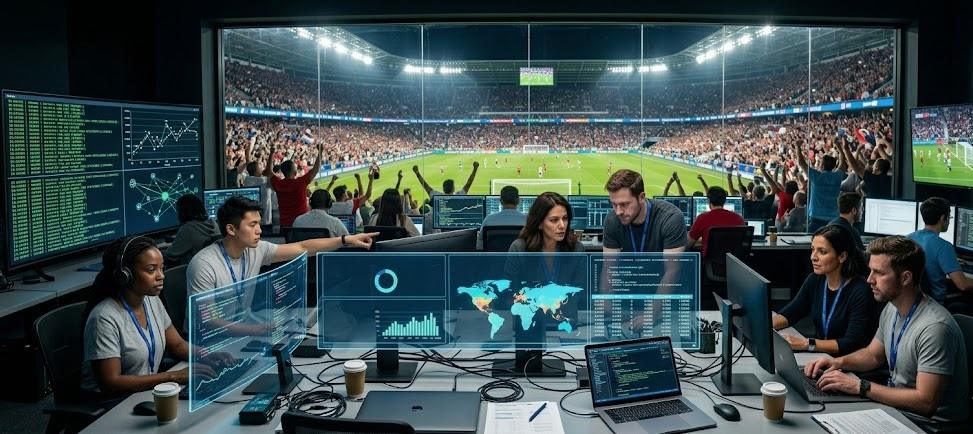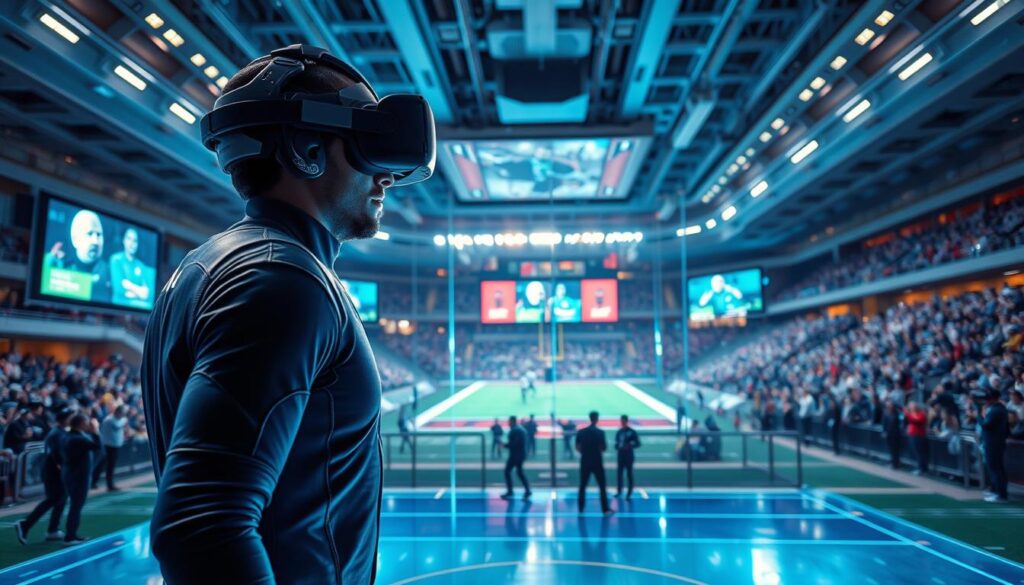
Do you remember that scene in Ready Player One where Wade Watts puts on his headset? He becomes weightless in zero-gravity basketball. I felt that excitement myself last week, not in a sci-fi future but in my living room. I was gripping a virtual rollercoaster ride, thanks to Meta’s latest demo.
The virtual reality in sports market is booming. It’s expected to reach $1.7 billion by 2025. This technology is changing sports strategies faster than Tom Brady can unretire. During the COVID lockdowns, we got to see games in 360º views. Now, we’re training like Simone Biles and trash-talking rivals from Tokyo to Toledo.
This revolution isn’t just for athletes. TikTok fans want more than just static stories. They want to be part of the action. Imagine directing Friday Night Lights during March Madness or betting virtual beers on LeBron’s last shot. The line between fan and player is gone.
As we explore how immersive sports watching changes everything, ask yourself: Are we just watching or are we part of the game? The answer might change how you see being a fan forever.
Introduction: Why VR is Sports’ Hottest Tech
VR is changing how we watch sports, and Gen Z is leading the charge. Just like Moneyball used math to find hidden gems, VR is bringing fans closer to the action. Imagine watching LeBron dunk as if you’re right there.
VR is making athletes faster and smarter. For example, Temple University’s QB rehab program used VR to help players recover faster. It’s like combining Fortnite with Friday Night Lights, changing sports medicine forever.
But there’s a catch. While pros get top-notch VR, the rest of us face a big price tag. Gen Z has to choose between new shoes or VR gear. It’s a tough decision.
| Aspect | VR Training | Traditional Training |
|---|---|---|
| Cost | $2,000+ setup | $150 sneakers |
| Accessibility | Global coaching access | Local facilities only |
| Data Insights | Biometric tracking | Coach’s eye test |
This isn’t just about better games. It’s about making fans feel part of the action. Soon, stadiums might even pay you to watch games from home. But until VR is for everyone, it’s just a dream.
Watching Games in VR vs TV: What’s Really Different?
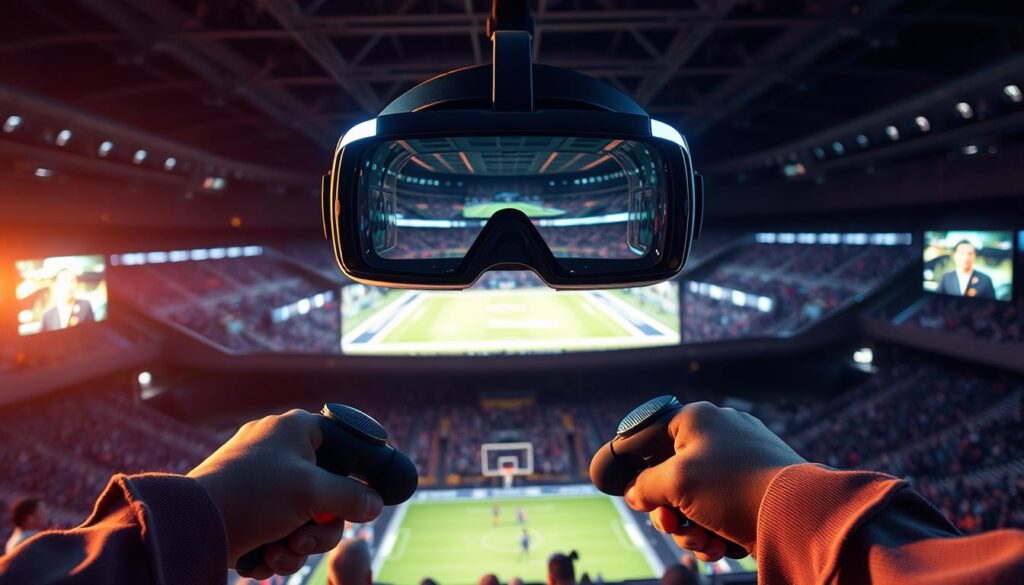
Traditional sports broadcasts haven’t changed much. You’re stuck with camera angles that aren’t always great. But VR stadiums change everything. It’s not just watching; it’s commanding the view.
The Camera Angle Revolution
Remember Paris Saint-Germain’s VR experience? You could:
- Glide over the field like a drone
- Lock eyes with a striker mid-penalty kick
- Watch Messi’s footwork from the bench cam
TV gives you two camera angles. Immersive sports watching lets you be the director. Want to see defensive formations from the 50-yard line? Done. Prefer hovering behind the goalie during a shootout? You’re weird, but VR’s got you covered.
Stats Overlay: From Madden to Reality
The Colorado Rockies’ Home Run Challenge shows the future. Their VR experience layers real-time stats like:
| Feature | TV Broadcast | VR Experience |
|---|---|---|
| Bat Speed | Generic graphic | 3D swing analysis |
| Ball Trajectory | Basic line drawing | Wind-affected flight path |
| Player Bio | Text box | Interactive career highlights |
Your living room becomes ESPN’s analytics desk. You’ll know a pitcher’s ERA before your uncle finishes his third beer. Just try not to smugly correct Aunt Karen’s fantasy picks – family peace hangs in the balance.
The First-Person Perspective: Experiencing Sports as a Player
Do you remember when EA Sports’ FIFA made us think we could bend free kicks like Beckham? Now, VR training makes that dream a reality. João, a 17-year-old from Brazil, uses a Meta Quest 3 to practice dribbling. He does it by replaying Neymar’s iconic Champions League goals from his point of view.
It’s not just fun for TikTok. Studies show athletes using young adult sports VR programs like Be Your Best can pass the ball twice as fast. Even NFL teams use VR headsets during film sessions. Watching Tom Brady’s game-winning drive is different when you see it through his facemask.
But there’s a big question in the virtual locker room:
- Pro: Perfect footwork patterns without shin splints
- Con: Zero grass stains or bruised egos
- Reality Check: Can you really learn a slide tackle without tasting turf?
Coaches say these tools help athletes make quick decisions. But some think VR makes sports too much like Dark Souls. It’s all about mastering patterns, not the real game. Yet, João got into Flamengo’s youth academy last month. His coach said those virtual reps helped him understand the game better.
Is this the future of training athletes? Ask the Alabama QB who practices reading defenses in VR. But don’t expect his jersey to stay clean.
Training, Learning, and Analytics for Teens
VR headsets are changing the game in youth sports training. They offer a better way than expensive travel teams. For just $29 a month, teens can practice like pros without leaving home.
NCAA rules? Forget about them when your living room is your gym. It’s like having a 24/7 training facility.
Here’s the play-by-play breakdown:
- 10,000-hour rule meets instant replay: VR tracks every detail of your game. Your three-point shot isn’t just “close enough,” it’s 2.3 degrees off perfect.
- Algorithm over applause: VR turns Coach Dad’s “good effort” into real stats. You’ll see your footwork accuracy as 87.6%.
- No benchwarming: Oculus Quest doesn’t care if you’re a star or a backup. Every drill is tailored just for you.
VR tech is leaving traditional methods in the dust:
| Old-School Training | VR Sports Prep |
|---|---|
| “Hustle harder!” (vague) | 27% faster lateral movement (measured) |
| $500/month batting cages | Unlimited 95mph fastball simulations |
| College scout wishful thinking | Exportable performance analytics |
VR sports experiences turn vague “hopes” into real data. That travel team kid who always starts? Your living-room-Lebron is hitting 84% in VR drills. Suddenly, “coach’s favorite” means something real.
And no, this isn’t just about screen time. It’s about focused practice with real feedback. The question is: Would you spend more on travel teams or on VR tech that changes the game?
Social VR: Meetups, Watch Parties & Global Friendships
Remember watching sports alone during the pandemic? Now, imagine 80,000 avatars cheering together in a VR stadium. Someone from São Paulo might even teach you how to say “PSG” right.
Teams like Paris Saint-Germain host VR fan hubs now. It’s like Coachella meets Monday Night Football, but without the expensive nachos.
Meta’s metaverse might seem empty, but sports esports fan engagement is booming. Last year’s virtual NBA Finals afterparty had 500,000 guests. That’s like filling 50 Madison Square Gardens.
Want to talk about sports with people from all over the world? There’s a spot for you in the digital bleachers.
| Experience Type | Social Depth | Global Reach | Identity Issues |
|---|---|---|---|
| Traditional Tailgate | High-fives, beer spills | Local parking lot | Your actual face |
| VR Watch Party | Holographic high-fives | 87 countries simultaneously | 10,000 “Tom Bradys” arguing |
| Esports Arena | Trash-talking in 15 languages | Borderless servers | Anonymous trolls (stil |
The social VR market is expected to reach $28 billion by 2027. But it’s not all about Meta. Sports franchises and gaming platforms are leading the way with meaningful meet-ups.
Discord channels for major leagues are filled with game analysis and meetup plans. It’s 60% analysis, 40% planning real-life meetups.
There are challenges, like finding your friend in a sea of Mahomes jerseys. Or explaining VR attendance to your boss. But moments like K-pop fans teaching Red Sox chants in VR show VR’s true power.
Accessibility, Costs, and Future Tech
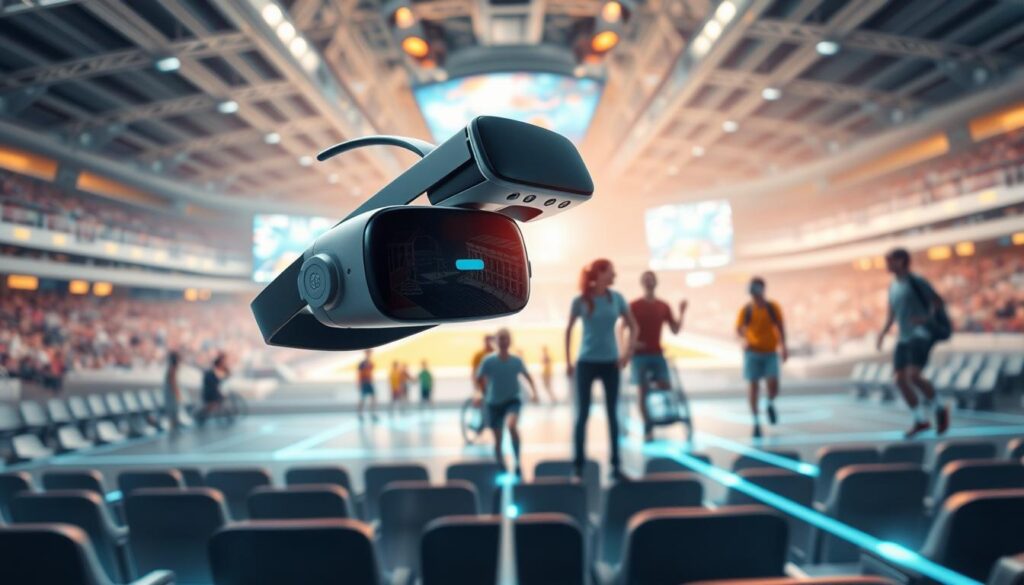
Today’s VR sports world feels like a luxury cruise ship. It offers great views but is out of reach for most. The average VR headset costs 12 Netflix subscriptions. This makes us wonder: are we building stadiums for the 1%?
Let’s look at the reality:
| Experience | Annual Cost | Hours of Content | Social Features |
|---|---|---|---|
| Premium VR Sports Package | $799 | 500+ live games VR events | Multiplayer lobbies |
| Netflix Standard | $66 | 10,000+ hours | Watch parties (2D only) |
But here’s a twist: cloud rendering could make VR more accessible. Imagine athletes training with holographic coaches without needing expensive headsets. Startups are already working on “VR scholarships,” hoping to find the next big talent.
The 2030 vision is exciting:
- AI analyzes your jump shot during pickup games
- Smart courts adjust difficulty based on biometrics
- Young adult sports VR leagues rival traditional college athletics
But I have doubts: will these tools help natural talent, or just tech-savvy parents? When an algorithm improves your free throw, is that skill or privilege? The future of sports is about more than better graphics. It’s about who gets to play.
How VR is Inspiring New Careers in Sports Science
Move over, Moneyball – virtual reality in sports is changing the game. Today, sports scientists use VR to study athletes’ movements. This is a big leap from the old days of relying on gut feelings.
Universities are now teaching sports science with a tech twist. Students learn about “Biomechanics of VR Motion Capture” and “Neural Adaptation in Virtual Environments”. Even retired athletes are becoming VR rehabilitation specialists, using their experience to help others.
Let’s compare old jobs to the new ones:
| Traditional Role | VR-Enhanced Counterpart | Key Difference |
|---|---|---|
| Talent Scout | Biomechanical Analyst | Gut instinct vs. 200-data-points-per-second streams |
| Strength Coach | Neuroplasticity Trainer | Weight room drills vs. cognitive load simulations |
| Referee Trainer | VR Officiating Specialist | Rulebook memorization vs. 360° split-second decision drills |
VR training is making a big impact in real sports. For example, referee training now includes VR replay simulations. This lets them practice in a realistic setting, without the pressure of a real game.
Esports is also benefiting from VR. Coaches study how VR affects players, just like they would analyze game strategies. It’s all about finding ways to improve performance, even in virtual environments.
Conclusion
We’ve tried on VR headsets and experienced sports in a new way. It’s not just about watching games; it’s about feeling like you’re part of them. With 457 million people expected to try it by 2025, it’s clear VR is changing sports.
Esports now lets you celebrate with LeBron after a big win. Training apps turn your home into a sports field. And social VR makes fans feel like they’re hanging out with others, even if they’re far away.
This isn’t just about new features. It’s about sports evolving. We’re not just watching games; we’re experiencing them in a whole new way.
Imagine watching history unfold right in front of you. Meta’s Horizon Venues and Sony’s PlayStation VR2 offer just that. They’re not just selling gadgets; they’re giving us a front-row seat to sports’ future.
When historians look back, they’ll wonder which side you chose. Did you stick with traditional TV, or did you dive into the virtual world? The choice is yours. The game is far from over.