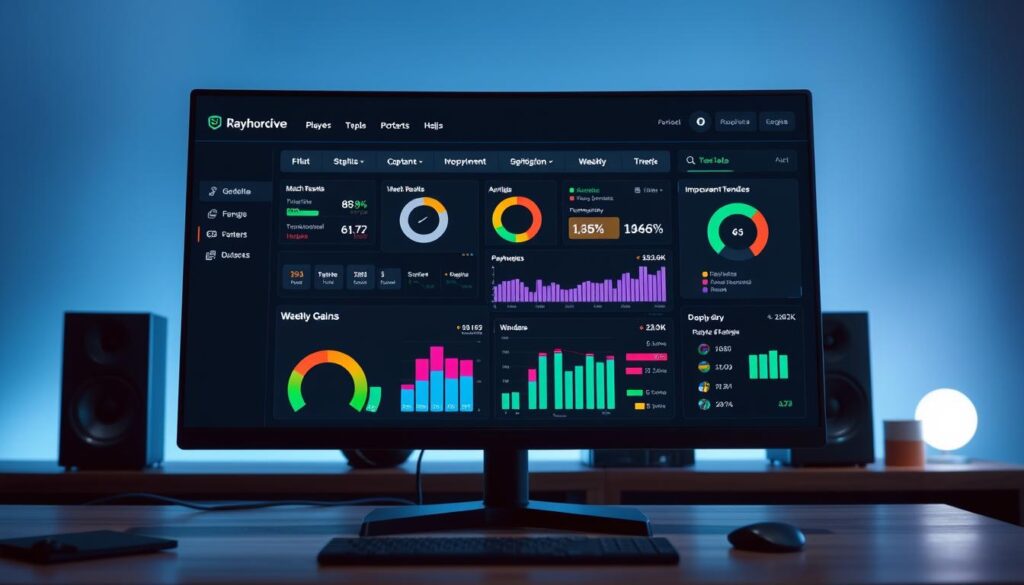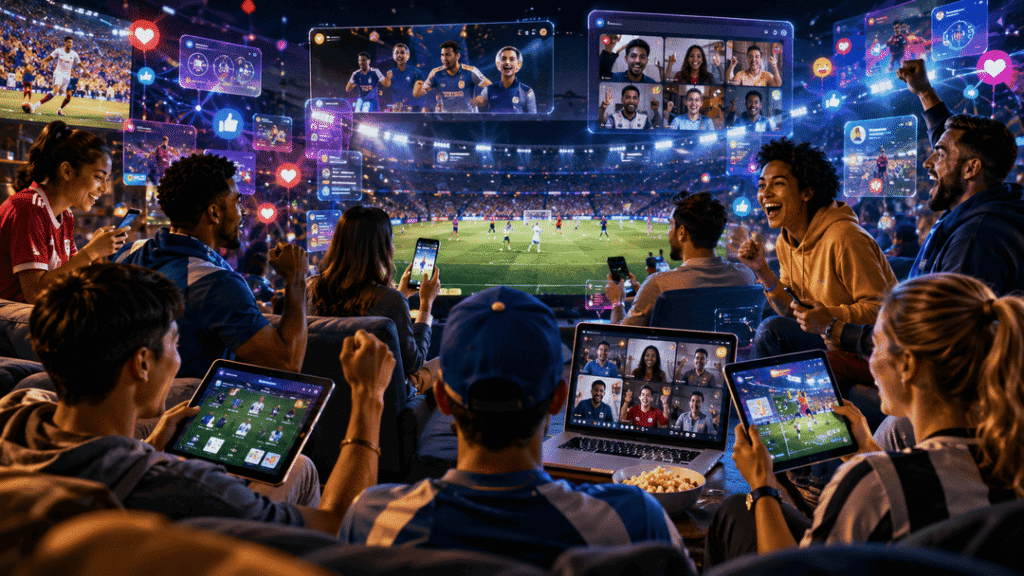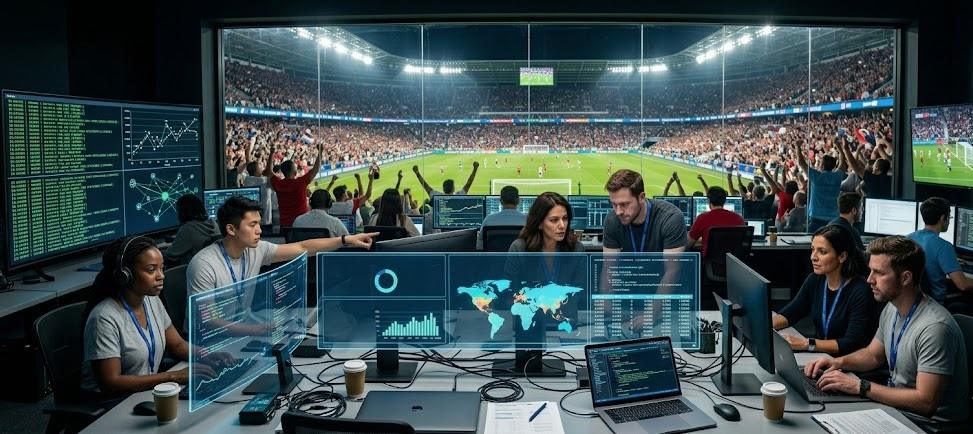
World Cup 2026 will not be a normal stress test for sports technology. It will be a 48-team, 104-match tournament spread across Canada, Mexico, and the United States, with games moving through 16 host cities and millions of fans following every goal, lineup change, replay, statistic, ticket update, and social reaction in real time.
That means the fan experience will not live only inside stadiums. It will live on phones, tablets, smart TVs, prediction games, live-score apps, fan communities, streaming platforms, ticketing systems, payment rails, fantasy contests, and matchday dashboards.
For sports platforms, the message is simple: slow technology will feel broken, even when it technically works.
A fan waiting ten seconds for a live score, a stream delay, a failed ticket scan, or a payment confirmation during the World Cup will not think about server loads or API bottlenecks. They will just feel disconnected from the moment. That is why World Cup 2026 will push sports platforms to build faster, smarter, and more responsive fan experiences.
World Cup Scale Changes The Rules For Sports Technology
The 2026 tournament is bigger than previous editions in nearly every practical way. More teams means more matches. More matches means more data. More host cities means more local fan zones, travel updates, regional content, and mobile demand. More time zones across North America mean more fans checking platforms from different countries at different hours.
That creates a very different technology challenge from a normal league weekend.
A club app might handle traffic spikes before kickoff. A fantasy platform might handle Sunday demand. A ticketing system might prepare for one stadium rush. But the World Cup compresses global attention across dozens of teams, markets, languages, cities, and digital behaviors at once.
Fans will not only ask, “Who scored?” They will ask:
- “Where is the closest fan zone?”
- “Why did the odds shift after that substitution?”
- “Can I watch the replay?”
- “Which player covered the most ground?”
- “Can I buy a shirt before it sells out?”
- “Is my ticket wallet updating?”
- “Why is everyone in the group chat reacting before my stream catches up?”
That is the modern sports-tech battlefield. The winning platforms will not be the ones with the most features. They will be the ones that make every feature feel instant, useful, and connected.
The Fan Experience Is Becoming A Real-Time System
Old sports media moved in stages. A fan watched the match, waited for the halftime show, checked the newspaper the next day, and maybe argued with friends later.
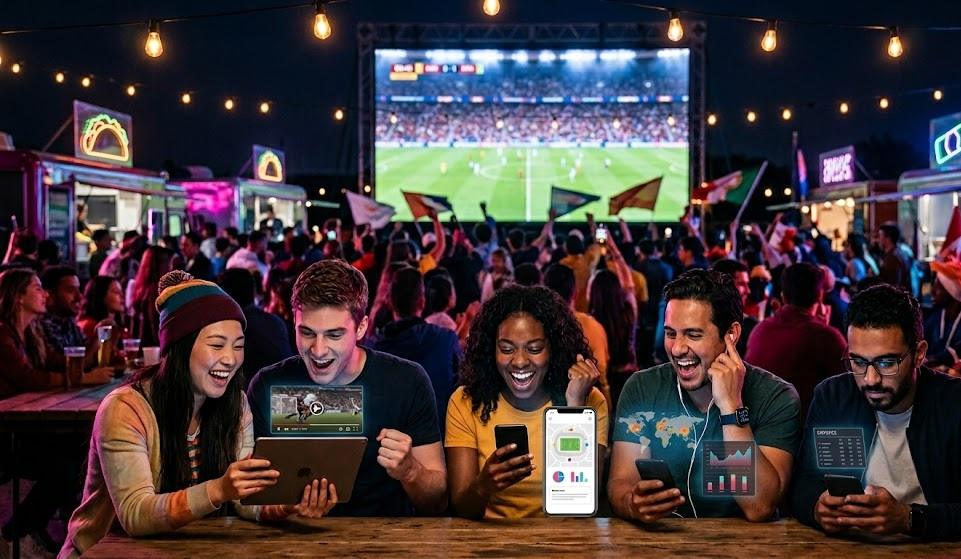
World Cup 2026 will run on a different rhythm. Fans will watch, react, compare, post, predict, purchase, analyze, and debate at the same time.
That creates a real-time system where every platform must understand what is happening on the field and what fans want next. A red card should not only update the score bug. It should shift the live match center, update tactical graphics, change prediction prompts, refresh fantasy projections, trigger highlight clips, and give fan communities something useful to discuss.
This is where CampTechWise-style sports technology becomes more than a cool add-on. The same forces explored in digital fan communities will become even more visible during the World Cup because supporters will not just consume the tournament. They will participate in it through digital layers.
The challenge is that participation requires speed. If the data arrives late, the conversation moves without the platform.
Faster Platforms Will Need Smarter Data Pipelines
Speed is not only about loading a page quickly. In sports, speed means moving accurate information from the field to the fan with as little friction as possible.
That involves several connected systems:
| Fan Experience Feature | What The Platform Needs Behind The Scenes | Why It Matters During World Cup 2026 |
|---|---|---|
| Live scores | Reliable data feeds and fast APIs | Fans expect instant updates across devices |
| Match statistics | Event tracking, player data, and automated processing | Supporters want deeper context, not just the score |
| Highlight clips | Video tagging and rapid content delivery | Big moments must be shareable within minutes |
| Fan polls | Real-time engagement tools and moderation | Communities need safe, active participation |
| Digital payments | Secure payment processing and fast confirmation | Purchases, subscriptions, and paid features must feel seamless |
| Personalized alerts | User profiles and smart notification logic | Fans follow different teams, players, and match windows |
The platforms that perform best will treat the World Cup like a living data environment. That means data cannot sit in isolated systems. Live stats, content feeds, user behavior, payments, notifications, moderation tools, and video infrastructure all need to talk to each other.
When they do, the fan experience feels smooth. When they do not, fans get duplicate alerts, broken streams, stale statistics, and checkout errors right when attention is highest.
Payment Speed Is Becoming Part Of The Fan-Tech Conversation
Sports platforms increasingly depend on payment systems, even when they are not traditional betting products. Fans use digital payments for tickets, merchandise, subscriptions, premium content, fantasy contests, collectibles, travel upgrades, and sometimes betting-adjacent services.
During a global tournament, payment speed becomes part of the user experience. A slow confirmation can feel as frustrating as a frozen stream. A failed checkout can turn a fan away from a platform entirely. A confusing payment flow can make younger or less experienced users feel locked out.
This is why crypto, digital wallets, and instant payment tools are now part of broader sports-tech conversations. Betting platforms are one clear example because they show how payment speed can change behavior during live sports. A useful betting-specific breakdown of crypto sportsbook for World Cup fans explains how faster transactions and Bitcoin-based systems are affecting the way some supporters approach tournament activity.
For CampTechWise readers, the bigger lesson is not “everyone should use crypto.” It is that payment infrastructure is now part of fan infrastructure.
If a platform wants fans to interact in real time, the financial layer has to keep up with the emotional layer.
Personalization Will Separate Helpful Platforms From Noisy Ones
World Cup 2026 will produce a flood of information. The problem for fans will not be finding content. It will be finding the right content at the right moment.
A casual United States fan might want kickoff reminders, player stories, and watch-party updates. A Mexico supporter might want tactical previews, lineup news, and local fan-zone information. A fantasy player might care about minutes played, injury risk, set-piece takers, and advanced stats. A youth coach might want clips that show pressing shape, build-up play, or transition defense.
Smarter platforms will use personalization to reduce the noise.
That does not mean throwing random algorithmic content at every user. It means understanding the fan’s intent. A good World Cup app should know whether someone is watching live, catching up after work, researching a player, following a bracket, or joining a community discussion.
The best experiences will feel less like a crowded feed and more like a smart matchday assistant.
AI Will Help, But Only If It Improves The Fan’s Understanding
AI will be everywhere during World Cup 2026, but not every AI feature will be useful. Fans do not need generic summaries that sound like recycled halftime commentary. They need tools that explain what is happening faster and more clearly.
A strong AI-powered fan platform could help explain why a team’s press is failing, why a substitution changed the match tempo, or why a goalkeeper’s distribution pattern matters. It could turn raw tracking data into simple insight. It could summarize a chaotic group-stage scenario without making fans open five tabs.
But the smartest platforms will avoid making AI feel like a gimmick.
The goal should be understanding, not noise. If an AI feature cannot help a fan learn something, react faster, or enjoy the match more deeply, it probably does not belong in the experience.
That matters especially for younger fans and students who are learning how sports data works. World Cup 2026 can become a classroom for real-time analytics, but only if platforms explain the game instead of overwhelming the user.
Safety, Moderation, And Trust Will Matter More Than Ever
A faster fan experience also creates bigger responsibility. When millions of people gather in live chats, prediction tools, social feeds, and interactive streams, platforms need strong safety systems.
That includes moderation for hate speech, scams, spam, gambling-related pressure, misinformation, impersonation, and harassment. It also includes clearer design around paid features, sponsored content, and risky interactions.
For youth audiences, this is especially important. World Cup content reaches families, students, young athletes, and first-time fans. A platform that encourages participation without guardrails can quickly turn excitement into confusion or pressure.
Trust will become a competitive advantage. Fans will return to platforms that feel fast, useful, and safe. Parents, schools, teams, and sponsors will pay closer attention to whether fan technology protects younger users instead of just chasing engagement numbers.
Sports platforms should treat moderation as part of the product, not as emergency cleanup after something goes wrong.
What Faster, Smarter Fan Experiences Could Look Like
The next generation of World Cup platforms will not be defined by one single feature. It will be defined by how well many features work together.
A strong fan experience could include live stats, personalized alerts, safe community spaces, tactical explainers, instant highlights, simple payment flows, multilingual support, accessible design, and clear privacy controls.
| Platform Feature | Basic Version | Smarter World Cup 2026 Version |
|---|---|---|
| Match alerts | Goal notification | Personalized alerts by team, player, bracket impact, and match context |
| Live stats | Possession and shots | Tactical trends, pressure maps, player workload, and simple explanations |
| Fan communities | Open comment section | Moderated spaces with polls, prediction tools, and topic-based rooms |
| Streaming | One broadcast feed | Multi-device viewing with highlights, clips, and synced match data |
| Payments | Standard checkout | Fast, secure, mobile-first payment options with clear confirmation |
| Content discovery | Latest articles feed | User-specific match guides, storylines, and learning paths |
The key is connection. A live stat should connect to a replay. A replay should connect to analysis. Analysis should connect to fan discussion. Fan discussion should stay safe and useful. Payments should not interrupt the experience. Notifications should help, not annoy.
That is how platforms move from “sports app” to “matchday companion.”
The World Cup Will Reward Platforms That Respect The Moment
Sports technology often gets judged by features, but fans judge it by moments.
- Did the app load before kickoff?
- Did the ticket scan work at the gate?
- Did the alert arrive before the group chat exploded?
- Did the replay explain what happened?
- Did the platform feel safe during a heated rivalry match?
- Did the payment go through without stress?
- Did the technology make the fan feel closer to the tournament?
World Cup 2026 will be too big, too fast, and too connected for platforms to rely on old digital habits. The tournament will reward systems built around real-time data, smart personalization, reliable payments, safe communities, and clear design.
The future of fan engagement will not be about adding more buttons to an app. It will be about building technology that understands the speed of sports emotion.
When the ball hits the net, the platform has only a few seconds to prove it belongs in the moment.