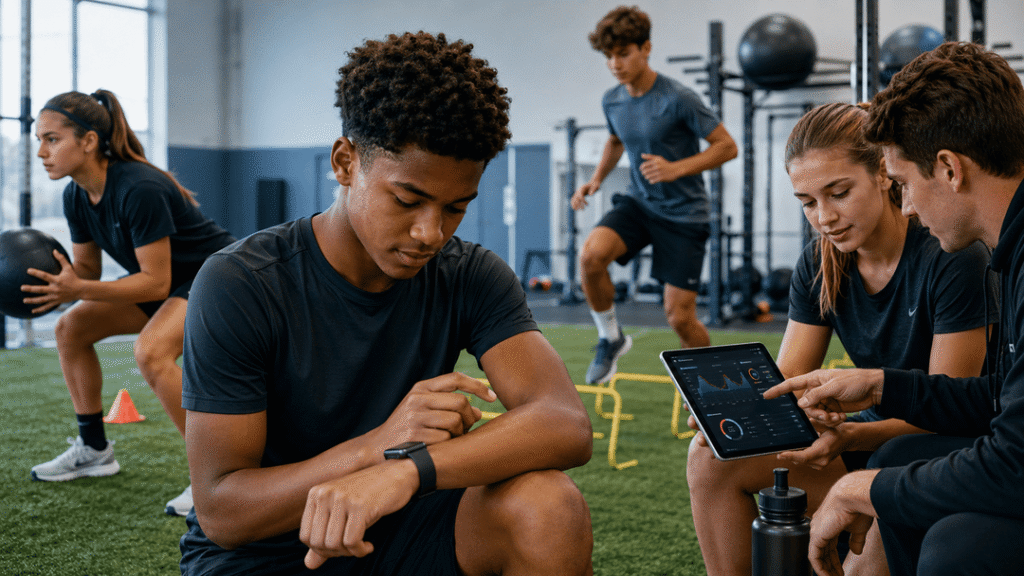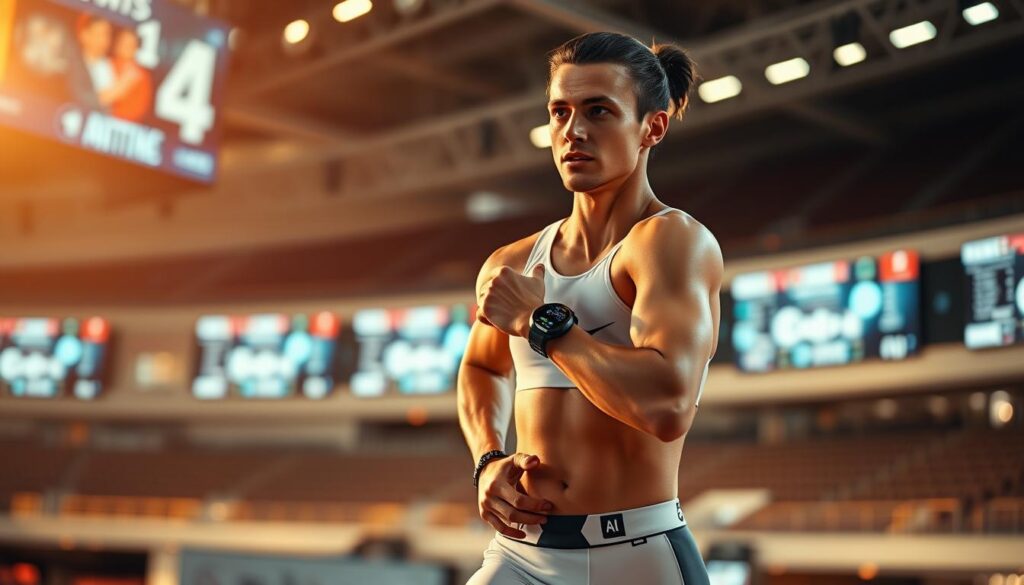
Remember when your fitness tracker just counted steps? Now, athletic gadgets are like super smart coaches. They watch everything from how well you sleep to how tired your muscles are.
NBA teams use Perch’s AI-powered weight racks to check how well players do exercises. Soccer players wear GPS vests that track how hard they sprint. Even your sports bra is now judging how well you do during games.
This isn’t science fiction. Devices like WHOOP straps and Catapult vests send important data to coaches quickly. They can see how much water you’ve lost, how long you’ve been on the ground, and even how stressed you are during games. It’s like having a Fitbit that knows everything before you do.
But here’s the twist: this technology transforming sports isn’t just for pros. Now, even weekend athletes can get access to advanced analytics. The gap between amateur and elite athletes is getting smaller fast. And it’s changing the game in ways that are both exciting and a little scary. Are you ready to see what your sweat says about you?
What Makes Wearables Effective?
Modern wearables are far from your grandma’s Fitbit. They’re more like Minority Report gadgets. The real magic happens when they turn workouts into useful data. Let’s explore why your gym selfies can’t compare to RFID-chipped athletes.
When Your Cleats Squeak More Than You Do
Zebra Technologies’ RFID chips track 27,000 data points per second on MLS fields. They capture everything from explosive accelerations to how much turf players swallow. Perch’s 3D cameras turn weight room efforts into precise power metrics.
- Velocity-Based Training (VBT) devices measure barbell speed down to 0.01 m/s
- Catapult Sports’ wearables track muscle load during NBA warmups
- WHOOP straps calculate strain/recovery ratios like Wall Street algorithms
From Spreadsheets to Slam Dunks
The Brooklyn Nets’ training staff uses machine learning to predict when Kevin Durant needs yoga. Spoiler: It’s always. But here’s the kicker – these systems don’t just collect data, they translate it into hieroglyphics coaches actually understand.
Velocity-Based Training is a game-changer. When a linebacker’s clean jerk slows by 15%, the AI suggests deload weeks before the athlete feels fatigue. It’s like having Moneyball’s Billy Beane whispering in your AirPods – except he’s calculating your risk of ACL tears.
So next time you see an athlete adjusting their wearable mid-game? They’re not checking Instagram. They’re accessing real-time readiness scores that make your Apple Watch’s stand reminders look like cave paintings.
Leading Sports Wearables
Today’s sports wearables are more than just step counters. They’re about changing the game. Athletes use devices that turn health data into winning strategies. Let’s see what makes these devices stand out.
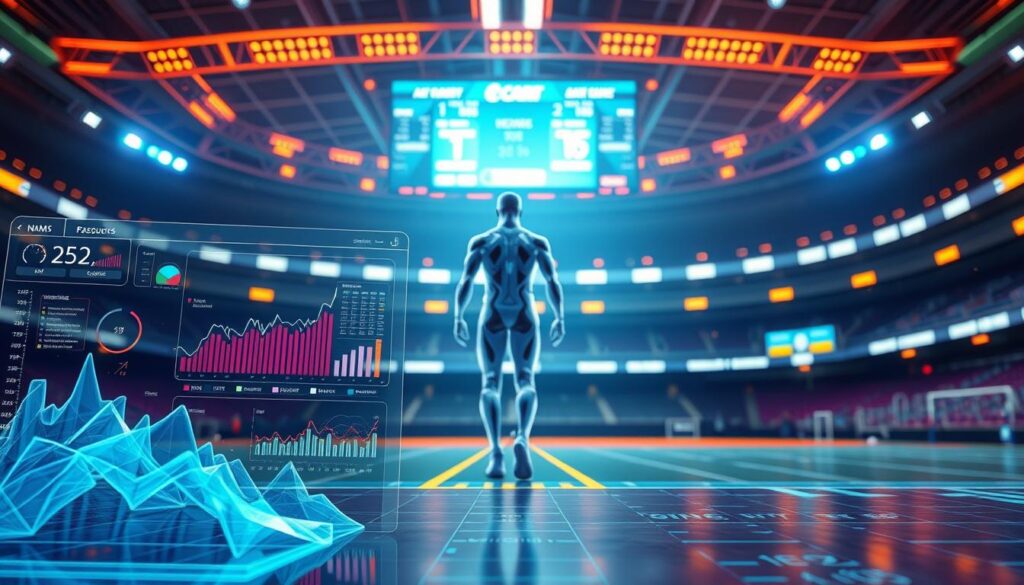
Equipment That Would Make Tony Stark Blink
Three devices are making waves in the sports world:
| Device | Superpower | Pro Users | Data Points/Hour |
|---|---|---|---|
| WHOOP 4.0 | Recovery optimization | LeBron James | 150+ biometric markers |
| BSX Insight | Muscle oxygen tracking | Olympic cyclists | 3D motion analysis |
| Perch Velocity | Weight room analytics | SEC football teams | 500lb force measurement |
From Spreadsheets to Spotlight Moments
The University of Georgia football team shows how predictive analytics in sport works. They used Perch sensors to improve their players’ strength. This led to better performance in the afternoon.
Paris 2024 is taking a similar approach. They’re using smart tracksuits to help sprinters perform better. It’s a new way to use big data in sports.
Apple Watch may be good for texts, but it’s not for sports. Real sports wearables need to withstand tough conditions. They must be ready for the game.
Health and Wellness Impacts
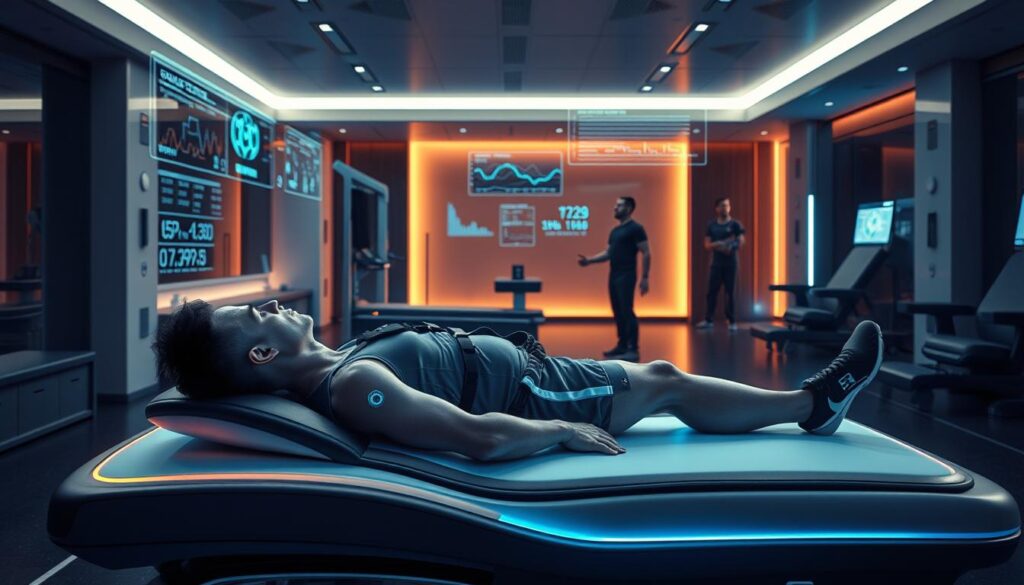
Forget ice baths and baggy sweatpants – modern sports recovery is like a sci-fi medbay. Teams like the Orlando Magic use $500,000 recovery suites. They have NormaTec compression boots that give players “robot hugs for your circulatory system.”
But, there are big ethical questions. Who owns the biometric data these devices collect?
Preventing Injuries
Today’s wearables track more than just steps. They predict collisions with NASA-like precision. They flag risky behaviors before injuries happen.
The real magic is in personalized nutrition analytics. Sweat analysis guides hydration adjustments during games.
NBA teams using advanced biometric monitoring see 37% fewer soft-tissue injuries. That’s careers saved.
Enhancing Recovery
The Magic’s recovery room has cryotherapy chambers cold enough to freeze Elon Musk’s Twitter ambitions. The standout is NormaTec’s dynamic compression system. It’s like a blood-pumping massage by R2-D2.
Teams report players bouncing back 22% faster from intense games using these methods.
| Recovery Method | Tech Used | Effectiveness | Cost (Annual) |
|---|---|---|---|
| Traditional Ice Baths | Manual temp control | 67% efficacy | $1,200 |
| NormaTec Pulse 3.0 | AI compression patterns | 89% efficacy | $18,000 |
| Hyperbaric Chambers | Oxygen saturation tech | 94% efficacy | $250,000 |
Here’s the rub: When your team owner owns your heartbeat data, who protects athlete privacy? Lawyers argue biometric data belongs to teams as “work product.” This sparks debates about ethics in sports technology.
Also, sustainability in sports tech is important. Those recovery pods use a lot of energy. The industry is working on solar-powered compression sleeves and biodegradable sensors. It shows even recovery tech needs its own recovery plan.
Innovations Expected in Wearables
The future of sports tech is like LeBron’s career – always changing and often overlooked. Imagine jerseys that spot muscle strains early or sweat patches that check cortisol levels during games. MIT’s biosensors can track health through sweat, and the 2024 Paris Olympics will use blockchain to protect athlete data.
This isn’t just science fiction; it’s what’s coming next.
Next-Gen Devices
Wearables will soon be like Iron Man’s Jarvis for athletes. The NBA is exploring blockchain for player tokens, changing how contracts are made and fans interact. E-Sports analytics use tennis tech for training, helping both digital and physical athletes.
Smart fabrics are advancing quickly, with prototypes that can heat up and prevent injuries.
Technology Integration Challenges
There’s a catch to this tech dream: Virtual Reality in Sports Training needs a lot of bandwidth. Schools spend a lot on wearables but find their Wi-Fi can’t handle the data. Blockchain in sports also has its own challenges, like who controls athlete data when it’s turned into an NFT.
The real game-changer will be coaches who can use data without overwhelming their players. Learn more about how data can improve athlete.
As we head to the 2028 Olympics, expect stadiums to be filled with algorithms. The goal is for your smartwatch to predict injuries before they happen. Until then, keep an eye on the lab and the locker room. The real MVP might be the one who figures out how to charge all these devices at once.