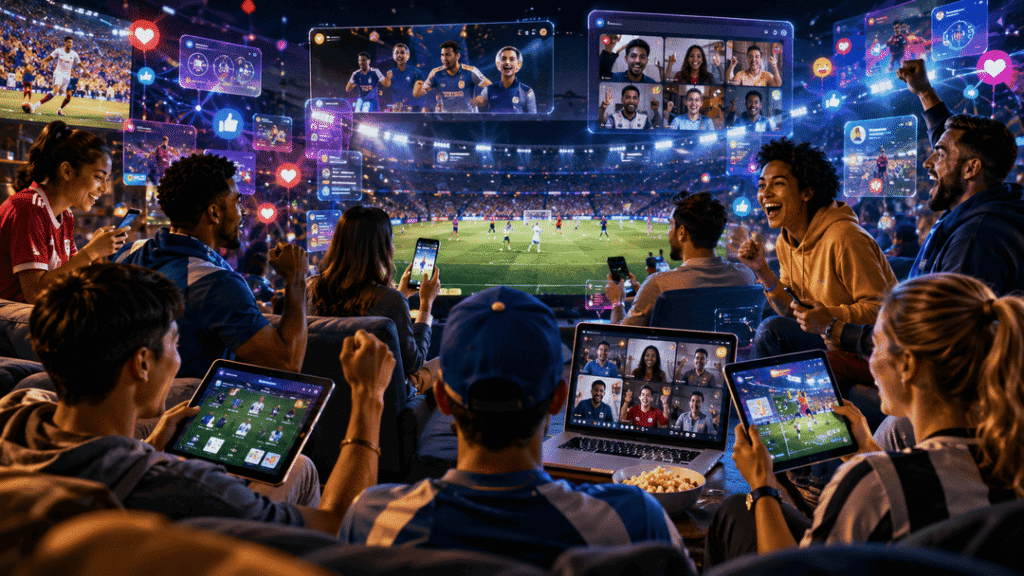
Imagine Steph Curry’s three-pointer flying through the air. At the same time, Iron Man-style analytics light up the court. This isn’t Wakanda anymore. It’s the new era of augmented reality in sports.
Holographic overlays and virtual dojos are changing how young fans watch games. They now prefer TikTok highlights over live games. Leagues are working hard to keep up, like Tom Brady in a blitz.
A projected $97 billion AR market by 2028 is real. It’s turning stadiums into mixed-reality coliseums. You can analyze Lebron’s footwork through smart glasses during timeouts.
Your friend’s Instagram story might show their face hologrammed in the Warriors’ locker room. ESPN has seen a 15% engagement spike with AR replays.
AR turns passive viewers into players. Training apps make free-throw practice fun with digital scoreboards. Social media filters let fans become the mascot during live streams.
Your future jersey might unlock exclusive AR content when scanned. It turns merch into something special.
So grab your virtual foam finger. We’re exploring how augmented reality is changing sports fandom. It’s creating a new way to connect in today’s world.
Introduction: The World of Augmented Reality
Remember when “cutting-edge sports tech” meant upgrading to HD or figuring out your VCR? Augmented reality makes those old tech look like toys. Now, stadiums feel like they’re in your living room, and your phone is a tactical coach’s playbook.
AR adds digital info to the real world through devices like smartphones or smart glasses. It’s like X-ray vision for sports nerds, but instead of bones, you see quarterback angles.
Modern AR tools turn passive viewers into experts. Teams use Lidar-scanned arenas for 360° virtual tours. This is great for fans who hate $18 beers and parking-lot jams.
Apps like Bleacher Report’s AR experience let you:
- Overlay real-time stats during live games
- Virtually “sit” in premium club seats during broadcasts
- Compare current plays to historic moments through ghost players
This isn’t just about cool graphics. Teams also use AR for practical upgrades. The Warriors’ Chase Center app helps visitors find their way around like a Silicon Valley guide. Even baseball’s Savannah Bananas have AR scavenger hunts that turn hot dog lines into fun adventures.
AR makes sports more interactive. Why watch replays when you can freeze a dunk and explore it in 3D? It’s like upgrading from microwave dinners to Michelin-starred meals, with the same ingredients but better tech.
How AR Enhances Live Sports Viewing
Remember when sports broadcasts looked like your uncle’s vacation slides? Today, augmented sports broadcasts turn stadiums into holographic chessboards. We’ve moved from the yellow first-down line to dissecting plays like forensic scientists at a Beyoncé concert.
On-Screen Graphics: From Atari to Xbox Series X

ESPN’s AR makes John Madden’s telestrator look like cave paintings. Real-time player stats float above helmets like digital ghosts. Want to know Mahomes’ cortisol levels during that 4th-quarter blitz? The NFL’s Next Gen Stats show anxiety metrics alongside rushing yards.
Here’s what modern augmented sports broadcasts deliver:
- Virtual overlays showing receiver separation in centimeters
- Heat maps revealing goalie blind spots during penalty kicks
- Animated play diagrams that make Romo’s predictions look obvious
Your phone becomes the ultimate armchair quarterback tool. Scan the field during commercials to see which linebacker needs a caffeine IV. It’s like having Belichick’s playbook – if Belichick shared secrets through Snapchat filters.
Broadcasters now compete on who can cram more data into the screen without inducing seizures. The real winner? Fans who understand why their fantasy team’s RB keeps fumbling in red zones. Augmented sports broadcasts don’t just show the game – they autopsy it in real time.
Interactive Fandom: Apps & Wearable AR
Remember foam fingers in the old days? Now, stadiums are like mixed-reality playgrounds. Your phone is like a digital rally cap. Teams are creating experiences that make Westworld seem simple.
From Filters to Treasure Hunts
The Minnesota Twins teamed up with ARound for a new fan game. They have a scavenger hunt in the ballpark. Fans collect virtual badges by scanning statues and stands – it’s like Pokémon Go for sports fans.
Red Bull even let viewers place athletes in their backyards. It’s like extreme sports paper dolls.
Here’s why this works:
- AR gamification turns passive spectators into active participants
- Virtual merch drops create FOMO-driven revenue streams
- Shared AR experiences forge digital tribes in the stands
The Padres’ batting challenge at Petco Park is legendary. Fans use AR glasses to swing at virtual pitches. It’s a tech upgrade that makes Topgolf look like whiffle ball in a sandbox.
These apps collect data on fan behavior. They show where fans linger and what they interact with. It’s not just fun; it’s about understanding the crowd.
Teams now track engagement metrics. When 50,000 phones become AR controllers, stadiums turn into games. Imagine crowd-controlled weather or AR fireworks that change with sound levels. Welcome to sports fandom 2.0 – where your hot dog comes with holograms.
AR in Sports Training and Analytics
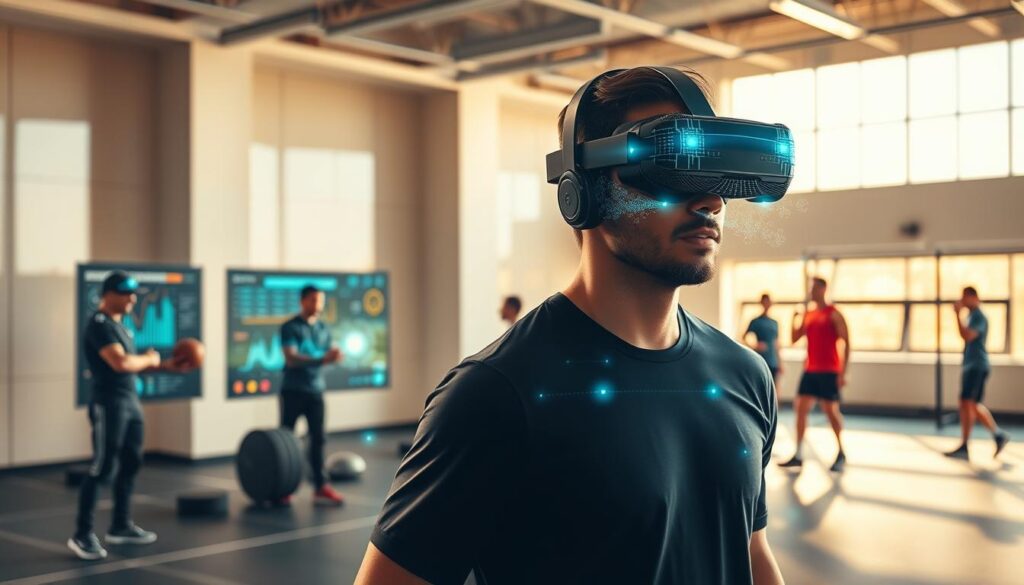
Today, athletes get Tom Brady-level coaching from smart algorithms. Augmented reality is changing how athletes train and analyze their skills. It’s even changing how they think about their sport.
Youth Learning Gets Jedi Knight Treatment
Little League is now using machine learning. Kids can wear Motorola’s edge+ training glasses to see their throwing motion in real-time. It’s like getting feedback on your curveball spin rate instantly.
AR is transforming youth sports in three key ways:
- Ghost defenders appear during dribble drills
- Real-time swing analytics replace old advice
- Perceptual training improves decision-making quickly
Your Living Room Just Became Coach Prime’s Office
Why go to the gym when AR brings Deion Sanders to your backyard? Today, any space can become a training facility:
| Old School | AR Upgrade |
|---|---|
| Mirror check form | 3D motion capture overlay |
| VHS playback | Instant biomechanical breakdown |
| Coach’s intuition | Machine learning predictions |
The magic is that these systems learn as you get better. That teenage pitcher isn’t just copying MLB stars. She’s working with AI that tailors drills to her body. It’s a mix of Moneyball and Montessori, leading to amazing results before kids even hit their teens.
Social Sharing and AR Communities
AR-filtered touchdown dances now get more views than game highlights. Social platforms have become digital stadiums. Here, 72% of fans celebrate wins, roast losses, and show off their augmented creativity.
This isn’t just watching sports. It’s about becoming part of the spectacle through shareable AR magic.
From Face Filters to Fame
Why settle for a basic selfie when you can dunk on virtual opponents? The NBA’s official AR filter lets you do just that. Platforms like TikTok and Instagram turn fans into content creators.
- Team-specific AR lenses that transform living rooms into locker rooms
- Virtual jersey try-ons that spark endless “Which player are you?” debates
- Replay overlays letting fans insert themselves into historic moments
The ImagineAR platform powers many of these effects. It creates what I call “sports meme warfare.” Fans battle through creativity, not insults.
Remember the LeBron aging filter? It made everyone look like retired coaches. It generated 4.2 million shares during last year’s playoffs.
| Platform | Top Sports AR Feature | Avg. Shares |
|---|---|---|
| TikTok | Virtual Victory Dances | 18.7K/post |
| Stadium AR Filters | 24.3K/post | |
| Snapchat | Player Avatar Lenses | 15.2K/post |
This isn’t just vanity metrics talking. Teams now track “AR engagement scores” as closely as ticket sales. The Patriots’ AR scavenger hunt during last season’s playoffs drove a 37% increase in merch sales from participants.
When fans can literally wear their enthusiasm through AR filters, fandom becomes wearable content.
The real magic happens when these digital moments jump back into physical spaces. I’ve seen AR-powered chalkboard menus at sports bars transform into instant replay stations during commercial breaks. It’s like Pokémon Go for sports nerds – except instead of catching Pikachu, you’re collecting virtual high-fives from your team’s mascot.
Tech Challenges & the Road Ahead
AR is set to change sports fandom, but we face some big hurdles. For every smooth virtual overlay, there’s a glitchy hologram ruining the fun. Let’s look at three major obstacles that could turn this digital dream into a mess.
Latency: The Silent Game-Killer
The Air Race X study showed AR’s biggest problem: a 0.3-second delay. This delay made pilots miss turns by 15 meters. Imagine this in baseball – you’d cheer a home run before the batter hits it. Current tech struggles to keep up, making experiences feel like awkward guessing games.
Hardware Headaches
Today’s AR glasses are huge and clumsy. They make Google Glass look small. These bulky headsets and tricky apps turn fans into distracted zombies. And forget about using them in a dirty stadium – it’s a recipe for disaster.
| Challenge | Current Pain Points | 2025 Solutions |
|---|---|---|
| Latency | 0.2-0.5s delays | 5G mmWave integration |
| Hardware | Clunky wearables | Neural interface prototypes |
| AI Accuracy | 87% call correctness | Quantum machine learning |
| User Adoption | 23% stadium usage | Holographic contact lenses |
The AI Referee Dilemma
Remember the 2012 NFL replacement refs? Today’s AI tools are even worse. They confuse hockey sticks with sabers. Until AI is 99.999% accurate, humans will keep yelling at robots instead of umps.
But there’s hope. Major leagues are working on edge computing hubs near stadiums. Startups like Pimax are making AR visors that can handle sweat and nacho spills. The goal is to make tech in sports feel like magic – just don’t spill your drink on the wizard.
Conclusion
Sports fandom now blends jerseys with JavaScript. Augmented reality in sports is changing how we watch games. It’s making fans feel more connected than ever.
Imagine your living room turning into Fenway Park with AR overlays. Interactive stats make casual viewers into experts.
AR’s magic is in its ability to adapt. NFL games use AR to make first-down markers glow. Olympic coverage adds biomechanical data to athletes.
Apps like Snapchat make halftime a virtual treasure hunt. It’s not just about eating nachos anymore.
This is just the beginning for AR in sports. Future stadiums might show holographic play diagrams. Your backyard could become Rafael Nadal’s clay court.
As 5G networks become common, AR in sports will need new skills. Will fans use smart contact lenses for stats? Can tailgating survive in AR gaming arenas?
Tomorrow’s sports fans will need strong phone batteries. And maybe therapy for virtual referee fights.