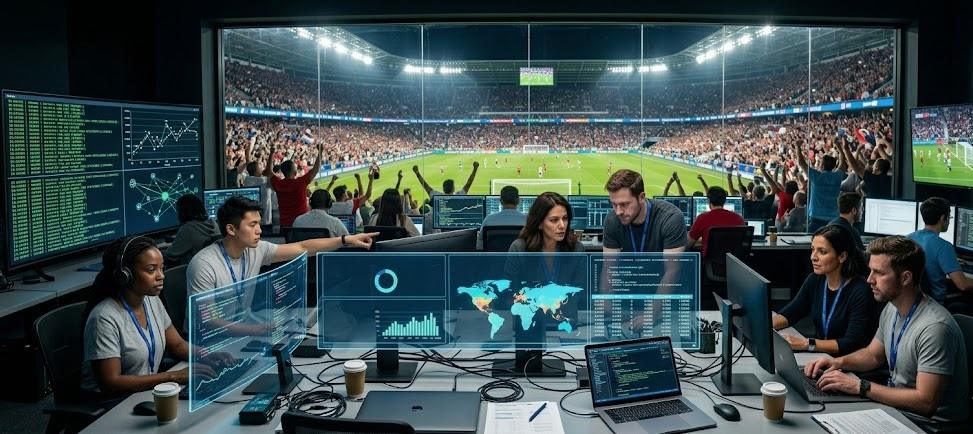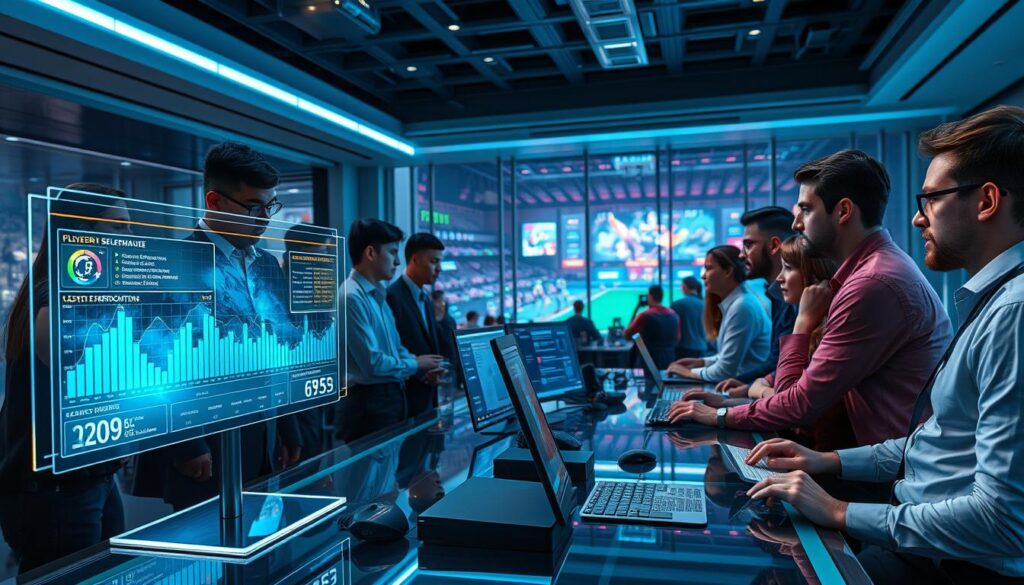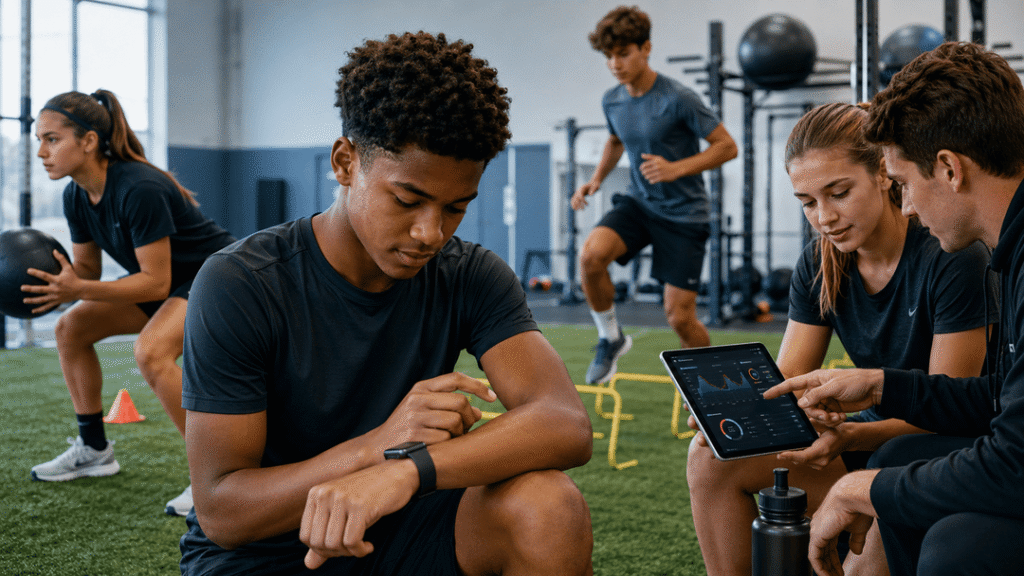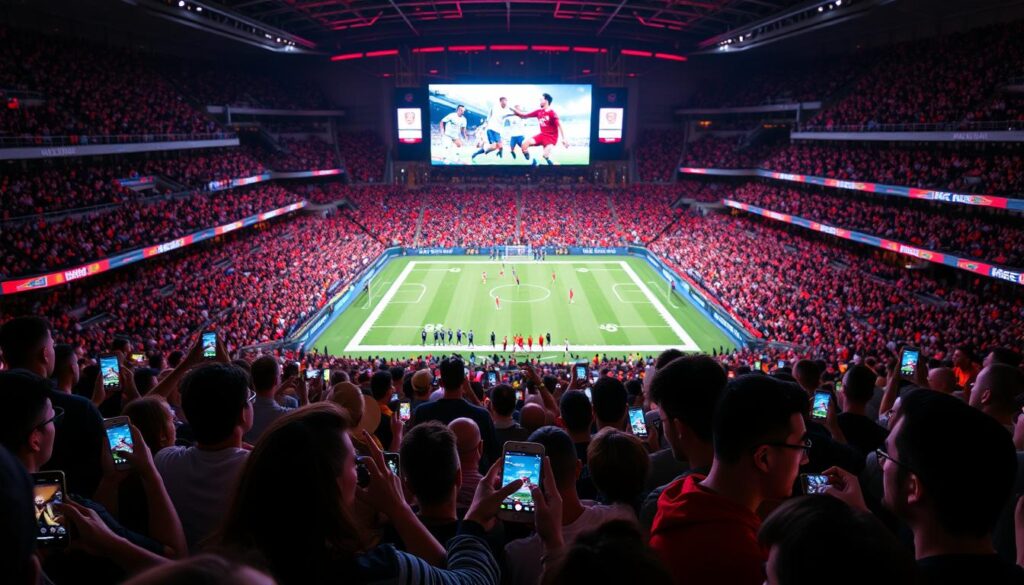
Remember when stadiums smelled like stale beer and unwavering optimism? Today, arenas are like digital playgrounds. Your phone is as important as the game itself. Teams measure crowd noise in likes, not decibels.
Your foam finger is now a tool for creating content. Modern venues are a mix of physical seats and digital hubs. Your seatmate isn’t just sharing nachos anymore; they’re streaming the game and upgrading seats virtually.
LeBron’s TikTok moves are more than just fun. They’re about turning simple plays into viral hits. The magic happens when 5G meets face paint. Fans can order merchandise right from their seats, and augmented reality turns lines into digital hunts.
But here’s the twist: we’re not just watching sports anymore. We’re helping create the experience with every tweet and share. Virtual reality is changing how we see the game, making fans feel like VIPs.
Your next jersey might come with blockchain proof, making it a digital keepsake. The real question is, will your hot dog vendor accept crypto soon?
Introduction: Social Media as the New Stadium
Think of your phone as a luxury box seat with better Wi-Fi and fewer spilled beers. The modern sports experience doesn’t start with a ticket scan—it begins the moment you open TikTok during math class. Digital fan engagement has turned fandom into a 24/7 dopamine loop where stadiums are just physical accessories to the real action: your screen.
Gone are the days when cheering meant waiting for a newspaper recap. Today’s sports ecosystems track your nacho preferences like the NSA tracks terrorists. Apps now predict when you’ll need a bathroom break before your bladder knows. This isn’t just smart infrastructure—it’s Tony Stark-level connectivity disguised as a Yankees cap.
| Old-School Fandom | 2024 Digital Engagement | Verdict | |
|---|---|---|---|
| Access | Season tickets or bust | Global live streams + AR replays | No more scalpers |
| Interaction | Booing from section 309 | Shaping plays via Twitter polls | Democracy wins |
| Memorabilia | Autographed baseballs | NFT highlight reels | Grandpa’s confused |
| Community | Local bar debates | Global Discord supergroups | Better emojis |
This shift creates what researchers call the continuous engagement loop. You’re not just watching LeBron—you’re betting on his next move through FanDuel, remixing his dunk as a TikTok stitch, and arguing about it in Reddit threads. Sports leagues now compete on two fields: the physical court and the attention economy.
What does this mean for traditional stadiums? They’ve become Instagram backdrops with $18 beers. The real magic happens in comment sections where fans dissect plays faster than ESPN analysts. When a 15-second clip can spark more passion than a fourth-quarter rally, we’ve entered sports’ digital renaissance—no foam fingers required.
Livestreams & Second Screens: Watching Sports in 2024
Watching sports used to mean sitting through commercials and halftime shows. Now, fans are changing the game fast. Gen Z viewers watch games on three screens at once – TV, phone livestream, and a friend’s Instagram Live.
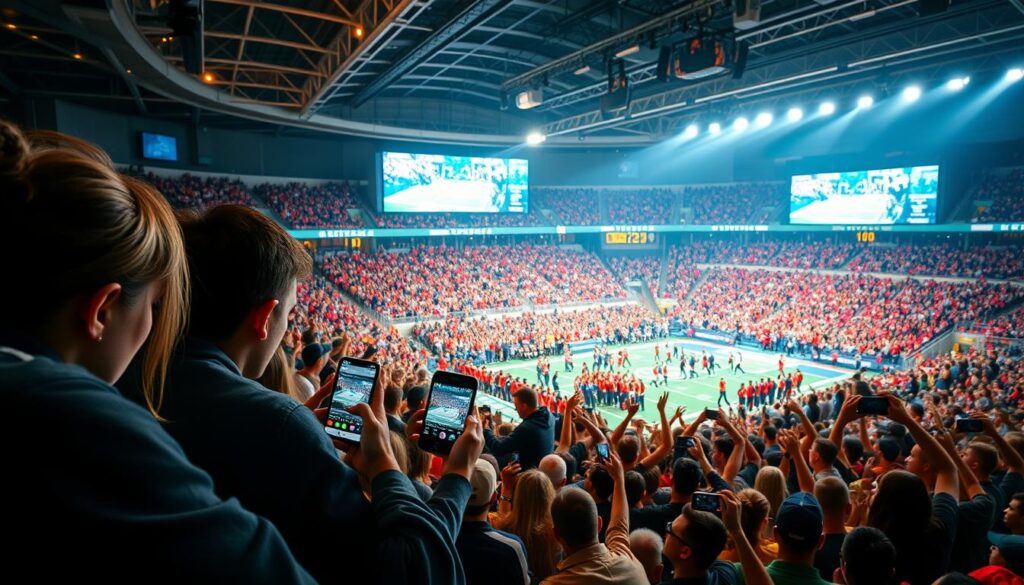
TikTok, Instagram, and the real-time highlight generation
Why wait for ESPN’s Top 10 when your For You Page is a highlight reel? Athletes like Ja Morant share their dunks on Instagram Stories before TV shows them. A 2024 Nielsen study found:
| Platform | Avg. Highlight Delay | User Engagement |
|---|---|---|
| TikTok | 12 seconds post-play | 83% higher than TV |
| 22 seconds | 67% story completion rate | |
| Traditional TV | 3-5 minutes | 29% ad skip rate |
This instant content creation makes every fan a mini Spielberg. During last year’s World Cup final, #MbappeGoalMix trends beat official FIFA posts 3:1. Teams hire “meme coaches” to help players create TikTok-worthy celebrations. It’s all about being ready for viral fame.
The second-screen revolution brings together unlikely friends. My cousin knew the Super Bowl score through a Travis Kelce Swift fan edit before CBS showed it. When athletes become their own media empires, traditional sports journalism faces a big change. You can see it on your phone right now.
Fans as Influencers: Amplifying Voices and Stories
Forget about press boxes and media credentials. Today, sports fans are making waves from their dorms and editing videos between Uber rides. The fan influence movement has turned casual observers into key players. Franchises now seek out social media stars like they’re top athletes.
When a teenager’s parody account of Steph Curry gets more attention than the Warriors’ official account, it shows a big shift. This change is as dramatic as a LeBron chase-down block.
Meme Moments That Move Markets
Fandom moves fast, thanks to TikTok. A viral dance during Monday Night Football becomes a challenge in the locker room by Wednesday. A bad camera angle of a coach turns into a bestseller before the game is over.
Teams watch these moments closely, like stock analysts track the market:
- The Lakers’ “Front Office Reaction Guy” meme series got 12M views during last year’s playoffs
- NFL teams send “viral playbooks” to super fans before big games
- Premier League clubs hire teenage editors to make match footage for Gen Z
This rush for content has created new jobs in sports tech. The hottest roles are in building Instagram sports communities and analyzing fan content for sponsors. Atlanta United’s Fan Media Program, which trains fans in content creation, helped 73% of participants find jobs in sports last season.
But there’s a catch: being real is key. When the Dallas Mavericks let fans take over their Twitter during the playoffs, engagement soared 218%. Why? Fans trust the genuine excitement of someone in face paint more than official messages. It’s honest, relatable, and, when done right, more valuable than any TV ad.
Direct Athlete-Fan Communication: DMs, Q&A, and more
Remember when athletes’ post-game interviews felt as rehearsed as a Broadway monologue? Today, athletes are more than just their game. They’re engaging with fans online. Ja Morant’s Twitter debates are as lively as his on-court moves. Giannis Antetokounmpo’s Instagram DMs are quicker than his agent’s.
This isn’t just athlete-fan communication. It’s like digital speed dating with a twist.
The shift from press conferences to personal chats has changed everything. Athletes now share their lives through direct messaging, Q&As, and TikTok duets. A 2023 study shows 68% of Gen Z fans feel closer to players who talk to them online. Even if it sometimes goes wrong.
Here are three ways social media is changing the game:
- DM diplomacy: Players like Kevin Durant settle debates in fans’ inboxes instead of through ESPN panels
- Q&A theater: NASCAR drivers host Reddit AMAs while literally racing at 200mph
- Vulnerability as currency: WNBA stars share mental health struggles via Instagram Stories
Grandma might get a quicker reply from Giannis than his marketing team does. This hyper-accessibility creates both loyal fans and PR nightmares. Sometimes in the same tweet. When authenticity meets hot takes, who’s really in charge?
| Traditional Media | Social Era | |
|---|---|---|
| Response Time | Days | Minutes |
| Message Control | High | Chaotic Neutral |
| Fan Perception | Distant | “We’re besties” |
The result? A new playbook where athlete-fan communication is as valuable as championships. Players aren’t just endorsing shoes—they’re building relationships online. But when the line between “authentic” and “overshare” blurs, who’s keeping score?
Behind the Scenes: Bringing Fans Closer than Ever
Luxury boxes are old news. Now, VR goggles that let you smell the locker room are the new status symbol. Teams use digital fan engagement tools to make fans feel like they’re right there.
Imagine walking through the Lakers’ locker room with LeBron via Oculus. Or using AR to “try on” a Celtics jersey with Tatum’s stats. The Warriors’ VR tunnel walk has 73% more engagement than real tours (Source 3).
Teams are changing how fans experience games:
| Old Experience | New Tech | Fan Impact |
|---|---|---|
| Jumbotron replays | 360° VR instant highlights | Control camera angles like Scorsese |
| Program $20 merch | AR jersey customization | See your name in floating LEDs |
| Post-game interviews | Live mic’d practice sessions | Hear coaches’ uncensored pep talks |
Snapchat filters that age you like Tom Brady’s TB12 method are a game-changer. When the Chiefs launched their “Super Bowl Ring Designer” AR tool, fans spent 11 minutes crafting virtual bling. That’s longer than the trophy ceremony.
This isn’t just about access. It’s about creating rituals. Fans start game days by checking their team’s VR locker room “mood lighting.” Fantasy footballers study AR overlays of QB throwing motions more closely than their stock portfolios.
Challenges: Managing Narrative, Toxicity, and Privacy
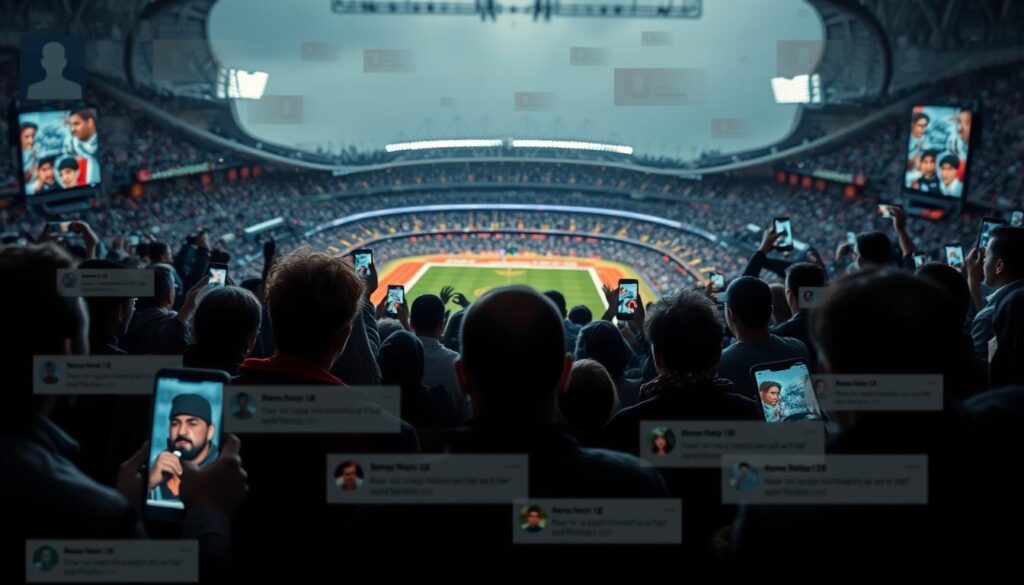
Social media has turned stadiums into global chatrooms. But it also gives trolls and data miners a big voice. Remember when Kyrie Irving’s vaccine stance caused more controversy than his basketball skills? His Instagram became a place where health debates overshadowed basketball.
Algorithms spread outrage quickly, like a Steph Curry three-pointer. But they also cause more harm.
Let’s look at the problems:
- Narrative hijacking: 42% of sports misinformation spreads through quote-tweets (Source 2). A single conspiracy theory can spread fast, like Usain Bolt.
- Toxic fandom: Features that let fans celebrate Lebron’s records also empower racist trolls.
- Data leaks: That face scan for virtual seats? It might help Moscow’s AI improve Putin’s free throw.
Platforms often make mistakes. Twitter’s community notes are like referees who only blow the whistle after the game. Meta’s privacy controls have many holes, like the 2003 Detroit Tigers defense. And livestream moderation is like the NBA’s replay center, run by sleep-deprived interns.
But there’s a twist. The tools causing problems might also solve them. Machine learning could spot racist slurs fast. Blockchain verification might stop fake athlete accounts better than Draymond Green defends the paint.
The question is, will platforms choose solutions over engagement metrics?
Next time you share a viral dunk clip, think about who controls the narrative. The answer might make you rethink that retweet button harder than Bill Belichick rethinks fourth-down strategies.
The Future: Social Platforms and Sports Fandom
The next big thing in sports fandom isn’t about foam fingers or face paint. It’s about Meta headsets and Ethereum wallets. Imagine virtual reality in sports turning your living room into a holographic Super Bowl suite. You can high-five Tom Brady’s avatar while avoiding crypto ads.
Why buy physical season tickets when you can have sports NFTs? These aren’t just digital bobbleheads. They’re becoming:
- VIP access passes to virtual locker rooms
- Tradable highlights that appreciate like rookie cards
- Collateral for decentralized fantasy sports leagues
Augmented reality in sports could turn every sidewalk into a court. Imagine AR glasses showing Steph Curry’s shooting form on your local hoop. Your shots get analyzed, and you get AI coaching.
| Feature | Traditional Fandom | Web3 Fandom |
|---|---|---|
| Seat Location | Upper deck, row ZZ | Virtual courtside NFTs |
| Memorabilia | Signed jerseys | Tokenized highlight reels |
| Fan Interaction | Wave at Jumbotron | DM athletes via DAO governance |
Leagues are testing VR drafts with fan tokens. Miss the 2023 NBA draft? No problem. Your AR glasses can show Paolo Banchero’s highlights on your office wall. The line between fan and owner is getting blurred fast.
Sports NFTs could let fans own teams. Imagine owning 0.0001% of the Yankees through a token. Fans could boo strikeouts and vote on coaches. That’s power!
Conclusion
Sports fandom has changed, blending stadium seats with Twitter threads. Now, every fan can create content. Twitch and Instagram Live have changed what it means to watch a game live.
These digital platforms open new doors – teams look for talent in meme pages. Gaming influencers even get jobs on ESPN. But, they also bring out the bad side of fans.
The future of sports will need people who know how to use social media. Careers will involve data analysis and creating viral content. A meme creator could become a GM, choosing players based on their online presence.
The real impact of social media on sports is breaking down barriers. When stars like LeBron share behind-the-scenes footage, they’re changing the game. It’s not just about watching; it’s about participating.