Do you remember that feeling when a digital roller coaster drops? Your brain says “this is real” but your feet know it’s not. That’s what happens when you wear a headset. It’s not just for gamers anymore.
Elite sports is changing quietly behind closed doors. Half of the English Premier League uses this tech secretly. They’re not playing games; they’re sharpening their skills under the sound of 60,000 fans.
This technology boosts motor, cognitive, and mental skills safely. It’s a key tool for athletes, moving from sci-fi to essential training.
But here’s the big question: Is this tech making sports fairer for everyone? Or is it just making things more expensive, widening the gap between rich and poor?
Current VR Applications in Sports
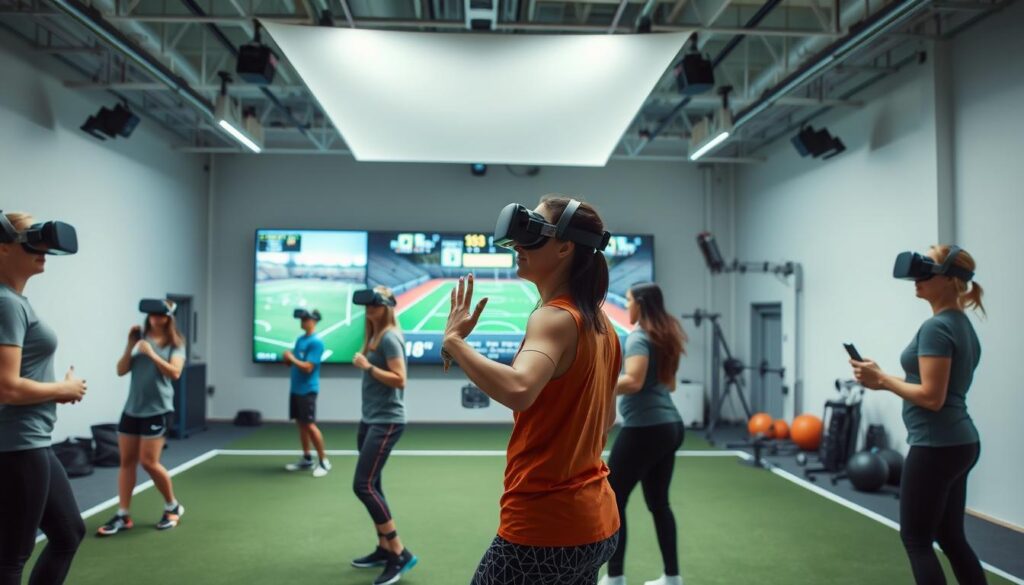
Virtual reality in sports is more than just a game. It’s changing how athletes train, fans watch, and officials prepare. It’s found in locker rooms, living rooms, and even referee offices. It’s as versatile as a Swiss Army knife.
First off, let’s talk about training. There’s a lot of sports where every millisecond counts. Precision is key.
- Target Sports: Archery, bowling, curling, darts. VR helps athletes focus, ignoring distractions.
- Bat & Racquet Sports: Baseball, table tennis. It simulates fast-moving objects and complex movements.
- Goal Sports: Football, basketball, soccer. It enhances spatial awareness and quick decision-making.
- Martial Arts: Karate. Athletes use headsets to practice and analyze moves.
But VR does more than just train athletes. It also helps with injury recovery. Athletes can practice movements without risking injury. Coaches get data on performance, like reaction times and decision-making.
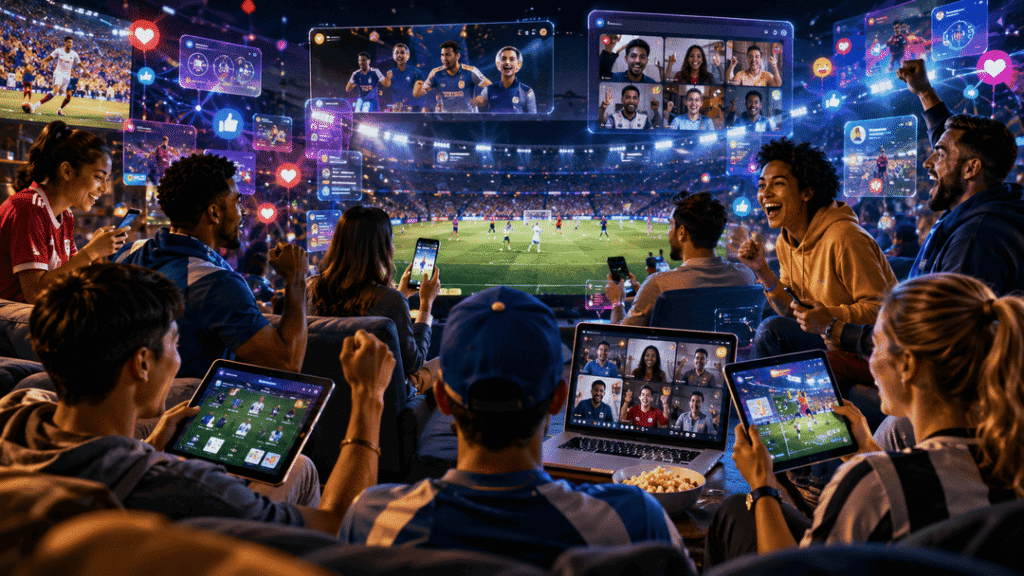
VR also benefits fans and officials. Paris Saint-Germain offers immersive experiences. Kids can feel the excitement of a game from their homes. It’s about making sports more accessible.
The English Football Association uses VR to train referees. They practice in virtual environments before real games. It helps them prepare for challenges.
The use of VR in sports is widespread. It’s not just for individual skills but for creating immersive experiences. It’s changing how we see sports. The digital world is now part of the game.
Mental Training and Visualization
The mental gym was always hard to find in sports training—until VR came along. We’ve heard sports are 90% mental for years. But most training doesn’t really focus on the mind.
Traditional visualization means athletes close their eyes and imagine winning. VR-based imagery (VRBI) puts them in a headset. They can feel the ice, hear the crowd, and see the target clearly. It’s like actually practicing, not just dreaming about it.
A 2021 study by Bedir and Erhan showed VR’s impact. Curling, bowling, and archery athletes improved with VRBI. They got better at their shots and at imagining them.
Pressure is real, like during a penalty kick. Traditional training might use loud noise. But VR gives you the whole scene—the goalkeeper, the ball, the goalposts. You’re not just imagining; you’re getting ready for it.
Immersive sports learning changes the game. It doesn’t replace physical practice but boosts mental strength. An archer can face strong winds in VR. A bowler can practice difficult shots many times in one session. The brain learns from both real and virtual failures.
| Training Method | Psychological Focus | Measurable Outcome | Repetition Capacity |
|---|---|---|---|
| Traditional Visualization | General confidence | Subjective improvement | Limited by focus |
| VR-Based Imagery (VRBI) | Specific scenario mastery | Quantifiable performance data | Virtually unlimited |
| Biofeedback Integration | Physiological stress response | Heart rate, muscle tension metrics | Real-time adjustment |
Biofeedback adds magic to VR training. A curler might see their heart rate spike in VR. They learn to stay calm while sliding. It’s not just practice; it’s psychophysiological programming.
We’re building mental toughness. VR helps athletes feel calm under pressure. It’s like having a library of high-stakes scenarios to practice. When the real moment comes, it feels familiar, not scary.
Team sports also benefit from VR. A quarterback and receiver can practice their timing in VR. They’re not just learning routes; they’re getting their brains to work together.
VR answers a big question for coaches: How do you practice staying calm? Now we can simulate game situations. We can practice defensive schemes and build mental muscle memory.
The old way treated the mind as a mystery. VR makes it trainable. Every missed putt teaches something about handling pressure. Every made free throw strengthens neural pathways. This is immersive sports learning at its best—it’s not just about learning plays; it’s about learning yourself under pressure.
We’re moving beyond just talking about mental toughness. We’re making it. One virtual practice at a time.
Skill Practice in Safe Environments
VR sports training offers what athletes have always wanted: a place to practice without fear of injury. Traditional training often feels like a gamble with your health. Want to master a diving header in soccer? You might face concussion protocols. Need to perfect a 100mph fastball? You could end up with Tommy John surgery.
The digital dojo changes everything. Here, athletes can try the impossible, fail, and start again without worry. It’s not about avoiding challenges. It’s about avoiding unnecessary physical risk while learning.
For example, football headers are a big concern. They can harm your brain even if they don’t cause a concussion. Yet, they’re key to the game. REZZIL and similar platforms offer a solution. Studies like Wood et al. (2021) show pros outperforming novices in virtual drills. Their skills translate well to real games.
The magic is in full control of the environment. Coaches can adjust things that are hard to control in real life:
- Ball speed and direction can be set exactly
- Opponent positions can be set, not random
- Weather can change instantly
- Fatigue is controlled, not a natural limit
This creates the perfect place to practice. A baseball pitcher can throw 200 curveballs in an hour without injury. A gymnast can try a risky move dozens of times without falling. The grind is there, but the damage isn’t.
| Training Aspect | Traditional Practice | VR Training Environment |
|---|---|---|
| Injury Risk | High – Physical collisions, overuse injuries common | Minimal – No physical contact, joints protected |
| Repetition Limit | Limited by athlete’s physical recovery | Virtually unlimited – Limited by mental fatigue only |
| Environmental Control | Dependent on weather, facilities, opponents | Fully programmable – Every variable adjustable |
| Immediate Feedback | Delayed – Often requires video review later | Instant – Biomechanical data provided in real-time |
| Cost of Failure | High – Injuries can end seasons or careers | Negligible – Reset button with no consequences |
This isn’t about making athletes soft. It’s about making them smart. The safe space lets them try new things without risk. They can experiment and find new ways to play without fear.
The learning curve gets steeper. When failing means just starting over, not getting hurt, you learn faster. Confidence grows with each successful try in the virtual world.
VR sports training marks a big change. We’re moving from “practice until you get it right” to “practice until you can’t get it wrong.” It’s safer, like learning to swim in a pool instead of the ocean. The challenge is there, but the risk of getting hurt is gone.
Injury Rehabilitation and Recovery
Imagine being a top athlete stuck in light physio and endless cycling. This is what injury recovery feels like. Your body heals at its own pace, not yours. At the same time, your mind, which is so sharp and strategic, starts to get rusty from lack of use.
Virtual reality athletics changes everything, turning rehab into a meaningful process. A study shows VR is a great tool for rehab. It keeps your mind active in a safe, low-stress way.
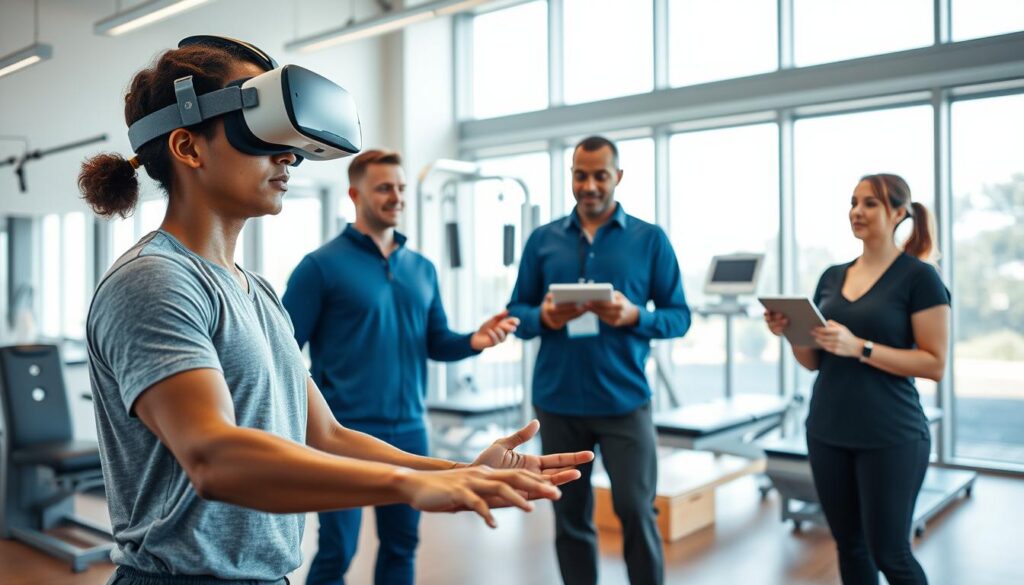
For an athlete with an ACL tear, rehab is slow and strict. Their world is limited to the training room. Virtual reality athletics offers a way to stay mentally sharp. It simulates the game’s excitement and challenges, all while keeping your body safe.
The benefits go beyond just keeping you entertained. It’s active mental maintenance. While your body heals, virtual reality athletics keeps your mind sharp. It keeps your decision-making skills and spatial awareness in top shape. It reignites that competitive spark that can fade with inactivity.
This approach also fights mental decay. While your body heals, your identity and instincts can fade. VR helps prevent this every day.
Virtual reality athletics also helps therapists see movement in a new way. Traditional rehab might hide bad habits. VR shows every movement in 3D detail.
Therapists can spot and correct bad habits early on. This is key to avoiding long-term damage. It turns rehab into a detailed, active process.
This isn’t just about getting athletes back in the game. It’s about making sure they return as complete competitors. They need to be both physically and mentally strong.
The stationary bike is important, but now it has a partner. A headset that keeps athletes’ spirits high, even when they can’t be active. This is more than just innovation. For many athletes, it’s a lifeline back to their passion.
Team Strategy and Playbook Learning
Imagine practicing every defensive scheme without needing a huge team or a big field. Virtual reality is making this possible in professional sports. Now, playbooks are more than just diagrams; they’re interactive experiences.
The Dallas Cowboys and Arizona Cardinals are leading the way. Their quarterbacks don’t just watch film anymore. They wear headsets and face virtual blitzes from all sides. They learn to read coverage that changes fast. This isn’t just learning; it’s solving problems at game speed.
The old way had a big problem. Just memorizing plays in a quiet room is like learning chess without a board. You might know the theory, but can you use it when things are moving fast? VR closes this gap, making knowledge into action.
Look at the soccer study by Fortes and colleagues. They worked on players’ visual skills, like pros do to scan the field. The result? Direct improvement in pass completion rates. VR drills help build this skill, turning it into muscle memory.
This is where immersive sports learning changes everything. It’s not about replacing practice. It’s about improving mental prep. A quarterback can see hundreds of defensive looks in an hour. A midfielder can practice scanning until it’s automatic.
The benefits are clear. Players get smarter, faster. They spot patterns and make quick decisions. Most importantly, they build confidence through endless practice that’s hard to do on a real field.
| Learning Aspect | Traditional Method | VR Training Method |
|---|---|---|
| Play Repetition | Limited by practice time, player availability, and field space | Unlimited repetitions in controlled virtual environments |
| Defensive Read Training | Static film study, occasional scout team simulations | Dynamic, interactive defensive schemes that react to decisions |
| Spatial Awareness Development | Developed through game experience over years | Gamified drills targeting specific scanning behaviors |
| Mental Fatigue Factor | High physical demand limits mental repetition | Pure cognitive training without physical exhaustion |
| Cost & Logistics | Requires full team, equipment, and facility time | Single player with headset can train anywhere, anytime |
Think of VR as the ultimate tactical sandbox. It’s where complex plays are learned through experience, not just memorization. A linebacker can practice reading an offensive line’s tells. A point guard can work on seeing passing lanes before they open.
The data shows VR’s benefits. Teams learn faster. Players make better decisions in games. The learning curve drops dramatically. It’s strategy on demand—crises solved in virtual space.
This marks a big change in how athletes learn. The playbook is no longer just something to memorize. It’s a world to explore. Every coverage, every blitz package, every offensive set becomes a scenario to master through immersive sports learning.
This change isn’t just for pros. College and even high school programs are using this tech too. It’s making football smarts more accessible to everyone.
So, the next time you see a quarterback make a perfect pre-snap read, think about this. He might have seen that exact defensive look a hundred times before. Not on film. Not in practice. But in a virtual reality where mistakes are free and learning is fast.
Equipment Needed for VR Training
The gear for VR sports training is more than just a headset. It’s a whole system with its own price range. Think of it like buying a car. You can get a basic model or splurge on a luxury one. Both get you from A to B, but the experience and cost vary greatly.
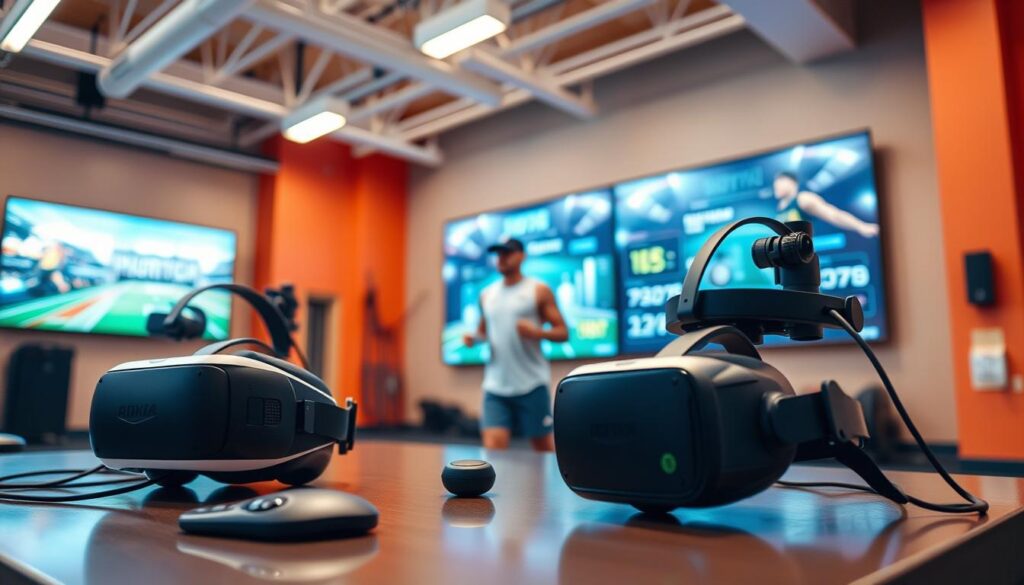
Let’s look at the tech options, from affordable to very expensive. On the budget side, you have smartphone-based systems. For example, the Utopia 360 headset works with an LG smartphone or ColorCross goggles. It’s like the IKEA of VR—functional but not fancy.
Then, there’s the mainstream level. Here, you find well-known brands like HTC Vive, Oculus Rift, and Oculus Go. This is where serious enthusiasts and pro teams usually start. The graphics are good, and you can practice skills without spending too much.
For detailed biomechanical feedback, you need top-tier gear. This includes custom-built, expensive motion-capture systems. You get haptic suits, pressure-sensitive floors, and sensors for precise movements. The computer needed is like a small data center.
Choosing the right equipment isn’t just about money. It depends on what you want to do. A basic headset is great for mental drills. But for detailed analysis of movements, you need advanced, high-fidelity gear.
| System Tier | Example Hardware | Primary Use Case | Approximate Cost Range |
|---|---|---|---|
| Entry-Level / Research | ColorCross Goggles, Standard Screens, Smartphone-based VR | Basic visualization, cognitive studies, accessibility projects | $50 – $300 |
| Consumer / Prosumer | Oculus Go, Oculus Rift DK2, HTC Vive | Skill practice, playbook learning, introductory rehab | $300 – $1,000 |
| Professional / Elite | Custom motion-capture suites, multi-sensor arrays, haptic suits | Biomechanical analysis, advanced rehabilitation, team strategy simulation | $5,000 – $50,000+ |
There’s a big issue often overlooked in tech talks: infrastructure. A kid in a rural area might dream of VR sports training but face a big obstacle without reliable internet and electricity. The gear is useless without these basics.
This creates a “digital moat.” Wealthy programs have access to it. Others are left out. The cost isn’t just the headset but also the tech skills, space, and internet needed. It’s the difference between buying a guitar and becoming Hendrix.
So, what’s the takeaway? Your goal determines your equipment choice. Are you improving your mental game or analyzing a baseball swing? Your goal sets your budget. The VR world’s entry fee grows with your ambition.
The right equipment unlocks VR sports training possibilities. Choose wisely, as your gear shapes your future.
Cost-Benefit Analysis for Teams
The cost of virtual reality athletics isn’t just about the price. It’s like choosing a rookie draft pick. You’re investing in future success, not just today’s performance.
First, let’s look at the cost. VR training starts at $327.78 per person. Traditional methods cost about $229.79. That’s a 40% difference that raises many eyebrows.
But, the cost drops significantly over time. Spread the investment over three years, and it’s just $115.43 per session. This makes VR a valuable tool for endless training scenarios.
Think about the cost of flying your team to practice against a specific defense. VR lets you do this for almost nothing. It changes the math when you consider scale.
Yet, many can’t afford VR. For small schools, poor countries, or tight college budgets, it’s too expensive. This creates an “accessibility paradox,” where the technology could help but is out of reach.
Let’s examine the pros and cons with a general manager’s eye:
| Advantages | Disadvantages |
|---|---|
| Unlimited scenario customization – Practice any situation, anytime | High initial setup costs – Significant upfront investment |
| Dramatically reduced injury risk – Dangerous drills become safe simulations | Technical requirements – Needs specialized equipment and maintenance |
| Time efficiency – More quality reps in less time | Learning curve – Athletes and coaches need training |
| Data-rich feedback – Every movement tracked and analyzed | Accessibility barriers – Out of reach for many programs |
For top teams, VR can save millions by preventing injuries. The ROI goes beyond saving money. It’s about keeping your best players healthy for big games.
VR offers more than just financial benefits. It gives teams time. They can focus on quality training in less time. This means less travel and faster recovery.
Is VR training a smart investment or a luxury? It depends on the team’s budget. For big teams, it’s a no-brainer. For smaller ones, it’s a tough choice.
The future of virtual reality athletics depends on making it more affordable. As costs drop, training could become more accessible. Until then, the debate continues.
Success Stories Across Sports
The proof is in the virtual pudding, and it tastes great for early adopters.
The Dallas Cowboys use VR to improve defensive skills for quarterbacks and defensive backs. Stephen Curry of the Golden State Warriors practices game-winning shots in a virtual hostile arena. Manchester City’s players practice tactical patterns in a perfect simulation of the pitch.
This isn’t science fiction. It’s just another Tuesday.
A 2010 study by Dessing and Craig found elite goalkeepers easily transfer their skills to VR tasks. In 2021, Wood and colleagues discovered professionals excel in VR drills that mimic their sport. The data shows immersive sports learning is effective because it mirrors real game conditions.
These stories are part of an ongoing experiment. They show the power of new tech in sports. The Cowboys aren’t just playing games; they’re improving their reactions. Curry isn’t just shooting hoops; he’s preparing for pressure.
This is the new frontier of immersive sports learning. It’s not about replacing the field. It’s about improving the mind. The victories here are just the beginning. The game is changing, and the rules are being rewritten, one virtual rep at a time.