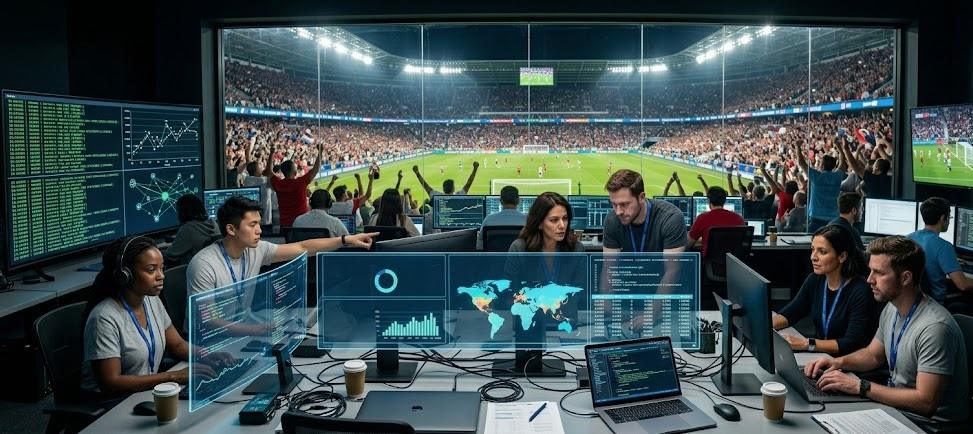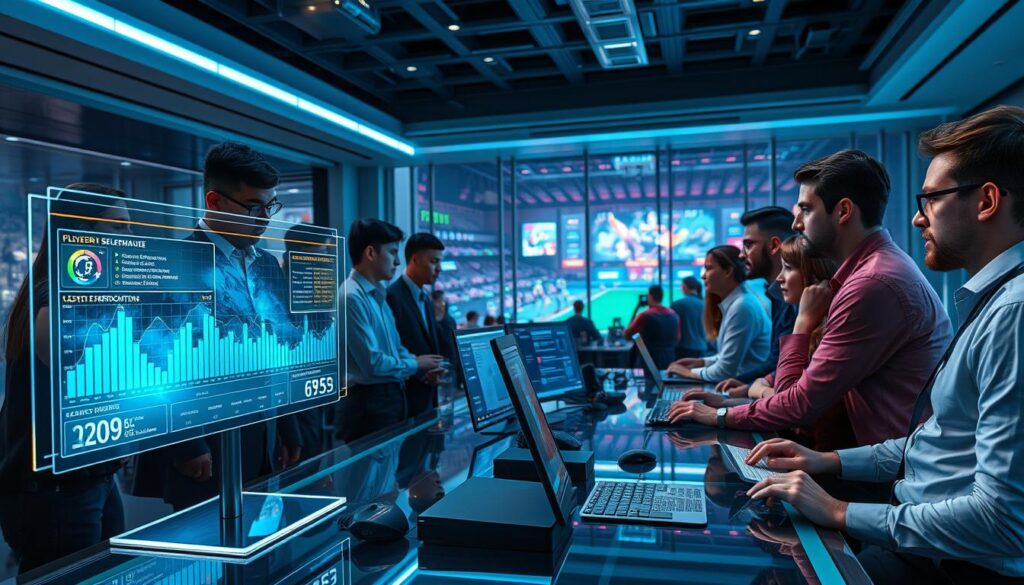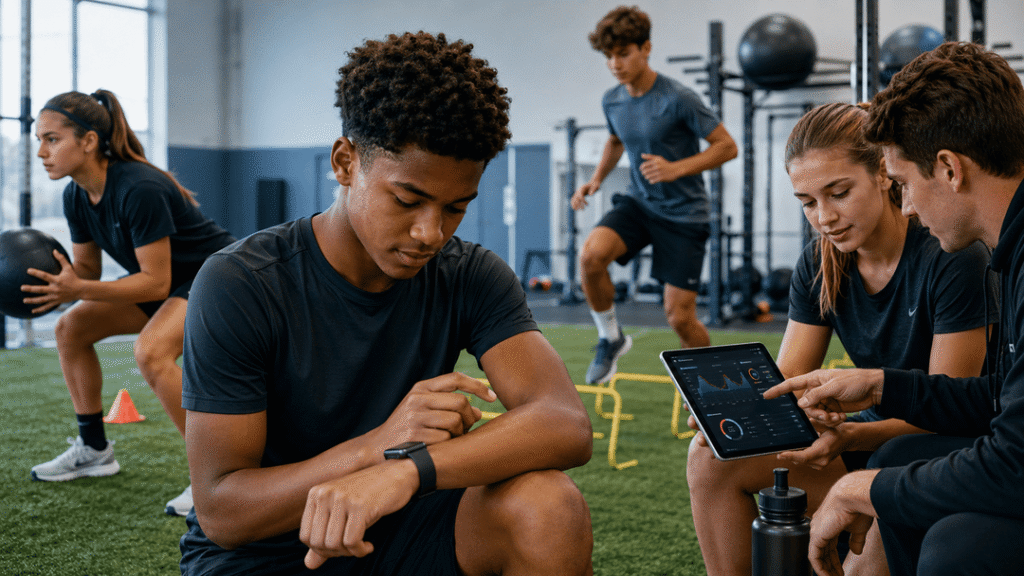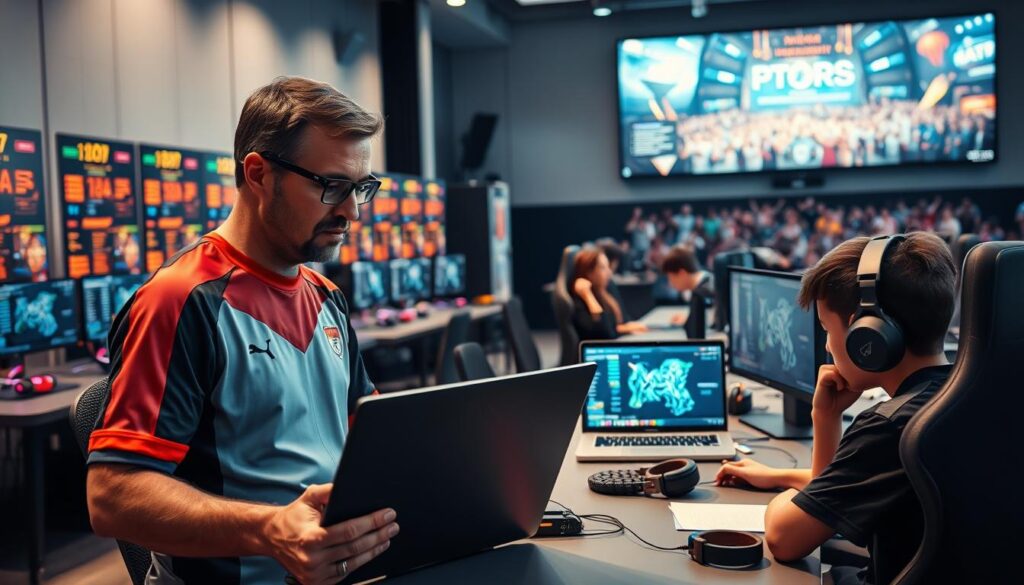
For years, we saw the stadium and the gaming world as two separate places. One was all about physical strength, the other about digital skills. But now, these two are coming together.
Welcome to the phygital frontier. Here, the training methods used for LeBron James are now key for esports stars. I’ve seen this change happen, and it’s a welcome shift.
Think about it. Kids playing basketball get help from coaches and nutritionists. But gamers often train alone. Both are striving for the best. Why did we let this gap exist for so long?
The answer is simple. Whether it’s a game-winning shot in basketball or a key moment in gaming, the principles are the same. You need hard work, strategy, and mental strength. The science of winning doesn’t care about the game’s setting.
This isn’t about making gamers do physical exercises. It’s about understanding that top performance in any field needs the same foundation. The days of talent being isolated are over. The era of esports coaching science has begun.
Performance Analysis in Competitive Gaming
Gaming performance analysis has changed a lot. It’s not just about how many kills you get. Now, it’s about the player’s body signals. High kill-death ratios are not the only measure of success anymore.
Today, champions are judged by more than just numbers. They’re looked at through the lens of biometrics. A missed shot is not just about aim. It’s about how fast your body reacted when your heart rate was high.
Tools like FITGMR app are changing the game. They turn health data into actionable insights. Your Apple Watch data goes straight to your coach’s screen. This means you can see your health status in real-time.
When biometric data meets gameplay footage, the truth comes out. We can see when focus drops, stress affects decisions, and fatigue ruins good plays. It’s like forensic psychology with a game controller.
This approach helps prevent burnout. It makes training smarter and more focused. Long, mindless gaming sessions can harm your career. Analysis shows what skills need work and when to rest.
- Practice with purpose: Find out which skills falter under pressure
- Recovery as strategy: View sleep and nutrition as key resources
- Peak timing: Train hard when you’re at your best
- Burnout radar: Catch fatigue before it turns into a slump
Just copying a pro’s routine without understanding it is like trying to paint the Mona Lisa without knowing the techniques. You admire the art but miss the details. The grind must be smart and strategic.
The new way of analyzing gaming performance is what sets champions apart. It turns feelings into data and talent into a lasting skill. Your body is part of your game. Listen to it.
Physical Health for Esports Athletes
The couch-potato pro gamer is a thing of the past. Now, competitive gaming training focuses on physical conditioning. Gone are the days of pale, junk-food-eating gamers.
Modern esports coaching knows a simple truth: a bad back can lose you a tournament. It’s not about turning gamers into linebackers. It’s about engineering a body for long gaming sessions.
Gaming is not just sitting around. It’s a full-body activity. Your posture and breathing are linked. Your sleep quality affects your reaction time.
Ignoring your physical health is like running a PC on a bad power supply. It will crash at the worst time.
Your physical health is key to your digital performance. Top competitive gaming training programs use wearable tech.
Devices like Apple Watch and Fitbit are more than just step-counters. They monitor your health. The Oura Ring tracks sleep, ensuring you’re ready for the next day.
Physical inactivity hurts your performance and health. Taking breaks is now a must in serious training.
Here’s a simple plan to mix physical health into your gaming:
- Micro-Breaks Every Hour: 5 minutes of stretching or walking to reset posture and circulation.
- Macro-Recovery Daily: 30+ minutes of dedicated cardiovascular or strength activity unrelated to gaming.
- Sleep as a Stat: Track and optimize your sleep with the same rigor you apply to your in-game metrics.
- Nutritional Fueling: Treat food as information for your body, not just comfort during a stream.
This holistic approach helps you become a better athlete. It’s what separates the contenders from the champions in esports.
| Wearable Device | Primary Function for Gamers | Key Metric to Track | Integration Tip |
|---|---|---|---|
| Apple Watch | Activity & Heart Rate Monitoring | Heart Rate Variability (HRV) | Set hourly stand reminders during practice sessions. |
| Fitbit | Sleep & Activity Tracking | Resting Heart Rate | Use sleep stage data to plan next-day training intensity. |
| Oura Ring | Recovery & Readiness Scoring | Sleep Score & Readiness Score | Let your morning readiness score dictate your scrimmage schedule. |
| Whoop Strap | Strain & Recovery Balance | Daily Strain Score | Correlate high-strain gaming days with needed recovery protocols. |
This isn’t just sports science. It’s an evolution. The principles of endurance and recovery apply everywhere, even in gaming.
The best competitive gaming training sees the player as a whole system. Your body, keyboard, and mouse must all work together. Your next win might depend on how well you slept.
Accept the phygital reality. Your biggest gaming upgrade might be a standing desk and an Oura Ring. The path to success is now physical.
Mental Training and Focus Techniques
Mental training in competitive gaming is not about finding peace. It’s about fixing a mind under constant attack. Unlike traditional athletes, esports players face mental fatigue, a silent but deadly foe. Even if your hand is ready, a slow mind can mean defeat.
Esports coaching is more than just telling players to focus. It’s about managing mental load. Coaches teach players to sift through chaos, making sense of cooldowns and positions. It’s about building mental strength, not just quick reflexes.
Managing emotions is key. “Tilt” is not a moral failure but a state of mind, like a tennis player’s nerves. In tennis, you have time to calm down. In esports, like in League of Legends, decisions come fast.
Today’s esports coaching understands this. The FITGMR model and Dr. Kyle Bennett’s “Performance through Health” treat the mind like hardware. Just as you wouldn’t run your GPU too long without cooling, your brain needs care too.
Good sleep is strategic, not just a habit. Skills are solidified during REM sleep, not YouTube marathons. Social isolation is a risk, not dedication. Research shows esports athletes face similar mental challenges as traditional athletes, but in a digital world.
The mental esports coaching toolkit includes:
- Pre-performance routines: Sixty seconds of breathing and visualization before a match can clear your mind.
- Post-loss protocols: A 10-minute reset to separate emotions from analysis. What went wrong technically versus emotionally.
- Cognitive spotlight drills: Training attention like a muscle. Watch VODs and focus on one element at a time.
- Energy management mapping: Track mental fatigue throughout the day. Know when your decision-making drops.
These methods turn tilt into data. A player isn’t “toxic”—they’re experiencing stress and brain fatigue. The fix isn’t a lecture but a reset ritual.
The best esports coaching sees the mind as having specs, just like hardware. Manage these specs with precision. The best plays start with a calm, focused mind.
Team Communication and Strategy
Modern esports coaching has turned team communication into a science. It’s now something you can see on a dashboard. Gone are the days when teamwork was just a buzzword. Today, it’s data points, graphs, and insights.
Ever listened to a pro team’s voice comms during a tournament? It’s not like a conversation. It’s like a neurological event. Callouts fire like synapses, strategies adapt fast, and emotions change like a stock market. It’s not chaos—it’s a special language. The coach’s job is to understand it.
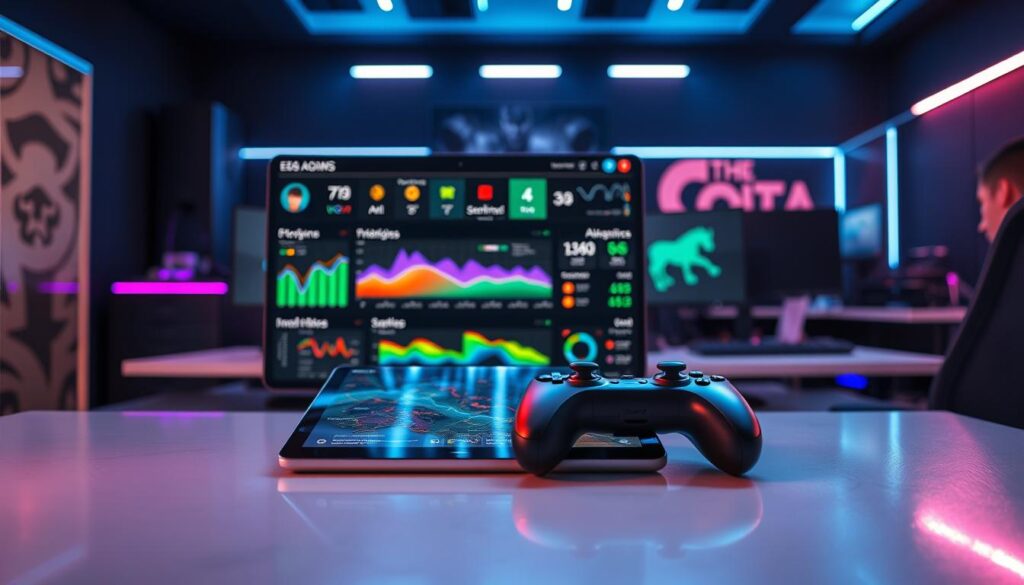
The magic happens in the web dashboard. It’s not just a scoreboard; it’s a social seismograph. Coaches and managers track everything from shot-calling to morale and stress. We’re talking about gaming performance analysis that goes beyond just numbers.
Let me break down what these dashboards actually measure:
- Communication Density: The ratio of useful calls to noise. Too much chatter can be as damaging as radio silence.
- Emotional Contagion: How frustration or positivity spreads through the team voice channel. One tilted player can sink the whole ship.
- Strategic Adherence: Whether players actually follow the called plays or go rogue at critical moments.
- Leadership Authority: Measuring whose calls get followed versus ignored. Sometimes the official shot-caller isn’t the real leader.
This makes the coach a social architect. You’re not just drawing plays. You’re building trust, designing feedback loops, and testing relationships. When a star player goes silent during crunch time, it shows up in the data before it costs you a championship.
The crossover from traditional sports is fascinating. Football coaches have playbooks; esports coaches have communication protocols. Basketball teams run set plays; gaming teams execute strategies with split-second timing. The difference? In esports, the entire strategic landscape can change with a single patch update. Adaptability isn’t just valuable—it’s essential.
This focus on teamwork creates career paths that value soft skills as much as talent. Understanding how esports builds leadership, communication, and collaboration is key for anyone entering this space. The players who rise to captaincy aren’t always the best shooters. They’re the ones who can read their team’s emotions while coordinating complex objectives.
Think about it: what’s more valuable in a clutch moment? A player who hits every shot but communicates poorly, or a slightly less accurate player who perfectly orchestrates the team’s positioning and cooldowns? The dashboard analytics increasingly point to the latter. This represents a fundamental shift in how we evaluate gaming performance analysis.
The technology creates fascinating feedback loops. After a match, coaches don’t just review gameplay footage. They analyze the communication transcript alongside heart rate variability data and in-game decisions. Was that bad call the result of poor information, emotional pressure, or a genuine strategic error? The answer determines whether the fix is tactical, psychological, or social.
This approach turns intuition into evidence. That “gut feeling” that two players don’t trust each other? Now you can see it in their hesitation to follow each other’s calls. The sense that morale is dipping? The voice analysis software detects micro-stresses in vocal patterns before anyone admits to feeling off.
Ultimately, strategy in esports has become a three-layer cake. At the bottom: individual mechanical skill. In the middle: team tactics and map control. At the top: the communication architecture that holds it all together. Most teams focus on the first two layers. Championship teams master all three, using every tool available—including deep gaming performance analysis—to build something greater than the sum of its players.
Technology Stack for Esports Coaching
The modern esports coaching toolkit is like a Silicon Valley startup’s tech stack. It’s far from traditional sports equipment. Today’s coach uses a bespoke digital infrastructure that analyzes data in real-time. This shift changes how we train for competitive gaming.
Lumenalta’s FITGMR platform is a great example. It’s not just an app; it’s a full ecosystem. A mobile app for players and a web dashboard for coaches work together. They use biometric data from wearables. This process is quick and iterative, like a tech startup.
We’re moving into the era of phygital sports. This is where physical and digital worlds meet. Virtual Reality headsets create immersive training scenarios. Motion sensors track player fatigue. Drone racing tests reaction times.
Arena sensors track everything from team positioning to communication. Choosing the right tools is like picking the right telemetry software for a Formula 1 team. The wrong choice can leave you blind. The right one gives you superhuman insight, especially when paired with innovations like advanced broadcasting technology which enhances real-time analysis and performance feedback.
A top-level competitive gaming training stack has a precise architecture. Each layer has a specific role in the athlete’s development.
| Technology Component | Primary Function | Data Output | Integration Level | Example Use Case |
|---|---|---|---|---|
| Biometric Wearables | Monitor physiological stress | Heart rate variability, GSR | High (Direct to coach dashboard) | Identifying tilt moments during high-pressure matches |
| VR Training Simulators | Create adaptive practice environments | Reaction times, decision accuracy | Medium (Separate analysis required) | Practicing uncommon map scenarios or opponent strategies |
| Communication Analytics | Parse team voice comms | Keyword frequency, tone analysis | High (Real-time feedback) | Improving callout efficiency and reducing comms clutter |
| Motion Capture Systems | Track physical posture & movement | Ergonomics score, fatigue indicators | Medium (Post-session review) | Preventing repetitive strain injuries during marathon practice |
| Smart Arena Sensors | Capture spatial team dynamics | Positioning heatmaps, rotation timing | High (Live tactical overlay) | Optimizing team formations and objective control patterns |
Each tool targets a different aspect of performance. Wearables handle the biological, VR the cognitive, and arena sensors the tactical. A complete competitive gaming training program needs all three.
The magic happens in how these tools work together. A player’s heart rate and positioning during a game phase tell a story. This is where platforms like FITGMR shine; they’re built as unified systems.
Adopting this stack requires a mindset shift. Coaches become data conductors, turning information into insights. Players become part of their own biometric story. The training process becomes more scientific.
Does this mean the human element disappears? Absolutely not. The technology shows patterns, but the coach interprets them. The stack provides the “what,” while the coach explains the “why.”
Building your stack isn’t about buying every new gadget. It’s about finding your team’s weaknesses and targeting them. If communication breakdowns are a problem, start with comms analytics. If fatigue is an issue, invest in biometric wearables.
The pace of innovation is fast. Tools evolve quickly, not like old-school sports. The coaches who thrive will treat their technology stack as a living system. They’ll constantly update and integrate new components into their competitive gaming training philosophy.
Data Analytics in Competitive Gaming
The clipboard has been replaced by the dashboard, changing esports coaching into a science. Gone are the days of just yelling “watch the flank!” Today, coaches understand why the flank wasn’t watched. They analyze the player’s performance deeply.
Simple K/D/A spreadsheets are a thing of the past. Today, analytics engines provide a complete view of performance. Coaches look at more than just kills. They analyze everything from heart rate to decision speed.
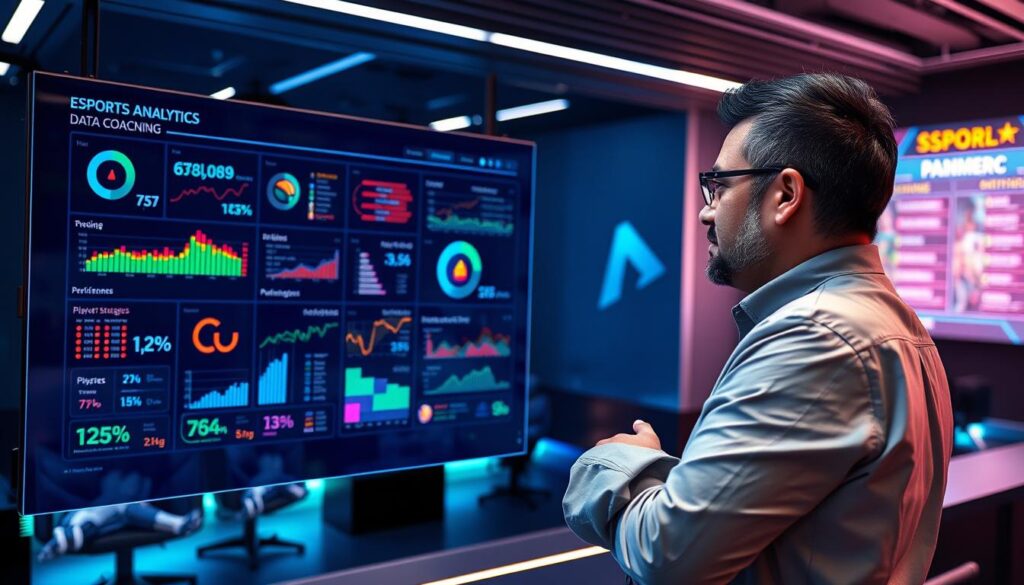
AI-driven sports analytics has changed the game. Coaches now give proactive advice, not just feedback. They might suggest changing practice times or nutrition to improve performance.
The table below shows how analytics give teams an edge. It’s about knowing what will happen, not just what happened.
| Data Type | Traditional Metric | Modern Predictive Insight | Coaching Action |
|---|---|---|---|
| In-Game Performance | Kills, Deaths, Assists (KDA) | Predictive win probability based on early-game resource allocation patterns. | Adjust early-game strategy and resource priorities for specific map setups. |
| Physical Biometrics | Practice hours logged | Correlation between sleep quality scores and afternoon reaction time consistency. | Implement personalized sleep hygiene and warm-up routines to peak for scheduled matches. |
| Behavioral & Cognitive | VOD review notes | Machine learning model identifying patterns in decision-making under high stress. | Design targeted stress-inoculation drills to improve clutch performance. |
| Team Synergy | Win/Loss record | Analysis of comms frequency and sentiment during comebacks vs. collapses. | Refine team communication protocols and leadership triggers during high-pressure moments. |
Data is the new draft pick. The most valuable asset is the team that can best use player data. Coaches now combine statistics, science, and strategy.
This isn’t about replacing instinct with numbers. It’s about using data to enhance instinct. The best esports coaching combines human wisdom with machine learning. Coaches can see a player’s championship chances through a holistic wellness score.
Career Pathways in Esports Coaching
Forget the corporate ladder. A career in esports coaching is more like unlocking a skill-based tech tree in a complex RPG. The traditional “Head Coach” is just the final boss. The real journey is about specializing in branches you never knew existed.
The phygital explosion—where physical athletic science meets digital competition—has spawned roles that would baffle a 20th-century career counselor. This isn’t about waiting for a vacancy. It’s about assembling a unique, hybrid skill set where diverse backgrounds converge on one ultimate goal: superior gaming performance analysis and execution.
- The Sports Scientist (Kinesiology Branch): This isn’t about bench presses. It’s about gamer biomechanics. They analyze posture, repetitive strain risk, reaction time physiology, and optimize nutrition for sustained cognitive focus. Their entire job is a deep, physical layer of gaming performance analysis, treating the player as the ultimate peripheral.
- The Tech Developer (Software Branch): They build the tools. Think UX designers and software engineers creating the coaching dashboards that visualize complex data. They turn raw stats from the previous section into intuitive heatmaps, replay systems, and strategy simulators. If you love code and competition, this is your lane.
- The Event Producer (Logistics & Streaming Branch): This role lives in the hybrid space. They understand arena acoustics and Twitch stream latency. They coordinate live audiences while ensuring the broadcast production captures every critical moment. They make the spectacle happen, both IRL and URL.
- The Analyst Content Creator (Media Branch): Part coach, part storyteller. They break down VODs with the narrative flair of a film critic, explaining strategy and mistake analysis to a fan audience. They turn esports wisdom into engaging tutorials, reviews, and documentaries, mastering the art of communicative gaming performance analysis.
- The Educator/Coach (Direct Impact Branch): The classic path, now supercharged. They synthesize everything—data, sports science, psychology—into direct player development. They are the translators, turning analytics into actionable advice and building team culture.
- The Entrepreneur (Visionary Branch): They see gaps in the ecosystem and build companies to fill them. Maybe it’s a new analytics platform, a specialized training facility, or a consultancy bridging traditional sports teams into esports. This is for the builder who sees the whole map.
Your background is your starting point. A degree in kinesiology, a portfolio in software development, experience in media production—all are valid entry tickets. The pathway isn’t about abandoning what you know. It’s about weaving it into the fabric of competitive gaming.
The most successful figures in this space are hybrids. They speak multiple languages: the language of data, the language of the body, and the language of the game. Your career map is unique. Start at your core skill, and start leveling up.
Traditional Sports Crossover Skills
The next big thing in competitive gaming isn’t just about data. It’s the wisdom from traditional sports. Football coaches have learned what esports is just starting to figure out.
Imagine planning a League of Legends season like a sports season. Building team culture in a virtual space is not new. Traditional sports have already solved these problems through hard work and sacrifice. Dr. Kyle Bennett’s research shows esports can learn from this without the pain.
This crossover isn’t about making gamers run laps. It’s about using sports science to improve gaming. Health is key to peak performance, not a barrier. This changes how we train for competitive gaming.
A good coach brings this knowledge to the digital world. They focus on things like keyboard posture and practice schedules. This mix creates better training programs for gamers.
The future of top competition is a blend of gaming and sports. The timeless skills of sports excellence will guide the next digital athletes. This is the ultimate advantage.