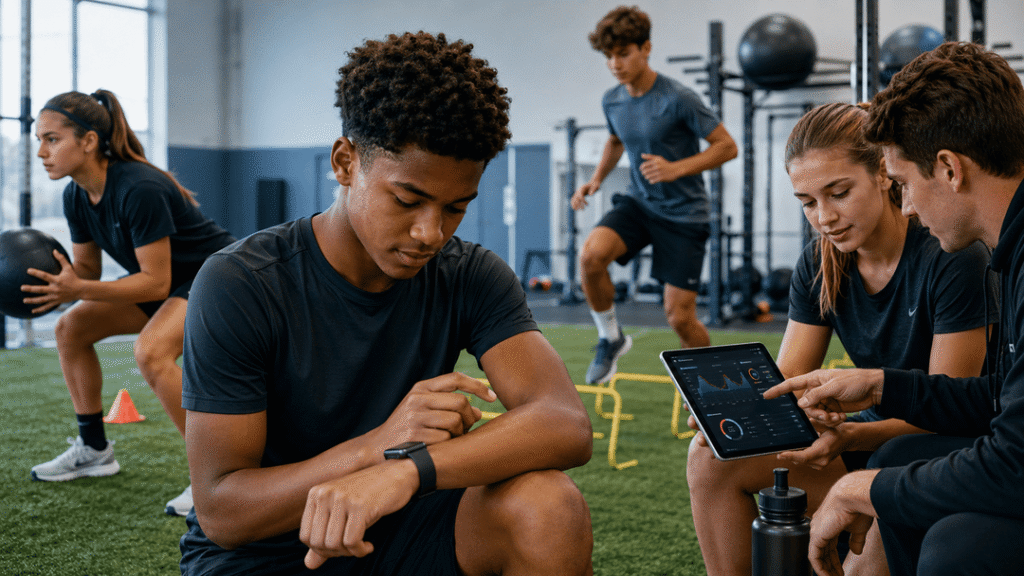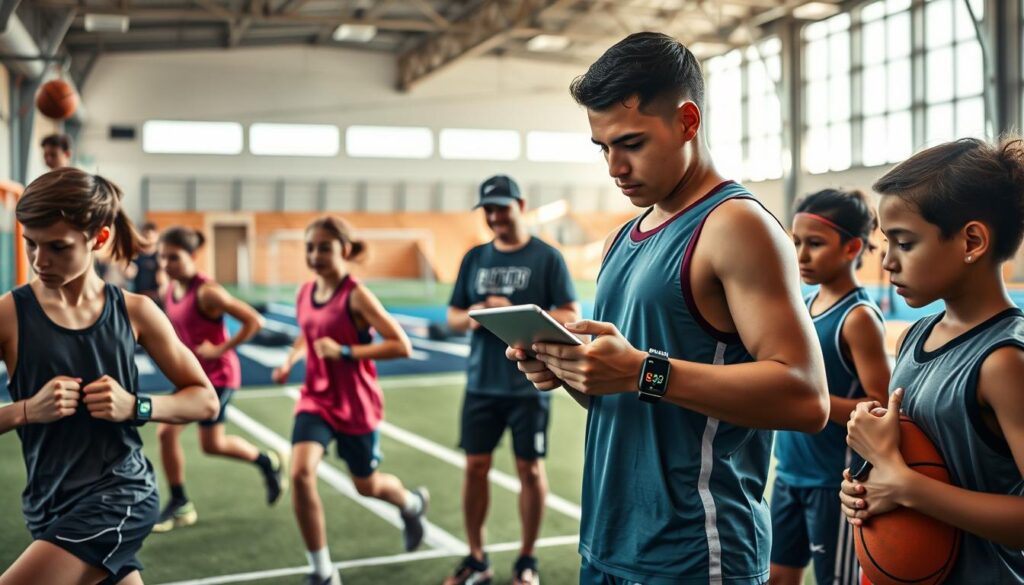
Imagine a mix of Black Mirror and Friday Night Lights. Now, every move of a 14-year-old soccer player is tracked and stored online.
We’ve left behind simple stopwatches. Today, sports wearable devices aim to change the game. But what’s the real price?
This isn’t just about improving a free throw. It’s about creating a digital watchtower on the field. The allure of biometric data meets the fear of constant monitoring.
When does helping a player become spying on a child’s body? Are we making kids into numbers in our search for the ultimate athlete?
Let’s get to the heart of the matter. Buckle up—or should I say, strap on your sensor—for a journey into this ethical maze.
What Wearables Measure
Imagine a sports science lab on your wrist. That’s today’s youth sports wearables. They’ve gone beyond simple pedometers. It’s like Moneyball for athletes, tracking every detail of their performance.
These wearables track athletes in two ways: outside and inside. Outside, IMUs and GPS track movements. They record every detail of a player’s actions.
Inside, sensors monitor heart rate and stress levels. Sweat patches analyze what’s in the sweat. Sleep trackers check how well you rest.
Together, they offer a detailed view of athletes. It shows not just what they do, but how hard it is for them.
| Data Type | What It Measures | Example Metric | What It Tells Coaches |
|---|---|---|---|
| Movement & Location | Speed, distance, acceleration, deceleration, change of direction | Peak Speed (mph), Total Distance (m) | Workload intensity, positioning efficiency, fatigue markers |
| Biomechanics | Body angles, force, rotation, impact | Pitch Arm Speed (rpm), Jump Height (in) | Technique efficiency, injury risk from poor form |
| Cardiovascular | Heart rate, heart rate variability (HRV) | Average HR (bpm), HRV Recovery Score | Aerobic fitness, nervous system stress, recovery status |
| Metabolic & Biochemical | Energy expenditure, sweat composition | Calories Burned, Lactate Threshold | Fueling needs, anaerobic threshold, hydration status |
| Sleep & Recovery | Sleep duration, stages, restlessness | Sleep Efficiency %, Deep Sleep Minutes | Overall readiness, injury susceptibility, cognitive function |
For youth soccer, IMUs track more than distance. They measure peak efforts like ball speed and sprint velocity.
A study found a link between data and how athletes feel. High effort levels were linked to feeling more intense and happy. It shows how data can predict emotions.
This constant monitoring creates a digital twin of athletes. It’s always improving. But it also changes how we coach. We now manage their data as much as their performance.
Consent and Parental Involvement
The real issue with privacy wearables isn’t the technology. It’s the way we get permission to use it. We’re talking about informed consent. In theory, it’s a sacred promise. In reality, it’s often a lost permission slip in a backpack.
The European GDPR is a model to follow. It demands clear consent and protects data. But in American high schools, the process is unclear. Consent is often hidden in a sports form. It’s hard to understand the fine print.
Can a 16-year-old really give informed consent? Or do they agree because they have to? The power balance changes when data is involved. “The tracker says you’re not working hard” is hard to argue against.
Who owns the data? The athlete? The parent? The club? The tech platform? With privacy wearables, it’s unclear. This isn’t just about privacy policies. It’s about who has the power.
| Consent Dimension | GDPR Ideal | Common US Practice |
|---|---|---|
| Clarity & Specificity | Explicit, purpose-driven forms separate from other agreements. | Often buried in general participation waivers; broad, vague language. |
| Data Anonymization | Required for research; identities protected by design. | Rarely guaranteed; data often tied directly to the individual athlete. |
| Defined Purpose & Duration | Clear use case stated; data deleted after the defined period. | Open-ended; data may be stored indefinitely for unspecified “team improvement.” |
| Access & Control | Rights to access, correct, and request deletion of data. | Access typically controlled by coaches/administrators; deletion rights unclear. |
The table shows what questions to ask. An active data steward doesn’t just sign. They ask questions. Who has access? How long is it stored? Is it for scholarship or surveillance? The goal is to respect the young athlete, not just their performance.
Benefits for Young Athletes
Sports wearable devices give young athletes superpowers when used right. It’s not about making kids robots. It’s about giving them knowledge. It’s like having a physics tutor for a young pitcher or a biomechanist for a teen runner.
These gadgets can predict injuries before they happen. They spot unusual patterns that might lead to stress fractures. This isn’t science fiction; it’s real training.
Devices provide instant, accurate feedback. They can point out bad gait or risky landings right away. It’s like having a patient, never-tired tutor. This feedback lets kids improve their skills quickly.
Motivation gets a boost from technology, too. Studies show happiness can make us faster. When kids see their data match their success, it’s a big motivator. Sharing this data can also help teams work better together.
This tech is also fair for everyone. Not all kids can get top coaching. Wearables offer insights that were once only for the elite. They help tailor training to fit each kid’s needs, preventing burnout.
Used right, this technology empowers young athletes. It teaches them to see their bodies as complex systems. This education lasts a lifetime.
Risks: Data, Surveillance, Pressure
The data from wearables isn’t just helpful; it’s a form of surveillance and pressure. It creates a permanent digital shadow when we track youth athletes. This isn’t just about getting insights; it’s about creating a detailed digital record.
First, think about the surveillance aspect. That simple GPS pod or heart rate monitor does more than track laps. It records every move, creating a detailed, corporate-level record of a kid’s life. This data isn’t just for the coach; it’s for others too. Where does it go? Who owns it? Could it be sold to colleges or companies later?
Then, there’s the mental impact. When a young athlete’s value is measured by numbers, it can be stressful. A bad day can feel like a failure. This constant checking can lead to perfectionism and fear of not meeting expectations.
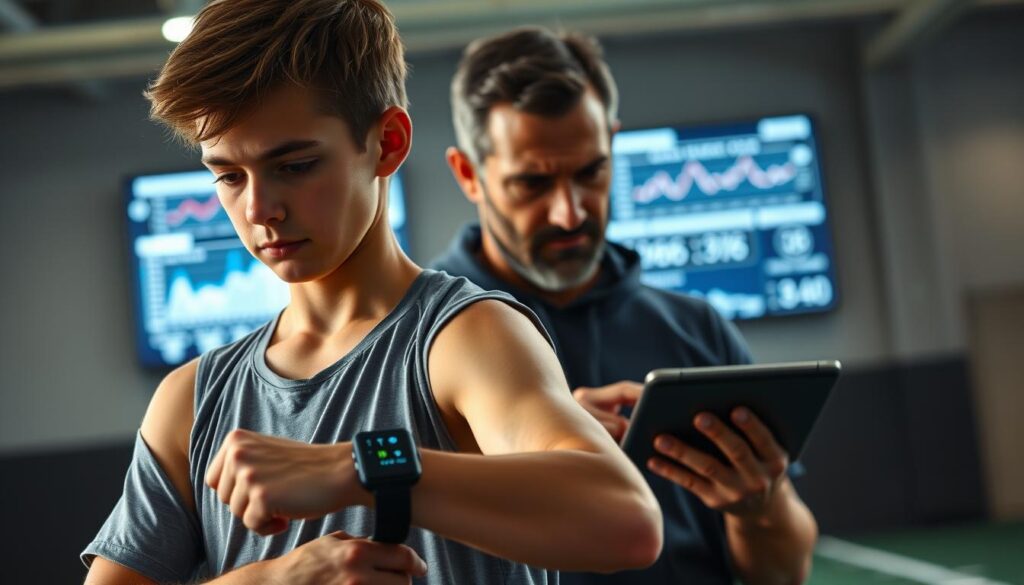
The mental risks aren’t the only ones. Take the Acute-Chronic Workload Ratio (ACWR) model, used to predict injury risk. It seems scientific but is fragile. A spike in training might be linked to injury, but it doesn’t prove cause and effect. Coaches might push kids too hard based on flawed data.
This mix of data, surveillance, and pressure turns athletes into data points. The athlete’s self is tied to their metrics. The joy of sports—the mud, laughter, and spontaneity—is lost in cold, hard data. It’s the ultimate way to sell out childhood athletic joy.
So, while tech promises better training, it has a dark side. It’s like Big Brother and Black Mirror combined. The tool is powerful, but using it wisely is even more important.
How Teams and Leagues Should Respond
If youth sports leagues want to avoid a PR nightmare and a legal headache, they need to move from ad-hoc tech use to a formal digital constitution. You can’t just wing this. The response must be structured, transparent, and put the young athlete’s well-being ahead of competitive advantage.
The first and non-negotiable play is drafting a Digital Bill of Rights for Young Athletes. This document mandates a formal “privacy wearables” protocol. It clearly states that data ownership rests solely with the athlete and their family—not the club, not the app developer. It sets strict limits on how long data is stored. Most importantly, it includes an ironclad ban on selling or sharing biometric data for commercial purposes.
Second, adopt what I call the “medical model” of data handling. A kid’s heart rate variability isn’t just a number; it’s a piece of their health record. Treat it like one. This means tiered access controls—the coach doesn’t need to see everything—and establishing ethical review boards for any research use. This aligns with modern frameworks that prioritize informed consent and data anonymization.
Third, education is the great diffuser of pressure. We need a three-pronged approach:
- Coaches: Trained to interpret data as a guide, not gospel. A low sleep score is a conversation starter, not a punishment.
- Parents: Offered seminars to cut through the marketing hype and understand what the tech actually measures.
- Athletes: Taught data literacy. They should learn to read their own metrics as feedback, not as a final judgment of their worth.
Lastly, the tech itself must evolve. Relying on one-size-fits-all metrics like the Acute Chronic Workload Ratio (ACWR) is outdated. The smart move is to invest in—or demand—context-aware algorithms. These consider age, gender, specific position, and even psychological readiness. The goal shifts from simple optimization to ethical optimization.
So, what does this proactive governance look like in practice? Let’s compare the old way with the necessary new way.
| Governance Aspect | Reactive (Current) Approach | Proactive (Recommended) Approach |
|---|---|---|
| Data Policy | Vague terms of service; data owned by the platform; indefinite retention. | Digital Bill of Rights; athlete-owned data; clear retention limits; a true privacy wearables standard. |
| Coach Training | Tool-focused: “Here’s how the app works.” | Ethics-focused: “Here’s how to use data to support, not stress, the athlete.” |
| Metric Use | Generic load monitoring (e.g., ACWR) applied to everyone. | Sport- and position-specific models that account for individual context and development. |
| Legal Foundation | Assuming compliance is the app developer’s problem. | Active GDPR-style compliance; treating athlete biometrics as protected health information. |
The bottom line? The league that gets this right won’t just be protecting kids. It will be building a sustainable, trusted model for the future of sport. That’s a championship-winning strategy.
Comparison: Best Practices
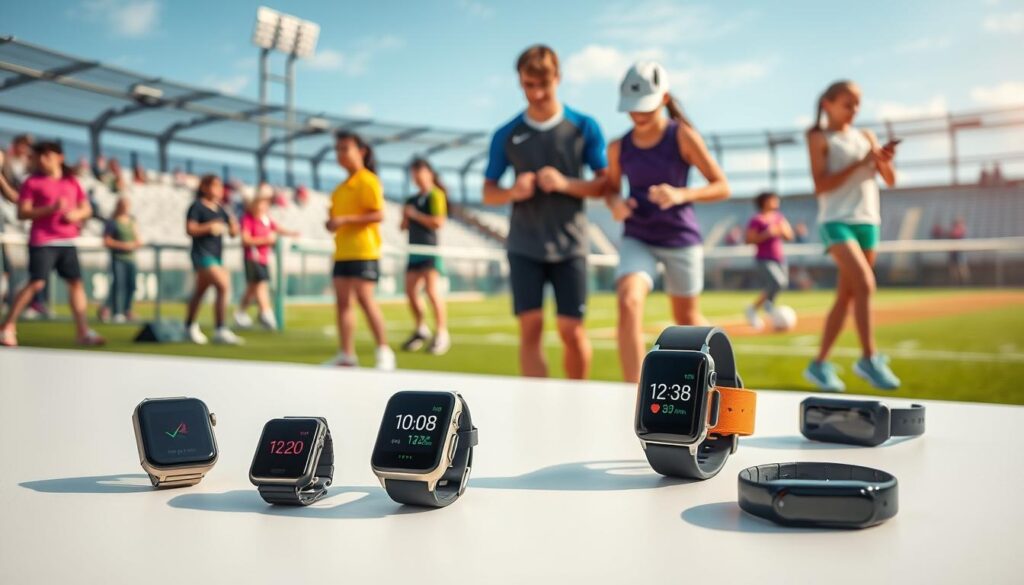
The best way to monitor athletes isn’t just one device. It’s about being specific, getting consent, and controlling data access. It’s like a chef choosing the right knife for the job. The right sports wearable devices are chosen for their specific task.
| Technology | Primary Use Case | Key Limitation |
|---|---|---|
| GPS | Tracking distance, speed, and workload in open-field sports (soccer, football WRs). | Nearly useless for confined, static positions (e.g., football linemen). |
| EMG (Electromyography) | Analyzing muscle activation and technique (swimmer’s stroke, pitcher’s throw). | Intrusive; better for lab-like skill analysis than daily training. |
| ECG/HRV | Monitoring cardiovascular strain and recovery readiness (runners, all athletes). | Shows the “what” of stress, not the “why” (biomechanical vs. psychological). |
The NFL uses RFID chips for sabermetrics. They figure out if a cornerback took the right angle. The NBA uses accelerometers to see the toll of jumps. MLS and European soccer clubs use GPS vests to manage team load.
But youth sports are different. A study on young female soccer players used insoles. They looked at footwork and ball speed, and the player’s mental state. This is a unique approach.
The key is to use the right tool for the job. Forcing a lineman into a GPS model made for a wide receiver is wrong. The best approach is to have a tiered system. Basic health metrics like sleep and resting heart rate are for everyone. It’s about athlete welfare.
Advanced biomechanical data is for specific use. It needs consent and is for skill development. It should never be used to criticize a kid. The real goal is to help the athlete, not just collect data.
Future Trends
Forget clunky wristbands; the next wave of tracking youth athletes will be woven into their jerseys and skin. We’re not just adding more gadgets. We’re entering an era where tech aims to vanish.
Imagine smart compression shirts that read muscle oxygenation in real-time. Think about epidermal patches, like high-tech temporary tattoos, that monitor cortisol levels. The tech is shifting from what you wear to what you are wearing. Even the sensors are getting a makeover, with research into triboelectric nanogenerators (TENGs) that harvest energy from movement to power themselves. It’s all moving toward passive, holistic data collection.
This isn’t just about collecting more numbers. It’s about smarter interpretation. The future points to integrated multivariate models that look at the whole athlete. It goes beyond simple workload ratios. An AI coach could analyze your form, fatigue, and stress hormone data, then whisper a form correction into your earpiece mid-drill. The line between athlete and algorithm gets blurry.
But let’s be clear: the ethical stakes are about to level up. With this depth of intimate data, what’s next? Will genetic performance predictors get linked to your wearable profile? Could an insurance company one day demand access to your child’s lifelong biomechanical record? We’re flirting with total biometrification—the reduction of a person to a stream of optimizable data points.
Our current ethical frameworks look like dial-up internet in the age of 5G. The core question becomes: who does this data truly serve? The trend is undeniable. The technology will push for total optimization, especially as systems expand across competitive pipelines like global youth football academies. But the human cost of that push is what we must measure.
The principle must be non-negotiable. The data must serve the kid, not the system. The young athlete is a person to be developed, not a machine to be fine-tuned. Future-proofing ethics means building guardrails now for technologies that feel like science fiction. This way, we’re not just writing a minority report for youth sports.
Takeaways
The debate isn’t about banning wearables. It’s about who controls the data. Wearables show us our true priorities with clear data.
Data helps, but it doesn’t decide everything. A heart rate graph shows a moment, not a person’s soul. Sprint speed measures speed, not spirit. The most important thing is the joy and well-being of young athletes, which can’t be measured.
The right path is clear, but we keep missing it. We should focus on the whole child, not just their performance. We need strong privacy rules for wearables and to teach everyone that more data doesn’t mean better coaching.
We’re not making robots for the best performance. We’re helping human athletes grow. Our goal is to make athletes healthier and more resilient, not just efficient.
Let’s use this tool wisely. We should aim to build better athletes. But first, let’s protect the kids behind the numbers. The future of youth sports depends on getting this right.