Remember the invincible competitor? That image is now as old as a cassette tape. Icons like Simone Biles and Michael Phelps are changing the game by sharing their mental struggles. They’re not just making headlines; they’re rewriting the playbook on performance.
For today’s young athletes, the competition is intense. The pressure of rivalry meets the constant buzz of social media. This creates a strange, digital loneliness. It’s a paradox: being hyper-connected yet feeling deeply isolated.
But here’s the twist. What if the devices that cause stress can also help build unshakeable resilience? This isn’t just about suggesting a meditation app.
We’re talking about a big change. It’s about making mental health analysis as common as reviewing game footage. The future isn’t about being tough; it’s about using technology to support mental health. Understanding the mind is the ultimate competitive edge.
Mental Health Challenges in Youth Sports
The scoreboard is the least of their worries. Today’s young athletes face a triple threat of stressors. These include physical, academic, and digital pressures that old coaching manuals didn’t prepare them for. It’s not just about pre-game jitters. It’s a constant pressure cooker where the game never stops.
Let’s talk about the classic grind. Source 3 shows how elite sports culture pushes kids to prove themselves from a young age. Financial worries and job instability based on weekend games are real for kids. The old way was about “pushing through the pain.” But now, we ask, “At what cost to the human operating the machine?”
Then, there’s the 21st-century barrage. Athletes are judged not just on the field but also on social media. Every post is a highlight reel. The fear of missing out (FoMO) leads to phubbing, hurting team bonds. Your online identity can feel like it’s disappearing into likes and comments.
Research like Source 1 helps diagnose these challenges. For sports education students, intense competition is real. It’s about abnormal training, balancing sport and study, and disrupted sleep. These factors can lead to depression. The body and mind pay the price.
The interaction is brutal. Training load, academic demands, job anxiety, and digital pressure lead to burnout. It’s not about being “soft.” It’s about our bodies and minds reaching their limits. The grind costs us in mental health.
| Stressor Type | Traditional Manifestation | 21st-Century Amplifier | Impact on Wellbeing |
|---|---|---|---|
| Competitive Pressure | Winning games, making the team. | Social media scrutiny, “prove yourself” culture from youth. | Chronic anxiety, identity tied solely to performance. |
| Academic Load | Maintaining grades to stay eligible. | Balancing full-course loads with professional-level training schedules. | Cognitive exhaustion, sleep deprivation, plummeting motivation. |
| Social & Identity | Team dynamics, peer acceptance. | Phubbing, curated online personas, erosion of offline self. | Isolation, FoMO, difficulty forming genuine connections. |
| Physical Demand | Hard practices, injury recovery. | Year-round specialization, abnormal training duration with no off-season. | Overtraining syndrome, chronic fatigue, heightened injury risk. |
So, where do our young athletes stand? They’re caught between a rock and a hard place, with a smartphone always by their side. Recognizing these challenges is key. The next step is finding tools like sports wellbeing apps for this new reality. These apps are not a magic solution but a vital part of modern support. The game has changed, and so must our support.
Tech Solutions: Apps, Chats, and Online Resources
Smartphones are not the enemy. In the right hands, they’re powerful tools for mental training. Studies show that knowing how to use tech well is linked to better mental health.
They also help fight feelings of loneliness. This is where digital support for youth athletes really helps.
We shouldn’t avoid technology. It’s like refusing a GPS because maps worked for your granddad. The goal is to learn to use it wisely, not to fear it.

Think of building a tech ecosystem for mental health. This ecosystem has three main parts:
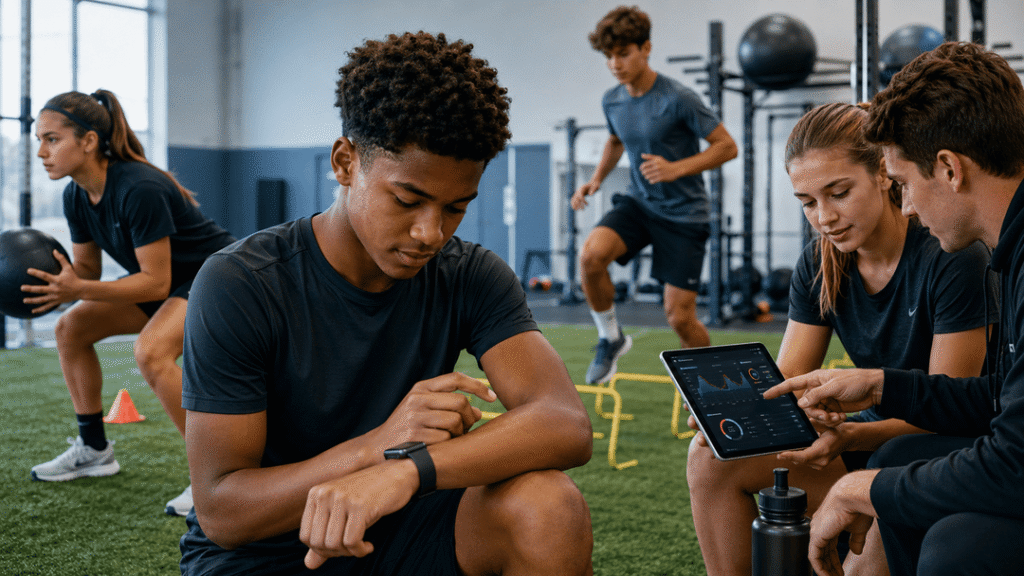
- The Daily Training Apps: This is the base. Apps like Headspace help with focus and mental images. Wearables track your body’s state, helping prevent burnout. It turns a phone into a tool for digital support.
- The Chat-Based Safety Net: For when stress hits, quick connection is key. This part offers fast, often anonymous, digital support. It connects athletes to counselors for help anytime.
- The Proactive Data Frontier: This is the latest, using IoT and data mining. It looks at data like sleep and social activity to spot trends. It suggests help before problems get big.
The second tier has grown fast. The pandemic made online therapy and online resources more common than ever.
The third tier is not far off. It uses data to understand and help, not just ask how you’re feeling. This is a new way of digital support.
The aim of all this digital support is not to make people addicted to screens. It’s to give youth the tools they need. It turns their devices into helpers for staying strong, focused, and recovering.
Peer Support and Team Communication
What if a device that distracts could also bring a team closer? The classic sports movie idea of a team as family gets a digital twist. Now, team unity is built in group chats, not just in the gym.
An athlete’s phone is a double-edged sword. It can offer support or spread negativity. This is where mental health tech comes in. It helps create positive communication.
Phubbing, or ignoring people for your phone, is a big problem. It leads to conflict and isolation in teams. It quietly breaks down the trust you work hard to build. The device meant to connect us becomes a divider.
The answer isn’t to get rid of phones. It’s to use them for good. Now, there are platforms for team support. They include tools for checking in on mental health, just like tracking physical performance.
This tech change is huge. It helps remove stigma. When a team leader shares their anxiety, it encourages others to do the same. It makes the whole team feel safe to open up.
Athletes love routine and structure. Mental health tech offers a way to communicate without pressure. It’s not a replacement for face-to-face talks. It’s a reliable way to support each other.
The aim is to use tech to strengthen the team, not to hide from it. By making supportive communication a part of daily life, we can build a stronger team bond.
Real Athletes Share Their Experiences
The most compelling stories in sports psychology come from the Olympic Village. Stars like Naomi Osaka and Michael Phelps share their mental health journeys. They’re not just talking; they’re changing the game.
Osaka’s choice to skip press conferences at the French Open was a bold move. It showed her commitment to her wellbeing over media pressure. Her decision has inspired many to prioritize self-care in their busy lives.
Phelps has been open about feeling lost after competitions. His honesty has shifted the focus from “what’s next?” to “how to rebuild?” His openness has made him a role model for many.
Simone Biles’ struggles with “twisties” in Tokyo were a turning point. She showed that even the greatest athletes have limits. Her story has helped normalize mental health discussions.
These athletes aren’t just talking; they’re reviewing the tools. They endorse sports wellbeing apps and talk about teletherapy. Their endorsements carry more weight than any review.
This feedback is changing the market. The table below shows how athletes use technology for mental fitness. It’s not about endorsements for money. It’s real feedback from the athletes themselves.
| Athlete | Primary Challenge | Tech Tool / Approach | Reported Impact |
|---|---|---|---|
| Naomi Osaka (Tennis) | Performance Anxiety & Media Pressure | Meditation apps, selective media engagement | Improved focus, regained control over environment |
| Michael Phelps (Swimming) | Post-Career Transition & Depression | Teletherapy, mindfulness apps for routine | Better emotional regulation, new purpose advocacy |
| Simone Biles (Gymnastics) | Pressure, Perfectionism & “The Twisties” | Mental health days, peer support networks | Preserved long-term career, sparked global conversation |
| Collegiate Runner (Anonymous) | Burnout & Identity Crisis | Journaling app, team-based wellbeing platform | Reduced isolation, found balance beyond sport |
The data shows that sports wellbeing apps are being tested at the top levels. Their stories are real and help others see the value in mental health tools. This validation is key for young athletes who might see therapy as a weakness.
The strongest statement in sports today isn’t about winning. It’s about being open about using tools for mental health. Champions saying they use apps for anxiety does more for mental fitness than any ad could.
Preventative Support
The real game-changer in digital support youth isn’t just another hotline. It’s a system that finds problems before they happen. We’re moving from just fixing things after they break to preventing them from breaking in the first place.
This shift is like changing from treating a sprain to training the ankle to avoid sprains. We’re not just managing mental illness anymore. We’re building mental strength from the start.
Research, like the GA-RF psychological state perception model, shows us the way forward. It’s not about watching everyone all the time. It’s about smartly analyzing a student-athlete’s digital life—like their sleep, study habits, and where they go online.
By setting a baseline, the algorithm can spot when things are off. If a student is spending less time in the library but more time online at night, it’s a sign. This isn’t about spying. It’s like a digital check-engine light that warns us before things get bad.
Now, let’s talk about how this works in real life. Imagine a smartwatch that suggests breathing exercises when it senses stress. Or educational programs that teach mental skills like focus and resilience right alongside sports training.
This approach makes mental health as important as physical training. It’s like preventing ACL injuries with mental strength. The tools are like silent guardians, and the data is the new coach for mental well-being.
The goal is to create a place where mental health is always a priority. It’s not just about fixing problems when they arise. It’s about building strong mental health from the beginning.
Parent and Coach Tips
Think of your smartphone as a high-tech clipboard for the field. It’s not a distraction, but a tool for learning plays. You’re the coach, and your playbook has just gotten a big update.
First, learn to use your phone well. You can’t help an athlete if you don’t know how to use digital tools. It’s not about coding, but knowing how to use apps wisely. This helps you and your athlete stay focused and calm.
Next, make mental health tech a key part of training. Make sure the team uses mindfulness apps as much as they watch game footage. This helps the athlete recover and grow, building positive mental resilience that translates directly into performance under pressure.

Parents, it’s time to change how you handle screen time. Instead of just saying no, choose the right apps for your kids. Make sure their phone is filled with apps that help them grow, not apps that make them feel bad.
Also, listen to what the data says. If a school’s wellness app notices something off, don’t worry. Use it to help your child. You’re not just spotting problems; you’re helping solve them.
So, your best tool is your own good judgment. Use technology to guide you, but always think for yourself. This is how you help your athlete’s mind grow strong.
Conclusion
The final score isn’t just about points on a board. It’s about the mental ledger. We’ve moved from ignoring the whispers in an athlete’s head to amplifying them with technology. This is the era of integrated digital support youth programs.
The data is in. Cultural shifts demand we listen. Empirical evidence proves digital tools work. Advanced analytics from models like GA-RF offer a crystal ball for preventative care. This convergence isn’t science fiction. It’s the new playbook.
Modern sports wellbeing apps are the new first-aid kit. They provide immediate, personalized care. This digital support youth athletes receive transforms vague anxiety into actionable insight. Think of these apps as a 24/7 training partner for the mind.
The goal was never to replace the human touch. It’s to augment it. To give coaches, parents, and the athletes themselves a sharper lens. The right sports wellbeing apps turn data into dialogue.
The whistle blows on the old way of thinking. The future of youth sports is integrated, data-empowered, and relentlessly human. That’s a victory worth celebrating.