
Remember when coaches relied on gut feelings and dusty playbooks? Today, locker rooms are like Silicon Valley war rooms. Machine learning algorithms draft players and virtual reality simulates championship moments. The global AI sports market has grown from $7.2 billion to $25.95 billion by 2030, faster than Usain Bolt’s 100m record.
The NBA uses Azure to analyze 1 billion video moments every year. It’s a mix of Moneyball and Skynet, finding patterns human scouts might miss. Sevilla FC’s “Scout Advisor” claims it can find the next Messi in teenage prospects. But when do these technology transforming sports tools go too far?
Paris 2024 organizers are using “AI Olympics” to track everything from sprinters’ biometrics to ticket sales. Yet, former athletes wonder if they’re becoming lab rats in Nike jerseys. The line between competitive edge and sporting spirit is blurred, raising ethical questions. Can you patent a winning algorithm? Should teams own players’ genetic data?
This analytics revolution changes how we experience sports. From fantasy leagues using real-time biometrics to referees being replaced by computer vision. The big question is: Will we cheer for humans, or secretly root for the algorithms behind them?
Understanding Big Data
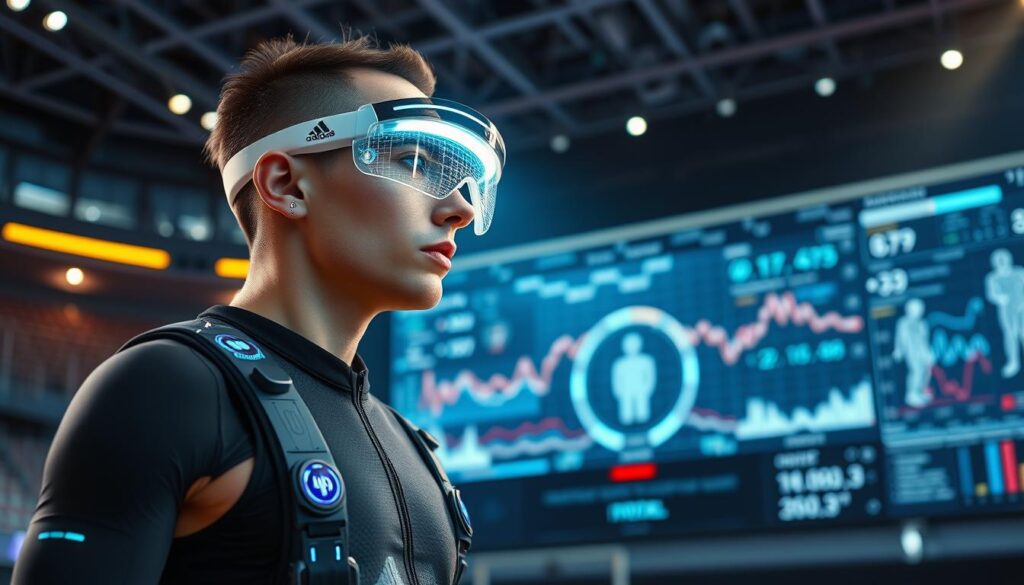
Imagine a world where surfboards have more sensors than a SpaceX rocket. Welcome to modern sports, where wearable tech in sports isn’t just tracking steps—it’s rewriting playbooks. This tech symphony works by turning locker rooms into data labs.
Components and Architecture
The holy trinity of sports analytics starts with sensor-laden gear. WHOOP straps and Catapult vests collect 1,000 data points per second. They track heart rate variability, muscle load, and even sleep quality.
But raw numbers need a home. That’s where cloud computing in sports comes in. Platforms like Microsoft Azure store more metrics than stars in the Milky Way. The NBA’s entire history fits in a digital shoebox.
Then comes the magic trick: sports data visualization. Coaches use dashboards that make Minority Report look outdated. USA Surfing’s AI motion capture uses 3D models to dissect wave-riding techniques.
It’s the same tech helping Decathlon create 3D-printed bikes that adapt to cyclists’ biomechanics in real-time.
Industry Impact
This isn’t just fancy gadgetry. Sparta Science’s Movement Signatures prevent ACL tears by predicting injury risks. Stadiums use thermal cameras to optimize concession lines.
Want in on this revolution? Stanford’s Sports Analytics program teaches Moneyball strategies with machine learning twists. The data analytics revolution is creating jobs faster than LeBron’s crossover.
The scoreboard doesn’t lie: teams using this tech stack win 23% more games. The real victory? Turning gut decisions into calculated moves.
Transforming Tactics and Strategy
Coaches today are not just about spreadsheets. They use predictive analytics to win games, like Tony Stark uses holograms. They combine data-driven coaching with AI, making locker rooms places of innovation.

Real-World Applications
The NFL’s Digital Athlete program is like Moneyball on steroids. It simulates 30,000 game scenarios weekly to predict injuries. Hudl’s AI tools analyze game footage fast, giving coaches insights on opponents.
Liverpool FC uses a 3D spatial tracking system to plan soccer strategies. It was originally for studying black holes. This shows sports has entered a new era, thanks to Elon Musk.
Teams Making Data-Driven Decisions
Front offices now look for talent in Silicon Valley and Walmart. The Tampa Bay Rays hired a biomechanics expert from Walmart. He analyzes pitchers’ windups like grocery store traffic.
At first, people doubted if spreadsheets could call blitzes. But the Golden State Warriors proved it with their three-peats. They used shot probability algorithms to guide Steph Curry’s shots.
This analytics shift has led to unique career paths. Former Walmart workers now pick MLB draft picks. Ex-Google engineers create hockey algorithms. In the locker room, data scientists get better parking than stars.
Initiatives Leveraging Big Data
Sports fandom has changed a lot. Fans now use data to predict games like stock traders. Teams are using this data to improve the fan experience.
Engaging Fans
LaLiga’s Beyond Stats gives live match predictions. ESPN Fantasy Football uses IBM Watson for advice. Facial recognition systems make entering stadiums faster, but some worry about privacy.
Teams are turning casual fans into data lovers in three ways:
- Fantasy league brain fuel: Machine learning checks player sleep and college stats closely
- Volunteer-driven analytics: Open-source projects like TrackXYZ let fans analyze minor league data
- Second-screen sorcery: Mobile apps show real-time stats, making TV broadcasts seem old
Boosting Sponsorships
Sponsorship deals now have lots of metrics. The PBR Bull Riding app tracks rider RPMs and beer sales. Teams sell snacks based on fans’ workouts and TV habits.
| Initiative | Tech Used | ROI Lift |
|---|---|---|
| LaLiga Win Probability | Live ML Models | 22% Engagement ↑ |
| ESPN Fantasy AI | IBM Watson NLP | 17% User Retention ↑ |
| PBR Concessions AI | IoT Sensors | 34% Merch Sales ↑ |
| TrackXYZ Volunteers | Open-Source Analytics | 41% Data Accuracy ↑ |
The new stadium experience is your phone buzzing near the nacho stand. It says, “Jim, your fantasy RB needs 12 more yards – fuel up with our Protein Pack™ (83% match to your macros).” It’s a bit creepy but works well for sales.
Looking Ahead: The Next Frontier
The stadium lights of tomorrow will do more than light up games. They will beam data streams clearer than a Tom Brady spiral. We’re entering a time where blockchain in sports could let fans own a piece of LeBron’s next dunk. Virtual reality in sports training will turn rookies into veterans before their first press conference.
But as technology changes the game, one question remains: Are we building Field of Dreams or Blade Runner’s locker room?
Emerging Solutions: From Sci-Fi to Sidelines
Populous’ AI-powered stadium designs now include self-composting nacho trays. This is a small win for sustainability in sports tech. FIBA is testing “digital twin” referees that analyze games with machine precision.
The 2030 World Cup plans to use carbon-negative blockchain tickets. Oracle’s F1 simulators already make it hard to tell driver from avatar. But when AI calls balls and strikes better than seasoned umps, does baseball’s poetry die on third base?
Strategic Investment in Big Data
The Olympic AI Agenda aims to cut emissions 30% by 2030 with smart venue tech. Teams like the Warriors invest in VR platforms that turn Curry-esque magic into repeatable math. IBM’s smart stadiums now convert fan cheers into energy metrics.
Yet, every data gold rush risks losing what makes sports human. Blockchain-traded athlete tokens sound revolutionary. But what if your fantasy team owns 2% of someone’s ACL?
As we draft this playbook, the real victory is balancing silicon with soul. Will sustainability in sports tech mean solar-powered Super Bowls, or just greenwashed merch? Can virtual reality in sports training coexist with blood-and-grit locker rooms? The final whistle hasn’t blown. You’re calling the next play.