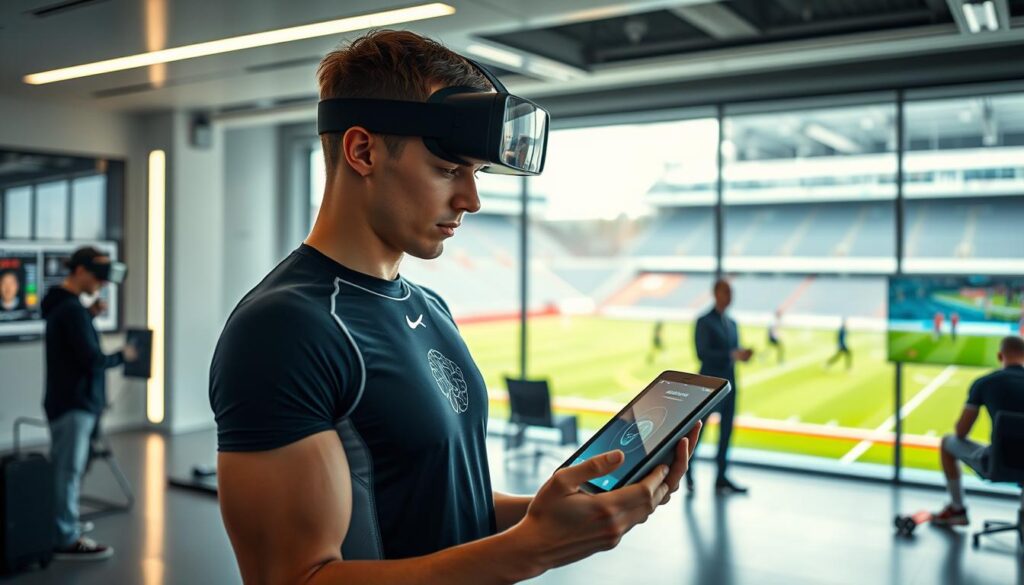
For years, athletes have pushed their bodies to the limit. Now, the real edge comes from training the brain.
Your brain is more than just a passenger. It’s a smart predictor. It uses sensory data to guess what’s next.
True success starts with mastering focus. Many think we have a simple “lizard brain.” But science proves our brain is complex.
Every experience shapes your world. This shapes how you react and decide during games.
Good cognitive training uses tested methods. These include making connections, vivid visualization, and learning from past experiences.
This approach distinguishes real brain training from just thinking positively. It opens the door to a deep dive into this exciting field.
Cognitive Skills That Matter: Anticipation, Inhibition, and Working Memory
The secret to top performance isn’t just in the gym. It’s in the brain’s ability to predict, decide, and adapt under pressure. While talent and physical conditioning are key, the edge often comes from sharpening mental processes. In neurotech sports performance, anticipation, inhibition, and working memory are critical.
Your brain is always predicting what’s next. It uses sensory data to forecast the future. This is the core of athletic anticipation.
Anticipation is about reading the play before it happens. A quarterback doesn’t wait to see a receiver open. His brain predicts the window based on the cornerback’s stance and the receiver’s route history. This predictive power is shaped by past successes, creating neural pathways the brain prefers to reuse.
Better sensory input leads to better predictions. This results in superior reaction time on the field.
The flip side of fast reaction is smart restraint. This is where inhibition comes into play. Inhibition is the cognitive brake—the ability to suppress an impulsive or incorrect response. In a fast-paced game, the first instinct isn’t always the right one.
A tennis player might see an opening for a powerful winner, but if the opponent is already moving to cover it, the smart play is to inhibit that swing and choose a safer, more strategic shot. Training inhibition helps athletes avoid costly errors and maintain composure under stress.
Lastly, working memory acts as the brain’s mental scratchpad. It’s the workspace where you hold and manipulate information for immediate use. During a play, a point guard is processing the shot clock, the defensive setup, his teammates’ positions, and the coach’s last instruction—all at once.
A strong working memory allows an athlete to execute complex tactics in real-time. It adapts plans on the fly without losing focus. It’s the cognitive skill that turns a game plan into fluid, intelligent action.
These three skills are deeply interconnected with how we focus. Attention in sports isn’t just about “locking in.” It’s about dynamically shifting between narrow focus (the seams on a baseball) and broad awareness (the base runners) and between internal focus (your breathing rhythm) and external focus (the defender’s hands).
Superior anticipation relies on optimal external attention to gather the best sensory data. Effective inhibition requires internal awareness to recognize a rising impulse. Working memory capacity is freed up by automating routine movements, allowing attention to be directed strategically.
Improving these cognitive inputs—through targeted neurotech sports performance training—directly enhances the physical output. When an athlete can anticipate faster, inhibit smarter, and process more information clearly, they move from being reactive to becoming proactive. They aren’t just playing the game; they’re staying a step ahead of it.
Tool landscape + evidence rating table
Athletes today face a sea of devices and software claiming to sharpen the mind for competition. This section cuts through the noise. We provide a clear map of the current brain training toolkit, from simple apps to advanced hardware.
Your foundational tools are often low-tech. Structured routines, visualization, and focused attention drills are proven mental “software.” They use environmental cues to prime your brain for peak performance.
Modern technology builds on these principles. It offers new ways to measure and stimulate cognitive function. Let’s evaluate what’s available.
Evaluating the Tech: From Apps to Neurostimulation
Brain training tools fall into two main categories: software-based and hardware-based. Each serves a different purpose and comes with its own level of scientific support.
Software-Based Solutions
These are the most accessible tools. Reaction time apps train your brain to process visual or auditory signals faster. They are excellent for building baseline speed.
Light boards, popular in racket sports, are a step up. They use randomized light patterns to train perceptual agility and anticipation. This directly mimics the dynamic visual demands of competition.
Both tools leverage the principle of adaptive difficulty. As you improve, the tasks get harder. This keeps your brain in a state of optimal challenge.
Hardware-Based Solutions
This category involves physical devices that interact with your nervous system. EEG headbands measure your brain’s electrical activity. They provide real-time neurofeedback, helping you learn to control mental states like focus or calm.
On the more advanced end is tDCS (transcranial direct current stimulation). These devices apply a weak electrical current to the scalp. The goal is to modulate cortical excitability, potentially enriching learning or recovery.
Hardware tools require a deeper understanding. They also come with more significant considerations regarding safety and proper use.
Evidence Rating Table: What Does the Science Say?
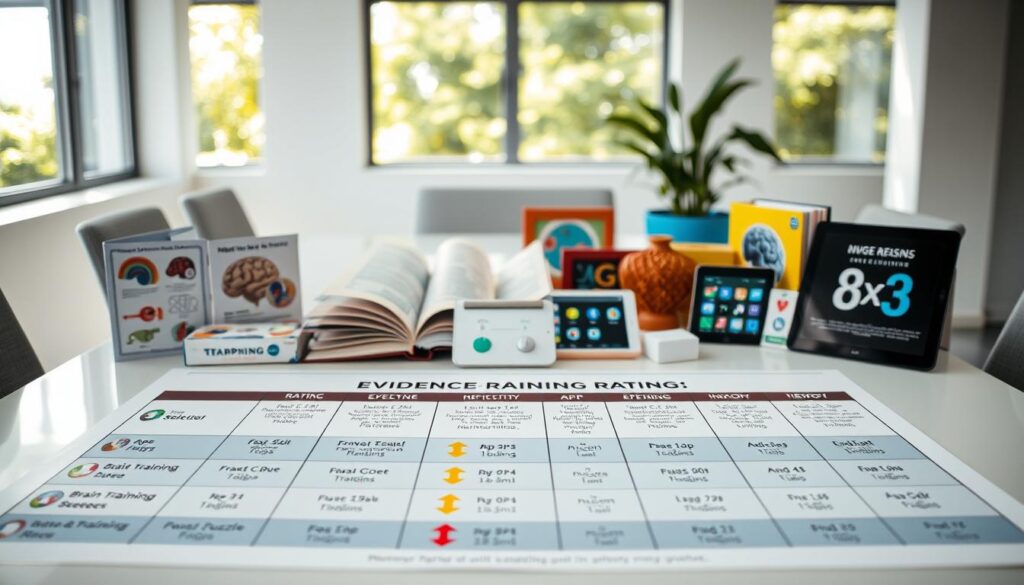
Not all tools are created equal. The table below rates popular categories on key criteria. This helps you make an informed decision based on evidence, not hype.
| Tool Category | Quality of Supporting Research | Measured Transfer to Sport | Ease of Use | Relative Cost |
|---|---|---|---|---|
| Reaction Time Apps | Medium. Strong lab evidence for cognitive improvement; sport-specific transfer studies are growing. | Medium-High. Good for general processing speed; direct sport transfer depends on task design. | Very High. Simple app interface, minimal setup. | Low. Often free or subscription-based. |
| Perceptual Light Boards | Medium. Strong face validity and positive anecdotal reports; controlled longitudinal studies are needed. | High. Directly mimics sport-specific visual scanning and decision-making under pressure. | High. Plug-and-play setup, but requires physical space. | Medium-High. Significant hardware investment. |
| EEG Neurofeedback Headbands | Medium. Solid evidence for anxiety and focus regulation; application for peak athletic performance is emerging. | Medium. Potentia for improved emotional control and focus states; sport-motor skill transfer is less clear. | Medium. Requires calibration and interpretation of data. | Medium. Consumer devices are affordable; clinical-grade systems are expensive. |
| tDCS Devices | Low-Medium. Promising lab studies on motor learning and endurance; protocols for athletes are not yet standardized. | Low. Theoretical potencial is high, but real-world sport performance data is very limited. | Low. Requires precise electrode placement and understanding of parameters. Not DIY-friendly. | Medium. Consumer kits exist, but medical-grade devices are costly. |
Use this table as a starting point. The best tool for you aligns with your goals, budget, and comfort with technology. Remember, technology amplifies practice; it does not replace it. A solid foundation of traditional mental skills training makes any technological intervention more effective.
4‑week protocol with baseline tests and recovery
To avoid training in a vacuum, follow this step-by-step plan. It focuses on transfer to field. It turns theory into action, guiding you from baseline to advanced techniques safely and with measurable gains.
Remember, cognitive training is a skill, not a sprint. Focus and consistency are more important than volume.
Week 1-2: Establishing Baselines and Cognitive Priming
The first two weeks focus on measurement and foundation. You can’t improve what you don’t measure. Start by setting simple baselines for reaction time and error rate using free online tools or sport-specific apps.
Set a SMART goal for your cognitive training. For example: “Improve my visual choice reaction time by 15% within four weeks, as measured by [specific app name], to enhance my field awareness during game play.”
This phase introduces cognitive priming. It designs your environment to cue the right mental state. Key activities include:
- Sensory Cue Design: Use a specific playlist for focus sessions or a particular scent to trigger a calm, alert state before training.
- Pre-Performance Routines: Develop a consistent 60-second routine of deep breaths and a key performance cue before starting any cognitive drill.
- Tool Familiarization: Begin short, 10-15 minute sessions with one or two selected tools from the evaluated landscape, focusing on form over intensity.
The goal here is awareness and control, not peak performance. Research in evidence-based cognitive training protocols shows that a structured start leads to better long-term adherence and results.
Week 3-4: Integration, Intensity, and Active Recovery
Weeks three and four focus on integration. The goal is to perform under mild pressure, directly supporting transfer to field.
Increase session intensity slightly. Add time pressure or auditory distractions to your app-based drills to simulate competitive conditions. This is the time to layer in proven sports psychology techniques:
- Visualization: Spend 5 minutes post-session mentally rehearsing the cognitive skill (e.g., quick decision-making) in a real-game scenario.
- The 4-4-8 Breath: Use this technique (inhale 4 sec, hold 4 sec, exhale 8 sec) for active recovery between difficult sets to maintain cognitive clarity.
- “Train It–Trust It”: This mindset is key. After deliberate practice, trust the skill to work automatically during competition. Structured reflection in a logbook helps cement this trust.
Active recovery is non-negotiable. Schedule at least two full days off from formal cognitive training each week. On these days, light physical activity, mindfulness, or engaging in a different hobby allows the neural adaptations to solidify. This period of integration is where true learning and transfer to field is maximized.
| Phase | Primary Focus | Key Activities | Desired Outcome |
|---|---|---|---|
| Weeks 1-2 | Foundation & Awareness | Baseline testing, SMART goal setting, environmental priming, tool familiarization. | Establish a measurable starting point and create consistent cognitive training habits. |
| Weeks 3-4 | Integration & Intensity | Increased drill difficulty, incorporation of visualization/breathing, scheduled active recovery. | Enhanced performance under mild stress and stronger neural pathways for transfer to field. |
| Ongoing | Recovery & Adaptation | Dedicated rest days, reflective logging, application in sport-specific practice. | Sustainable long-term improvement and prevention of mental fatigue or burnout. |
Following this progressive structure ensures cognitive training strengthens the mind just as a weight program strengthens the body. By cycling through baselines, intensity, and recovery, you build robust skills designed for the pressures of real competition.
Safety/ethics: minors, stimulation cautions, data privacy
Getting a mental edge should never risk an athlete’s brain health or privacy. Cognitive training is promising, but it comes with big responsibilities. This part talks about the key points of safe and ethical use.
We believe in a balanced approach, focusing on healthy brain-body connection. Athletes under pressure need to prioritize their long-term health. This means being careful with certain technologies and questioning who owns the data.
Special Considerations for Young Athletes
Young athletes are more at risk because their brains are developing. Technologies like tDCS (transcranial Direct Current Stimulation) are not safe for them.
EEG headbands should also be used with caution. Without expert advice, they could harm young brains or lead to dependency. Young athletes should focus on basic training and managing their mental load.
For adult athletes, getting professional advice is essential. A study in eNeuro shows the need for strict rules and monitoring. Here’s a checklist for safety.
| Device/Technique | Primary Risk | Mandatory Precaution | Recommended Action |
|---|---|---|---|
| tDCS Devices | Skin irritation, improper current targeting, headache | Consult a sports neurologist or clinical psychologist | Start with lowest possible intensity; never exceed 20-minute sessions |
| EEG Headbands | Data misinterpretation, anxiety from biofeedback, privacy breaches | Use only devices with clear FDA clearance or CE marking | Treat data as a trend, not an absolute metric; disable cloud storage if possible |
| Cognitive Training Apps | Mental fatigue, frustration, unrealistic expectations | Set strict time limits (e.g., 15-20 mins per day) | Integrate sessions with physical recovery periods |
Navigating Data Privacy in Neurotech
Data privacy is a big issue. Who owns the data from your EEG headbands or apps? This data can show a lot about your mental state.
Before using any connected device or software, ask these questions:
- Where is my raw brainwave or performance data stored?
- Does the company reserve the right to sell or share anonymized data with third parties?
- Can I permanently delete all my data from their servers?
- Is the data encrypted both in transit and at rest?
Choosing wisely protects you and your team. Look for tools with clear, athlete-focused privacy policies. Your brain data is as important as your physical health—protect it well.
DIY logs: measure decision speed/error rate
A simple notebook can be the most valuable tool for tracking your mental progress. You don’t need expensive lab equipment to start gaining insights about your mind. By logging your performance, you can turn vague feelings into clear, measurable data.
This hands-on method helps you assess yourself honestly. It’s key for growth. By logging your performance regularly, you build a database that shows your true strengths and weaknesses.

Designing Your Own Cognitive Dashboard
Think of your log as a cognitive dashboard. It should show your key performance indicators (KPIs) clearly. For athletes, decision speed and error rate are key KPIs.
Decision speed is how fast you react and choose the right action. Error rate shows how often you make the wrong choice. Tracking both helps you understand if you’re fast but often wrong, or accurate but slow.
You can measure these metrics with little equipment:
- For Decision Speed: Use free online tools or mobile reaction time apps. These give you a baseline in milliseconds. For sport-specific speed, time yourself in drills where you react to a coach’s signal or a video simulation.
- For Error Rate: Create drills with clear right or wrong outcomes. In a passing drill, count completed vs. intercepted passes. In a tactical video review, note correct vs. incorrect read of the play.
Consistency is key. Use the same drills and tools each time. Record your results right after your session for accuracy. Below is a template for a weekly cognitive log. Treat it as a living document for your training.
| Date | Drill / Task | Decision Speed (ms or sec) | Error Rate (%) | Notes / Observations |
|---|---|---|---|---|
| MM/DD | Simple visual reaction test (app) | 215 ms | N/A | Felt distracted, morning session. |
| MM/DD | Tennis return of serve simulation | 0.48 sec | 40% (2/5 correct) | Anticipated server’s body language well. |
| MM/DD | Basketball defensive read drill | N/A (qualitative) | 25% wrong reads | Struggled with off-ball screen recognition. |
| MM/DD | Dual-task cycling navigation | Delayed response | 60% wrong turns | High cognitive load caused performance drop. |
Interpreting the Data: Trends Over Time
Single data points are snapshots. The real power of your DIY log comes when you look at trends over weeks and months. This long-term view helps you reflect and grow.
Plot your decision speed and error rate on a simple graph or review your table monthly. Look for these patterns:
- Upward Trend in Speed & Downward Trend in Errors: This is the ideal—you’re getting faster and more accurate. It signals effective training and cognitive adaptation.
- Plateau: If your metrics stall for several sessions, it may indicate a need to change your training stimulus or increase difficulty.
- Increased Speed with Higher Errors: You might be sacrificing accuracy for speed. The training focus should shift to maintaining precision under time pressure.
- Increased Errors with Stable Speed: This could point to fatigue, lack of focus, or the need to solidify foundational knowledge before pushing pace.
Your notes column is key for understanding these trends. Did a poor session coincide with poor sleep? Did a breakthrough follow a focused session with a reaction time app? This context turns numbers into a story about your performance. This cycle of logging, reviewing, and planning creates a powerful feedback loop, embodying the principles of structured improvement and putting you in control of your cognitive development.
Case mini‑studies and next steps
The true measure of cognitive training is its real-world impact. Seeing principles work in practice proves their value for your performance.
From Theory to Podium: Real-World Applications
A professional tennis player used a reactive light board system for just 10 minutes daily. This drill sharpened her anticipatory skills. The result was a measurable transfer to field, with her return-of-serve accuracy improving by 18% in match play.
A college basketball team adopted pre-game group visualization, a technique echoed by elite athletes like Stephen Curry. Their clutch free-throw percentage rose significantly during the season’s final minutes. These tools, from simple apps to advanced systems like VR sports training platforms, create the focused environment needed for skills to stick.
Your Action Plan for Smarter Training
Your journey starts with a single, focused step. Review the tools and protocols outlined earlier. Select one element to implement this week.
It could be the baseline test from Week 1, setting up a DIY decision-speed log, or trying a sensory priming technique. Commit to it consistently for two weeks and track any changes in your practice or competition focus. For ongoing, evidence-based insights to guide your progress, consider joining our community. We are here as your partner in unlocking peak performance through smarter brain training.