Ever wonder how your fitness tracker knows when you’re actually running versus just faking it for the social media likes? Meet the unsung hero of the quantified self movement – the humble data logger.
Think of these devices as digital diarists that never sleep. They constantly document your every move, heartbeat, or temperature fluctuation. They’re the silent observers turning your analog life into beautiful, analyzable digital streams.
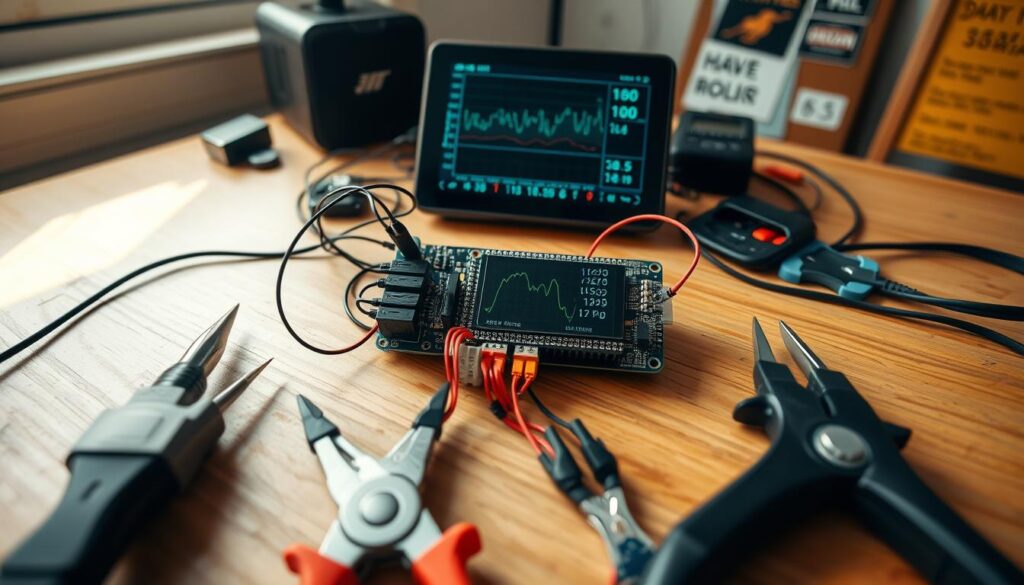
The micro:bit implementation is like training a digital puppy to recognize your gait patterns. On the other hand, the Moteino MEGA build is like the Formula 1 car of data collection – serious machinery for research applications.
Whether you’re tracking your morning run or conducting groundbreaking research, these devices transform experiences into actionable intelligence. It’s like having a personal biographer for your biological data, minus the creative license and judgmental looks.
Top Metrics to Measure
If data were wine, most amateur sports metrics would be the boxed variety – convenient but lacking nuance. The micro:bit approach keeps it beautifully simple: running, walking, or contemplating your existence? Sometimes that’s all you need.
But when you’re ready to graduate from vin ordinaire to Grand Cru, the serious builds enter the conversation. We’re talking high-bit ADC channels that capture analog signals with stunning precision. Burst sampling that catches micro-movements you’d miss. And temperature monitoring via those clever NTC thermistors – because sometimes your environment matters as much as your effort.
The real art isn’t measuring everything – it’s measuring what actually informs your performance. Are you tracking workout intensity or just counting steps? Monitoring recovery patterns or simply logging hours? It’s the difference between knowing you ran and understanding why that run mattered.
Consider this comparison of measurement approaches:
| Measurement Approach | What It Captures | Best For | Complexity Level |
|---|---|---|---|
| Basic Activity Tracking | Running, walking, stationary states | General fitness awareness | Beginner |
| Environmental Monitoring | Temperature via NTC thermistors | Outdoor sports, conditions analysis | Intermediate |
| High-Precision Analog | Complex signals through ADC channels | Technical sports analysis | Advanced |
| Burst Sampling | Micro-movements, rapid changes | Peak performance moments | Expert |
The table isn’t about ranking approaches – it’s about matching methods to questions. Want to know if your afternoon hike was more strenuous than yesterday’s? Basic tracking suffices. Need to understand how temperature affects your marathon performance? Those NTC thermistors become your best friends.
Quality sports metrics answer specific questions. They’re the difference between knowing you moved and understanding how that movement moved you forward.
Choosing Sensors and Processors
Welcome to the hardware candy store. Here, your choices can turn a simple project into something amazing. The debate over processors isn’t about raw power. It’s about how future-proof you want your project to be.
The ATmega328p is like the Honda Civic of microcontrollers. It’s reliable and gets the job done for basic tasks. But, it struggles with complex tasks and high-speed sampling.
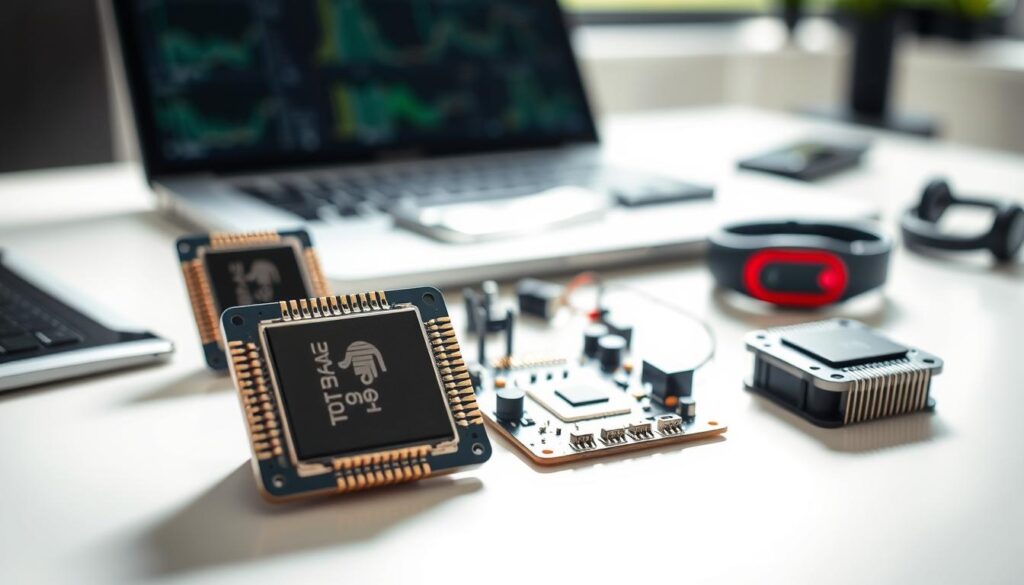
The ATmega1284p is like an upgraded workshop. It has more storage, with 128K program space, 16K SRAM, and 4K EEPROM. This upgrade is huge, like the difference between recording yesterday’s weather and creating a climate model.
Sensors are where the magic happens. The ADS1115 ADC module offers 16-bit resolution, unlike the 328p’s 10-bit ADC. It’s like comparing a lab tool to a kitchen measuring cup.
The DS3231 RTC module is super accurate, better than many Swiss watches. Accurate timestamps are key for useful data analysis.
Choosing between 3.3v and 5v systems is important. 3.3v uses less power, while 5v is better for noise immunity. This choice affects sensor compatibility and battery life, important for field use.
| Component | ATmega328p | ATmega1284p | Best Use Case |
|---|---|---|---|
| Program Space | 32KB | 128KB | Complex algorithms |
| SRAM | 2KB | 16KB | High-speed sampling |
| EEPROM | 1KB | 4KB | Data retention |
| Max Sampling Rate | ~10kHz | ~860Hz | Burst measurements |
| Typical Cost | $4-6 | $8-12 | Budget vs performance |
Accelerometers are special. They measure G-forces, vibrations, and movements with great precision. With the right processor, you’re not just logging data—you’re capturing physics in action.
Your choices of sensors and processors are like choosing between a haiku and an epic poem. Both are artistic, but one needs more room to breathe.
Wiring and Coding Basics
Welcome to digital origami – where we fold electrons into meaningful patterns. Think of wiring your Moteino MEGA like conducting a symphony. Each instrument must play exactly on cue.
The SD card connections follow a strict protocol:
- CS goes to D4 (grey wire)
- MOSI connects to D5 (orange)
- MISO links to D6 (purple)
- CLK joins D7 (brown)
Get one wrong and you’re playing jazz instead of classical. Precision matters in this 3.3v ecosystem.
The TN0702 MOSFET isn’t just a fancy switch. It’s the bouncer that decides when power gets to party. This power management ensures your system doesn’t crash when you need it most.
I2C bus implementation creates the communication highway between components. It’s the diplomatic corps of your data logger – ensuring everyone talks nicely to each other.
Now for the coding philosophy. The micro:bit approach is beautifully simplistic. We use Boolean variables that ask the eternal question: “are we logging or aren’t we?”
Here’s the elegant truth about data logging code:
- Initialize your variables (true/false states)
- Set up your sampling intervals
- Create the write-to-storage function
- Build the conditional execution logic
The beauty is in the constraints. Working within 3.3v systems teaches you efficiency like nothing else. Every milliampere counts, every clock cycle matters.
Your coding becomes a study in minimalism. You learn to say more with less – the haiku of programming. The micro:bit’s MakeCode environment makes this accessible while maintaining power.
Remember: good wiring enables clean coding. And clean coding produces reliable data. It’s the circle of life for electronics enthusiasts.
Storing and Visualizing Data
Collecting data is like taking thousands of selfies at a concert – thrilling in the moment but utterly useless if you never look at them again. The real magic happens when you transform those raw numbers into actionable insights through proper storage and analytics.
Your SD card becomes the meticulous librarian of your digital life, organizing every heartbeat, step, and breath with precise timestamps. It’s the silent witness to your athletic endeavors, patiently waiting for you to ask the right questions.
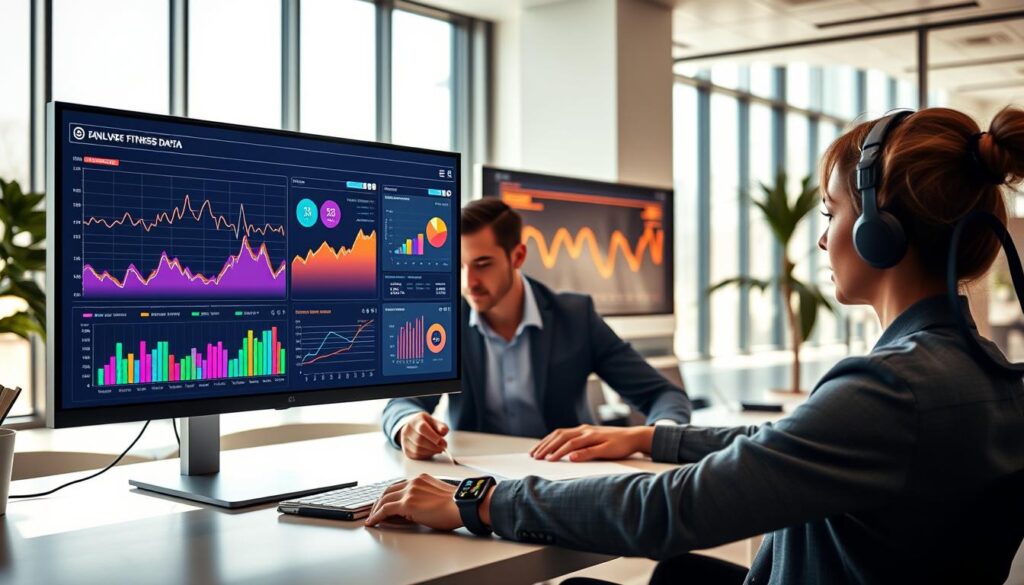
Retrieving your data is simpler than finding your favorite streaming show. Just plug your device into any computer and watch as the MICROBIT drive appears like a digital butler ready to serve your analytics needs. The MY_DATA file structure organizes your information with the precision of a Swiss watchmaker – each column and row telling part of your story.
Now for the fun part: visualization. Opening MY_DATA feels like unwrapping a present you forgot you bought yourself. You can:
- Create web browser graphs that show your performance trends
- Import into spreadsheets for deeper analysis
- Spot patterns you never knew existed
The =COUNTIF formula becomes your digital detective. Want to know how many times you actually ran versus how many times you thought about running? =COUNTIF(B2:B70,1) gives you the brutally honest answer. It’s the spreadsheet equivalent of that friend who tells you when you have spinach in your teeth.
Here’s how different visualization methods stack up for sports data analysis:
| Method | Ease of Use | Detail Level | Insight Quality |
|---|---|---|---|
| Web Browser Graphs | Easy | Medium | Good for trends |
| Spreadsheet Charts | Medium | High | Excellent for details |
| Custom Dashboards | Advanced | Maximum | Professional grade |
Seeing your energy peaks and crashes visualized is more enlightening than any fitness influencer’s advice. That moment when the graph shows exactly when you hit your stride during a workout? That’s better than most Netflix plot twists.
For those ready to take their data game to professional levels, the OpenLogger offers advanced storage and visualization capabilities that make basic SD card logging look like stone tablets. Because in the end, data without analysis is just digital hoarding – and nobody wants to be that person who keeps every receipt from 1998.
Your numbers are waiting to tell their story. The only question is: are you ready to listen?
Projects for Different Sports
Ever wonder why your tennis serve feels powerful but the results suggest it’s not? Your wearable sensors might be judging you from the wrong angle. Sports analytics isn’t one-size-fits-all – each discipline demands its own surveillance protocol.
Football players need sprint pattern tracking. Netball enthusiasts want throwing motion analysis. The micro:bit becomes your personal sports analyst, constantly critiquing performance without demanding overtime pay.
Orientation matters more than your last relationship status. Mount it incorrectly on your wrist, and your brilliant tennis serve might register as an unfortunate staircase tumble. The device’s accelerometer doesn’t understand athletic grace – it only understands physics.
Here’s how to deploy your wearable sensors across different athletic endeavors:
- Football: Mount on dominant wrist to track sprint bursts and directional changes
- Netball/Tennis: Secure firmly for throwing motion analysis – the gyroscope detects rotation velocity
- Workout Monitoring: Chest mount for heart rate correlation with movement intensity
The sweet spot lies between data collection and actually enjoying your sport. Nobody wants to play with a harsh critic strapped to their wrist. Properly configured wearable sensors should feel like helpful training partners, not judgmental coaches.
Remember: Your device’s interpretation depends entirely on how you introduce it to your sport. Get the placement right, and you’ll have data that actually improves performance, not just document frustration.
Integrating with Apps
Does your data logger work with your smartphone in 2023? We’ve moved past manual data entry. Today, devices talk to each other.
Bluetooth connectivity is key. It lets your logger speak to modern devices. No cables or tedious transfers needed. Just smooth data flow.
The micro:bit CreateAI website is where your data shines. Raw numbers become polished insights. Your athletic performance turns into stories worth sharing.
Data transfer protocols work like digital diplomats. They make sure your logger and apps communicate clearly. Seamless is the goal here.
Browser compatibility is important. Chrome and Edge are the favorites. They work well with others. Safari is like the friend who’s always late and doesn’t get the jokes.
Setting up your first connection is like teaching your grandparents TikTok. It might take some time, but once it clicks, the possibilities are endless. Your data gets a voice beyond spreadsheets.
The goal is more than just collecting data. It’s about conversation. Your logger talks to apps, apps talk to you. You impress friends with insights they can grasp. That’s the real win.
Privacy & Security
Welcome to the most ironic chapter of your data logging journey. You’ve spent years complaining about tech companies harvesting your personal data. Now, you’re voluntarily building your own surveillance system. The twist? You’re both the spy and the spied-upon.
Privacy in data logging isn’t about hiding from corporations anymore. It’s about controlling who sees your data. Like that embarrassing graph showing 47 minutes of “stationary time” during your workout. Your data logger knows things about you that even your therapist doesn’t.
- Information privacy: Who gets to see your performance metrics?
- Physical security: Protecting your hardware from damage or theft
- Data integrity: Ensuring your files don’t get corrupted
Your personal data deserves better protection than your social media passwords. Start with encryption for stored data and secure transmission protocols. That Moteino MEGA better be locked down tighter than Fort Knox when you’re mid-tackle or taking a tumble.
Physical security matters more than you think. That $200 data logger flying off during a mountain bike descent isn’t just a financial loss. It’s a data breach waiting to happen. Secure mounting and protective cases aren’t optional accessories; they’re your first line of defense.
Data integrity is the unsexy foundation of everything. Nothing ruins your analysis like corrupted files that suddenly show you running at light speed for three seconds. Regular backups and validation checks separate amateur hour from professional data collection.
For internet-connected systems, consider implementing advanced security measures that protect against remote threats while maintaining system performance.
| Security Aspect | Beginner Approach | Professional Solution | Cost Impact |
|---|---|---|---|
| Data Encryption | Basic password protection | AES-256 encryption | Low (software-based) |
| Physical Protection | Basic case | Waterproof shock-resistant housing | Medium ($50-100) |
| Access Controls | Single user access | Multi-tier permission system | Low to Medium |
| Data Backup | Manual copying | Automated cloud sync | Variable (free to subscription) |
| Tamper Detection | None | Hardware-based tamper evidence | High ($200+) |
Remember: you’re not just collecting data anymore. You’ve become both the data collector and the data guardian. The question isn’t whether you can build a data logger – it’s whether you can build one that doesn’t betray your trust (or your embarrassing workout stats).
Your move, data guardian. Will your security measures be stronger than your curiosity about seeing those performance metrics?
Conclusion
So you’ve reached the finish line—either with a soldering iron in hand or just a curious mind. Off-the-shelf fitness trackers are like fast food. They’re quick and easy but not very satisfying. Your custom data logger is like a gourmet meal you made yourself.
Why settle for generic solutions when you can build something that understands your specific needs? Whether you chose the simplicity of micro:bit or the power of Moteino MEGA, you’ve created more than a tool. You’ve built a bespoke analytical companion.
The real win isn’t just in the numbers. It’s in the flexibility to adapt to any research question. It’s in knowing exactly how your data sausage gets made. Commercial solutions might track steps. Your creation tracks your story.
Now go analyze something. The world is your dataset.