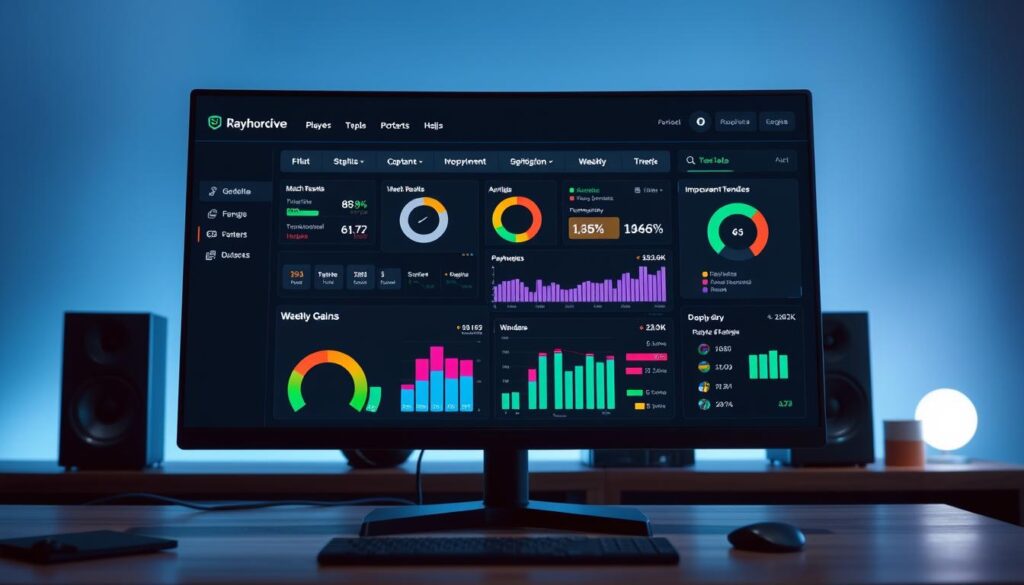
The world of sports and tech is booming. It’s a top career choice for those who love tech. Data experts, developers, and engineers are key to success, just like athletes.
Just having passion isn’t enough. “Passion without structure burns out.” This shows a big gap between talent and clear career paths. The sportstech market is growing fast, valued at $8.9 billion in 2018 and expected to hit $31.1 billion by 2024.
This field covers many areas, like performance analytics and fan engagement. It’s a growing industry full of chances.
Business pros and entrepreneurs need clear guidance. Programs in esports are creating structured paths. They teach students about marketing, production, and analytics.
Starting with hands-on learning is key. Doing starter projects in sports analytics is a great first step. Guides like this one show how to use data to win.
Role map across data, CV/ML, VR/AR, biomechanics, UX, ethics
Imagine the sports-tech world as a matrix. On one side, you have athletes, coaches, fans, and team managers. On the other, there are different types of technology. Where these meet, you find a career path.
This “SportsTech Matrix” is a powerful tool. It helps us understand how various skills solve problems for different people. Let’s explore the key roles in this exciting field.
These professionals turn raw numbers into winning strategies. They work closely with coaches and team managers. Their goal is to find patterns in player performance, opponent tactics, and game outcomes.
They use statistical models and data visualization tools. Their insights influence draft picks, game plans, and player development programs. They answer questions like, “Which play is most effective against this defense?”
Computer Vision & Machine Learning (CV/ML) Engineer
CV/ML engineers build the brains behind automated sports analysis. They create algorithms that can “see” and understand video. This powers tools for automatic player tracking, pose estimation, and tactical recognition.
Their work feeds into predictive models for injury risk or player talent. This role is at the heart of modern performance analytics and broadcast enhancement tech.
VR/AR Developer
A VR/AR dev builds immersive digital experiences. For athletes, they create virtual reality training simulators. These programs let a quarterback practice reads against a digital defense anytime.
For fans, they develop augmented reality overlays for broadcasts. Imagine seeing real-time stats floating over players during a live game. This role blends creative software engineering with a deep understanding of sports immersion.
Biomechanics Specialist
This role focuses on the human body in motion. Specialists analyze data from wearable sensors and motion capture systems. They seek to optimize athletic movement for peak performance and reduced injury risk.
They collaborate with sports scientists and medical staff. Their findings can lead to technique adjustments in a golfer’s swing or a runner’s stride. It’s engineering applied directly to human physiology.
UX/UI Designer & Product Manager
These experts ensure sports-tech tools are useful and easy to use. A designer crafts the interface for a coach’s tablet app or a fan’s mobile experience. The product manager defines what that app should do and for whom.
They bridge the gap between complex technology and the end-user. Their work is key for adoption, whether the user is a professional athlete reviewing film or a fan engaging with a team’s app.
Ethics & Governance Specialist
This is an emerging but critical role. As sports collect more data and use smarter algorithms, new questions arise. Specialists tackle issues of player data privacy, algorithmic bias in scouting, and the ethics of performance enhancement.
They help organizations navigate the fine line between competitive advantage and unfair practice. They ensure technology serves the sport’s integrity.
| Primary Role | Main User / Stakeholder | Core Technology Focus |
|---|---|---|
| Data Analyst/Scientist | Coaches, Team Managers | Statistical Modeling, Data Visualization |
| CV/ML Engineer | Performance Staff, Broadcasters | Computer Vision, Predictive Algorithms |
| VR/AR Developer | Athletes (Training), Fans (Engagement) | Immersive Simulation, Augmented Reality |
| Biomechanics Specialist | Athletes, Medical & Training Staff | Wearable Sensors, Motion Analysis |
| UX/UI Designer & Product Manager | End-Users (All Groups) | User-Centered Design, Product Strategy |
This role map provides your starting coordinates. You can see where your current skills might transfer. More importantly, you can identify the new domain knowledge you need to acquire. The next step is building the specific skill stack for your target role.
Skill Stacks and Starter Kits: Your Foundation in Sports-Tech
Starting your sports-tech journey means learning key tools. These tools are based on your career path, from data analysis to immersive development. They are your foundational skill stacks, turning theory into practice.
Today’s sports tech blends hardware and software. To succeed, you need to know both digital tools and physical devices. There are three main starter kits for beginners.
https://www.youtube.com/watch?v=OBHL3xt5O_Q
If you love numbers, this is for you. The main languages are Python and R. They’re essential for data analysis and machine learning.
Start by learning important libraries:
- Pandas & NumPy: For handling and organizing big data.
- Scikit-learn: To create models for predicting performance or injury risk.
This stack is key for a Sports Data Analyst. It turns raw data into useful insights.
Your VR/AR Development Starter Kit
For immersive experiences, you need a different set of tools. Unity is the top choice, known for its ease and 3D skills.
Learning Unity means:
- C# Programming: The language that makes Unity scenes interactive.
- 3D Asset Pipeline Understanding: How to work with models, animations, and environments.
These skills help you create virtual stadiums or interactive drills. Learning Unity for games also applies to sports tech.
Your Biomechanics & Hardware Integration Starter Kit
This path connects the digital and physical. It focuses on sensor technologies that track athletic movements. Key tools include IMUs and force plates.
Your kit also includes:
- Sensor Data Acquisition: Collecting data from wearables or devices.
- Signal Processing Basics: Making sense of data from movement sensors.
This foundation is vital for biomechanics analysis and sports engineering. It helps improve technique or equipment by analyzing movement.
Don’t try to learn everything at once. Focus on one area first. A solid foundation in one area is your best start. Pick the kit that matches your role and begin your journey.
5 starter projects: pose‑tracking counter, AR playbook, shot‑chart app, VR reaction game, fan‑poll overlay
To move from learning to making things, you need projects that solve real problems in sports. This product design idea is key in sports-tech. Making real apps shows you can do the job.
Each project below links to the skills and roles we’ve talked about. They help you go from theory to action.
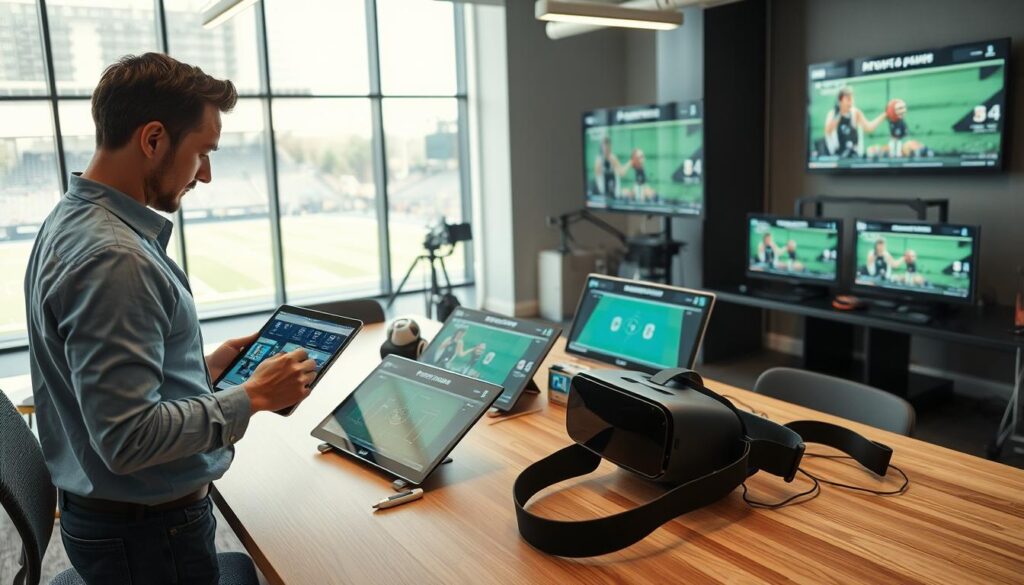
This project teaches you about computer vision. You’ll use OpenCV and MediaPipe to make an app that counts exercises via webcam.
It meets a real need for athletes to track their workouts. You’ll learn to process video and detect poses.
The project fits the Computer Vision Engineer role. It uses Python skills from your starter kit in a fitness setting.
- AR Playbook Visualizer
Mix coaching strategy with augmented reality. Create an app that puts play diagrams on a real tabletop using Unity and AR Foundation.
Coaches can show players complex formations in a new way. This project focuses on spatial design and user interaction.
It’s great for an AR/VR Developer. You’ll use Unity skills to solve a team sports communication problem.
- Basketball Shot-Chart App
Explore sports analytics with this project. Use Python and Plotly to map shot locations and efficiency from a CSV file.
The app helps players and coaches spot shooting patterns and weaknesses. The goal is clean, insightful charts.
This project is key for a Data Analyst. It turns data into useful insights, a big product design goal.
- VR Reaction Training Game
Make a simple Unity project for VR. The user must hit or dodge objects in 3D space.
This game improves visual reaction time and hand-eye coordination. Focus on easy 3D interaction and performance.
It shows UX Designer skills in immersive environments. The project makes training fun with interactive tech.
- Live Fan-Poll Overlay
Make a mini-project that engages audiences. Use a framework like Flask or Streamlit to show real-time fan votes during a live stream.
This system adds an interactive layer to broadcasts. It shows how to handle live data and create dynamic interfaces.
It touches on Product Manager and Software Engineer roles. The focus is on user engagement and real-time product design.
These projects give you a portfolio piece for each major sports-tech area. Start with one that matches your skills. Then, move to others.
Good product design starts with understanding the user’s problem. Each project here does that for athletes, coaches, or fans.
Portfolio tips: GitHub, demo vids, writeups, data notes
Turning your tech projects into career chances depends on how you show them off in a portfolio. It’s not just about the build. You also need to tell a story that hiring folks can get right away.
Your portfolio should be like a dynamic display, not just a PDF. It should show your tech skills, how you solve problems, and how you share complex ideas. Here’s how to make one that stands out.
For any sports-tech job, your GitHub is key. It’s where interviewers first look. So, take good care of it.
- Clean, Commented Code: Write for humans, not just machines. Use easy-to-understand variable names and comments to explain the logic.
- Detailed README Files: Every project needs a README. It’s like the project’s homepage. Include an overview, setup steps, key features, and links to demos or videos.
- Commit History Hygiene: Use clear commit messages. A history of small, logical commits shows you work well and understand version control.
Create Short, Impactful Demo Videos
Code repos can be tough for non-tech folks. A short video can bridge that gap.
Use free tools like Loom or OBS to record your screen and voice. Show your project in action. For example, if it’s a shot-chart app, walk through loading data and making a visualization. For a VR reaction trainer, show how immersive it is.
Keep it short. Grab the viewer in the first 10 seconds, show the main feature, and explain its value. This visual proof can be more powerful than code.
Publish Technical Write-Ups
Writing about your work shows you’ve learned and can communicate well. It turns a project into a story of problem-solving.
Use platforms like Dev.to, Medium, or a blog for this. Share the challenge, solutions, hurdles, and results. It shows your thought leadership and makes your process clear.
- Did you fix a tricky bug in your pose-tracking algorithm? Write about it.
- Did you optimize a database query for your fan-poll overlay? Document the process.
These articles show you’re a leader in your field and make your process transparent.
Maintain Meticulous Data Notes
This tip is key for analytics and data science roles. Your portfolio must show you handle data well.
Keep a project journal or a “data_notes.md” file. Document every step:
- Data Sourcing: Where did the data come from? (e.g., NBA API, public sensor dataset).
- Cleaning Process: What missing values, outliers, or formatting issues did you address?
- Modeling Choices: Why did you choose a specific algorithm or statistical test?
- Assumptions & Limitations: Be honest about the constraints of your analysis.
This shows you’re professional and makes your work reproducible and trustworthy.
By having a polished GitHub, engaging demo videos, insightful write-ups, and detailed data notes, you create a strong portfolio. It tells a complete story: you can build, explain, and deliver. This showcase turns your projects into valuable assets for your sports-tech career.
Internships/hackathons; find mentors/datasets
Learning skills and landing a job in sports tech are connected through internships, hackathons, and mentorship. Building a portfolio is key, but joining the professional community is even more important. It gives you the context, connections, and credibility employers look for. Here are some steps to gain that vital experience.
Getting an internship is a great way to start your career in sports tech. You can find opportunities in many places. Big sports leagues like the NBA, NFL, and MLB, as well as teams, offer tech and analytics internships. The startup scene in sports tech is also full of chances, from wearable sensors to fan engagement platforms.
Also, corporate innovation labs in big tech or apparel companies often look for talent for sports projects. Reports show a growing sportstech ecosystem with many accelerators, hubs, and venture funds. These places are not just for investing; they’re also where you can find internships and make industry contacts.

Sportstech hackathons are great for proving your skills. Events like the NBA Hackathon and the MLB Tech Cup challenge you to solve real problems quickly. They help you show your technical skills under pressure and meet industry judges and recruiters. Even sports-themed projects in general tech hackathons can show your passion and initiative.
Finding a mentor can really help you grow professionally. A good mentor gives advice, feedback, and can open doors. Start looking on LinkedIn, targeting people in roles you want. Be thoughtful in your engagement before reaching out with a clear request.
Industry conferences are also great for finding mentors. Events like the MIT Sloan Sports Analytics Conference and SXSW Sports bring together leaders. Don’t just listen to talks; join workshops and networking events. Universities with strong sports programs also have networks that can help.
Getting quality data for projects can be a challenge. Start with public datasets. Sports leagues often release official stats, and sites like Kaggle have sports datasets. Building your own dataset through web scraping is also valuable. It shows you’re proactive. Companies that make sports sensors and tracking equipment sometimes offer sample data for developers.
For more on working with data, consider pursuing a career in sports analytics.
In summary, moving from solo projects to community engagement is essential. Pursue internships, participate in hackathons, find mentors, and learn to find data. These steps turn theoretical knowledge into practical skills for careers in sports tech.
90‑day learning plan
Turning insights into action is the final step. This structured 90-day plan provides a clear path to begin building your careers in sports tech.
The first 30 days focus on foundation. Choose one core skill stack, like Python for data analysis or Unity for immersive experiences. Spend daily time on a focused course or tutorial series.
Days 31 to 60 are for specialization. Pick one starter project, such as the AR playbook or shot-chart app. Build it while applying portfolio best practices from day one. Document your process on GitHub and create a short demo video.
The final month is for community and refinement. Engage with the sports tech ecosystem. Contribute to an open-source project on GitHub. Network with professionals on platforms like LinkedIn. Use their feedback to polish your project and presentation.
This phased approach breaks a large goal into manageable steps. It builds technical skill, practical experience, and professional connections. Following this roadmap creates momentum and a tangible asset for your portfolio.
Launching successful careers in sports tech requires a blend of learning, building, and connecting. Start your 90-day plan today.