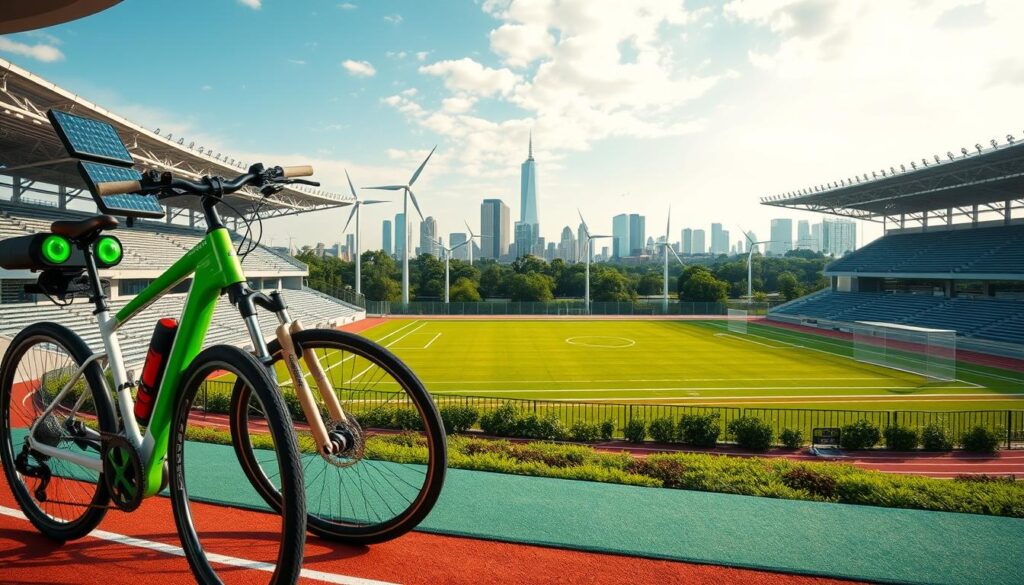
The sports world’s new battle cry is “Net Zero or Bust.” While LeBron dazzles on court, the industry is shifting toward being green. Deloitte says by 2030, sports will focus on sustainability, with Paris 2024 aiming for Paris Agreement goals.
This isn’t just about recycling anymore. Stadiums are like Silicon Valley labs, using cloud computing to save energy. Artificial intelligence helps cut waste, and even sports gear tracks carbon offsets.
Fans are becoming part of the solution. Imagine 70,000 people’s body heat powering stadium lights. But can tech beat our love for throwaway culture and big tournaments?
Addressing Environmental Concerns
Imagine an NFL stadium parking lot filled with nacho trays and beer cans. It’s like the Great Pacific Garbage Patch—during pregame warmups. The sports industry’s environmental impact is huge, like Shaquille O’Neal. Yet, stadiums are now testing new eco-friendly ideas.
Challenges
One NFL game can create 35 tons of waste, like 14 pickup trucks full of trash. Teams often show off green efforts but don’t really change. This is like “eco-theater,” where recycling bins hide the real waste.

Opportunities to Improve
Wearable tech and big data are changing sports for the better. They help athletes and fans fight climate change:
- Smart jerseys track hydration to cut down on water bottles
- AI apps find the best marathon routes to beat heat
- Biometric sensors help athletes reduce their carbon footprint
Forest Green Rovers’ timber stadium is a great example. It’s designed to be carbon-negative, using old materials in new ways. This is backed by sustainability analytics that are as sharp as a linebacker’s tackle.
The goal is to make every foam finger compostable and every stadium a climate lab. In this game, Mother Nature is the ultimate judge.
Innovations in Sports Technology
Imagine a basketball court designed by Tony Stark. We’re not talking about vibranium hoops yet. Sports tech has evolved fast, like LeBron’s crossover. From stadiums powered by sunlight to AI coaches smarter than Phil Jackson, the game is changing. Let’s explore how Silicon Valley meets sweat equity.
Sustainable Products and Services
The days of disposable water bottles and plastic turf are ending fast. Today’s sports gear looks like it came from a climate-conscious Marvel spin-off:
- Bamboo goalposts that sequester carbon while stopping headers
- AI-powered hydration systems tracking athletes’ sweat like Wall Street algorithms
- Recycled ocean plastic jerseys – because looking good shouldn’t cost the Earth
Alibaba Cloud’s Olympic content delivery system shows tech can be green. Their cloud infrastructure cut data center energy use by 40% during the Winter Games. It’s like giving carbon emissions a Zamboni treatment.
Renewable Energy Integration
Stadiums are switching from diesel generators fast. Petco Park’s $4 million solar investment is saving money and polar bears. Their 336,000 kWh annual output could power:
| Energy Use | Traditional Power | Solar Solution |
|---|---|---|
| Lighting | $18,000/month | $2,500/month |
| Scoreboards | 7,200 lbs CO2 | 0 lbs CO2 |
| Concessions | Grid-dependent | 30% solar-powered |
This isn’t just about saving trees. It’s about making money. Cloud computing in sports optimizes energy use like a chess grandmaster. When renewable systems meet AI analytics, stadiums become self-aware in the best way.
Collaborations and Partnerships
When sports leagues team up with tech giants and eco-groups, it’s a big deal. It’s like a superhero team-up, but instead of fighting villains, they’re fighting climate change. These partnerships are changing the game fast, combining big business with small steps to save the planet.

Cross-Industry Initiatives
The CSIT and GAISF partnership is like a superhero team. Blockchain developers and sports leaders work together. They’re making carbon offsets into digital assets, like turning baseball cards into green currency.
Formula 1’s goal to be carbon neutral by 2030 is serious. It’s like a NASCAR team switching to solar power in the middle of a race.
| Initiative | Industry Partners | Sustainability Impact | Tech Used |
|---|---|---|---|
| CSIT/GAISF Alliance | Sports governance, Tech firms | Carbon credit transparency | Blockchain tracking |
| Formula 1 Net Zero 2030 | Auto manufacturers, Energy sector | 100% renewable race logistics | Biofuel innovation |
| NFL Green Partnerships | Apparel brands, Waste management | Zero-waste Super Bowl events | AI-driven recycling |
Partnering with Environmental Groups
Sports teams teaming up with eco-NGOs is a game-changer. Formula 1 working with Ocean Conservancy to fight marine plastic is real action. The NBA partnering with Rainforest Trust is planting trees and creating carbon sinks to fight deforestation.
Blockchain makes it all work like magic. Imagine every recycled cup at a stadium becoming a digital token. It’s like a game where everyone wins, with rewards for going green.
A Greener Future
The sports world is changing fast. Imagine stadiums that take in more carbon than they release. Or concession stands that check your nacho cheese use like a quarterback’s stats.
Seattle’s Climate Pledge Arena is leading the way. It’s the first sports venue without fossil fuels. This change isn’t just about recycling. It’s about redefining competition.
Goals for Sustainability
Predictive analytics could make waste management more precise. Why only track player stats when we can analyze energy use in big arenas? The UN’s Sustainable Development Goals offer a roadmap for leagues to cut emissions.
Imagine solar-powered arenas and food vendors using data to reduce waste. They could offer food based on fan preferences.
Managing Change
Going green isn’t a quick fix. It’s a long-term effort with partners. Venues like Atlanta’s Mercedes-Benz Stadium show that eco-friendliness and sports can go hand in hand.
By working with groups like the Green Sports Alliance, teams can win fans. Gen Xers are willing to pay more for sustainable experiences.
The game isn’t over yet. But with predictive analytics and green venues, the future looks bright. The MVP might soon stand for “Most Valuable Planet.”