Imagine watching a concert not just on a screen, but from the stage itself. You feel the bass guitar’s beat. You can see the drummer up close and peek over the lead singer’s shoulder.
This isn’t just science fiction. It’s the future of 3D immersive streaming. This tech turns viewers into active participants, not just passive watchers.
For those in sports and live events, this change is huge. Holograms, 3D streaming, and volumetric video are leading the way. They’re not just experiments. They’re the future of fan engagement.
The shift is already happening. As we’ve seen with VR changing how we watch and play, the groundwork is laid. This new tech will take fan experience to new heights.
How volumetric capture/streaming works
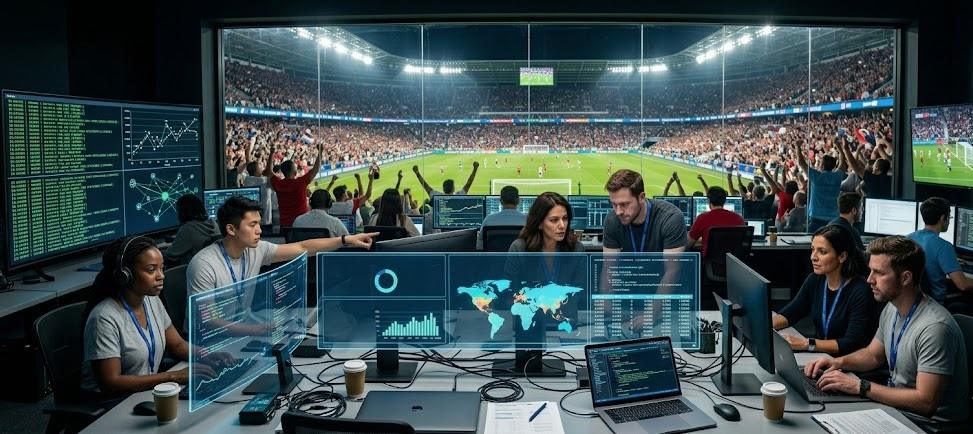
The journey from a real-world moment to an immersive 3D stream starts with volumetric capture. This method is more than just filming. It creates a three-dimensional copy of a person or scene.
The Capture Stage: Building a “Digital Double”
Think of a traditional video camera as a single eye. It captures light from one fixed viewpoint. Volumetric capture uses dozens, sometimes hundreds, of “eyes.”
These are high-resolution cameras arranged in a special array. They surround the subject from every possible angle. Depth sensors and LiDAR (Light Detection and Ranging) are also used. These tools don’t just see color. They measure the exact distance to every point on the subject.
Together, this sensor suite collects massive amounts of data. It creates a detailed 3D point cloud of the scene. This cloud is the raw material for your digital double.
From Data to Model: Processing and Stitching
Raw data from the cameras and sensors is not yet a usable model. Powerful algorithms take over next. Their job is stitching.
These advanced programs analyze all the overlapping images and depth maps. They fuse them into one seamless, photorealistic 3D model. This model is fully textured with real colors and details.
The result is a dynamic asset. You can rotate it, zoom in, or even view it from angles the original cameras never saw. This is the core magic of volumetric capture.
Delivering the Experience: Compression and Streaming
A high-fidelity 3D model contains a huge amount of data. Streaming it live requires smart compression. Specialized video codecs, like VVC or AV1, are essential. They shrink the file size without ruining the visual quality.
Real-time rendering engines then bring the model to life on your screen. They adjust the view based on your commands instantly. High-speed internet networks deliver the stream. Technologies like 5G and fiber optics make this interactive experience possible from anywhere.
To see the leap clearly, compare it to the video we know today.
| Feature | Traditional Video | Volumetric Capture |
|---|---|---|
| Viewpoint | Fixed, director-chosen | User-controlled, any angle |
| Output | 2D frame sequence | Interactive 3D model |
| Capture Method | Single or multi-camera (flat) | Array of cameras + depth sensors/LiDAR |
| User Interaction | Play, pause, rewind | Rotate, zoom, walk through |
| Data Size | Relatively smaller | Extremely large, requires advanced compression |
Understanding this pipeline—capture, process, stream—gives you the foundation. You can now see how volumetric capture turns real events into explorable digital worlds. This knowledge is key for evaluating its exciting applications.
Devices and bandwidth realities
For fans to truly inhabit a 3D stream, two critical realities must be addressed: the viewing device and the immense data flow behind it. This is where theoretical technology meets practical deployment.
Today, immersion is mainly limited by headsets. Virtual reality (VR) headsets offer complete digital immersion, ideal for simulated courtside seats. For a more social or mobile experience, augmented reality (AR) glasses are key. These see-through visors overlay volumetric players and stats onto your living room.
They are a major focus for consumer electronics firms. Current challenges include finding the right balance between field of view, comfort, and battery life.
The future looks beyond headsets. Research into holographic displays and light field technology aims for glasses-free 3D. Imagine a true hologram of a player on your table. This remains in labs, but it points to a less intrusive long-term goal.
Regardless of the display, the data demand is staggering. Streaming a standard 4K video requires about 25 Mbps. A pristine, uncompressed volumetric stream needs tens of gigabits per second—hundreds of times more data.
Why the huge jump? You are not streaming a flat image. You are transmitting a full, dynamic 3D model that can be viewed from any angle. This requires capturing massive data from the start, often using high-speed 100GigE camera systems, and then sending enough detail to reconstruct it perfectly for the viewer.
This bandwidth reality dictates the needed infrastructure. Widespread adoption hinges on robust 5G and, eventually, 6G networks. These provide the wireless speed and capacity for such heavy data streams.
Equally critical is edge computing. Processing data closer to the user, at the “edge” of the network, slashes latency. A half-second delay ruins the illusion of live presence. For a seamless experience, computation must happen near the stadium and the fan.
In summary, scaling immersive sports requires parallel tracks. Consumer adoption of comfortable, capable AR glasses must advance alongside massive investment in high-speed, low-latency networks. The experience is only as strong as its weakest link.
Use cases: courtside replays, avatar meet‑ups, remote play walk‑throughs
Imagine stepping into a virtual stadium or meeting a colleague’s lifelike avatar. These are no longer sci-fi dreams but real possibilities. Volumetric capture is moving from labs to live applications, creating new ways to engage fans and collaborate professionally. Three areas show great promise: immersive sports replays, social interaction with digital personas, and virtual environments to explore.
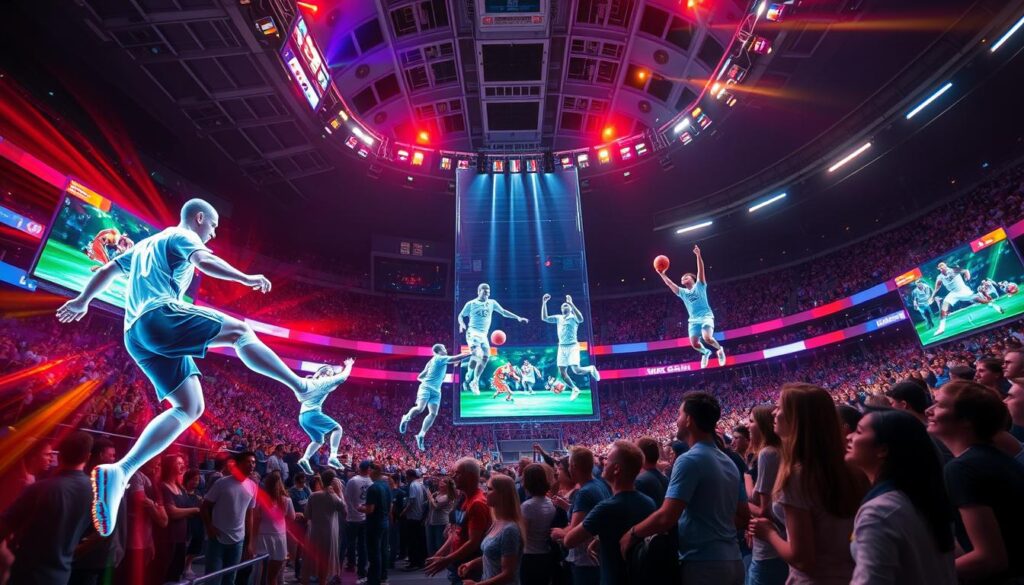
The first major application is the courtside replay. Spatial video changes how fans analyze the game. Instead of a fixed broadcast angle, you can buy a “virtual seat” with full freedom of movement. Zoom in on a key tackle from the linebacker’s perspective. Orbit around a slam dunk from above the rim. This technology turns every viewer into an instant analyst.
Teams and broadcasters can offer these replays as premium features. Fans get a deeper understanding of player strategy and athleticism. The experience feels personal and exclusive, far beyond traditional slow-motion. This level of immersion builds a stronger emotional connection to the sport and its stars.
Next, consider the power of 3D avatars for social and business meet-ups. Virtual fan clubs can gather in a shared digital space, represented by realistic avatars. They can cheer together, interact with virtual merchandise, and even get a post-game talk from a player’s avatar. Sponsor events become interactive experiences, not just logo placements.
In the corporate world, this means meetings in persistent virtual workspaces. Colleagues from across the globe appear as lifelike digital doubles. They can gesture, share 3D models, and collaborate on designs in real time. The sense of presence is profound, making remote work feel truly connected. This application extends to training, onboarding, and global team-building exercises.
The third use case is remote play walk-throughs and virtual tours. The concept of metaverse stadiums is central here. Fans who cannot travel can take a guided, interactive tour of the arena from home. They can visit the locker room, walk onto the pitch, and see exclusive behind-the-scenes areas. This access is a powerful new revenue stream and fan loyalty tool.
For athletes and coaches, remote walk-throughs are revolutionary. A coach can upload a volumetric capture of a play. Players, anywhere in the world, can then step into that capture to practice their positioning and reactions. Scouts can analyze prospects in immersive 3D, examining form and decision-making from any vantage point. This turns video review into a tangible, spatial experience.
These use cases share a common thread. They use immersive technology to remove physical and perceptual barriers. The fan is no longer a passive viewer but an active participant. The business meeting is no longer a grid of faces on a screen but a collaborative session in a shared space. The stadium is no longer a distant building but an explorable digital asset. The future of engagement is spatial, social, and deeply personal.
Business models: tickets, angles, sponsor quests
Entrepreneurs and marketers see volumetric video as a new frontier. It’s a chance to make money in a digital world. We’ll look at new ways to make money from fan experiences.
Monetizing exclusivity and depth is key. Simple ads or subscriptions won’t cut it anymore. Fans want to be part of the action.
Premium Virtual Ticket Tiers offer something new. Think beyond just watching a live stream. A premium ticket could give you a private view, like being on the sidelines or in a team huddle.
These tickets create a sense of scarcity and value. They turn viewers into VIPs with a unique view. The more exclusive the view, the more people will pay.
Pay-Per-Angle Access takes it further. Fans can buy temporary control of the camera. They might follow their favorite player or the drummer for a song.
This model is all about super-fans. It lets them choose their own adventure. It’s flexible, with options for different prices and lengths.
Interactive Sponsor Quests turn ads into adventures. Brands can sponsor virtual experiences or challenges. For example, a sportswear brand might hide virtual sneakers in a 3D stadium tour.
Completing a quest can unlock cool stuff. This model engages fans and helps brands. It shows how well ads work, not just how many people see them.
Custom 3D avatars are key in all these models. A fan’s avatar is their identity online. They can buy virtual clothes, accessories, or animations for their avatar.
Fans spend money on their 3D avatars to stand out. This creates a steady stream of income. It’s tied to how fans express themselves and their status online.
These models work best together. A premium ticket might include avatar customization. A sponsor quest might give a unique avatar item. The table below shows how these models compare and who they target.
| Business Model | Key Feature | Target Audience | Potential Revenue Stream |
|---|---|---|---|
| Premium Virtual Tickets | Exclusive, fixed volumetric viewpoint | High-engagement fans, corporate clients | High-price one-time or seasonal access fee |
| Pay-Per-Angle Access | Temporary control of camera perspective | Super-fans, analysts, hobbyists | Micro-transactions per angle or per minute |
| Sponsor Quests | Branded interactive challenges & rewards | Marketing departments, engaged users | Sponsorship fee, performance-based pricing |
| Avatar-Based Microtransactions | Customization of user’s 3D avatar | All users seeking personal expression | Continuous sales of digital goods and skins |
The key takeaway is clear. Success comes from combining immersive tech with creative business ideas. Start with a basic tier, then add premium features and sponsor quests. This approach creates a lasting ecosystem around 3D experiences.
Accessibility: captions, motion sensitivity
The promise of metaverse stadiums is big, but there’s a big challenge: making it accessible for everyone. To become a hit, it needs to focus on people’s needs. This means making sure it’s comfortable and welcoming to all.
VR headsets and immersive displays can cause eye strain and fatigue. They can even make you feel sick. To solve this, the tech needs to be lighter and easier to use for a long time.
True accessibility means designing for everyone. Immersive experiences must cater to a diverse audience with different abilities. This includes captions for audio commentary and crowd noise. It also means audio descriptions for fans with visual impairments.
Designs should also include color-blind modes for stats and interface elements. These aren’t just extras; they’re key to creating welcoming digital spaces. Making metaverse stadiums inclusive is both a business need and a moral duty.
Key design principles for accessible volumetric experiences include:
- User-Controlled Comfort: Adjustable settings for movement speed, field of view, and scene transitions to mitigate cybersickness.
- Multi-Sensory Redundancy: Critical information (like a goal alert) should be conveyed through visual, audio, and haptic cues.
- Simple Navigation: Intuitive menus and controls that don’t require complex motor skills or prior VR expertise.
Designing for accessibility is not just a moral issue; it’s a business one too. By focusing on accessibility, developers can attract more fans. This ensures that metaverse stadiums become a hit, welcoming everyone to the future of live entertainment.
Build a mini‑demo with free tools
Ready to move from spectator to creator? Building a basic volumetric experience is easier than you think. You don’t need a big studio or a lot of money to start. This guide will show you how to make a simple volumetric demo with free tools.
First, decide what you want to create. Do you want to scan a real object, animate a simple character, or place a 3D model in your room via augmented reality? Each option has great starting points that cost nothing.
For scanning a real object or person, try Polycam or KIRI Engine. These apps use your phone’s camera to make a 3D scan. Just walk around your subject, taking photos from all sides. The app will turn them into a textured 3D model you can export.
If animation is your goal, Blender and Mixamo are a great free combo. Blender is a full-featured 3D creation suite. You can find a free character model on Sketchfab, then use Mixamo to add animations with a few clicks.
For an AR experience, Adobe Aero or Unity with AR Foundation are excellent. They let you import your 3D model and place it in the real world, viewable on a mobile device.
Here’s a simple step-by-step guide to make your first asset in under an hour:
- Plan Your Asset: Start small. Choose a simple object like a coffee mug or a figurine for scanning, or a basic humanoid character for animation.
- Capture or Download: Use Polycam to scan your object, or download a Creative Commons-licensed model from Sketchfab or TurboSquid.
- Process and Clean: In your chosen software, remove any stray geometry or artifacts from the scan. Simplify the model if needed for better performance.
- Animate or Place (Optional): Take your cleaned model to Mixamo for animation, or import it into Adobe Aero to position it in your physical space.
- Export and Share: Export your final creation as a common file type like .GLB or .USDZ. You can now view it on compatible devices or embed it in a presentation.
This process lets you talk about volumetric video and spatial media from experience. You’ve made something. That prototype, no matter how simple, is a great way to start conversations with your team or clients. It makes complex ideas more real.
The barrier to entry is lower than ever. By spending a little time with these accessible tools, you learn the basics. This knowledge helps you evaluate more advanced solutions and see how they can help your business. Start building today.
Careers: 3D graphics, compression, UX
Holograms and volumetric video are changing the job market. New roles are opening up for creative and technical people. This change offers many opportunities for career growth in a rapidly changing digital world.
Experts in 3D graphics and asset creation are in high demand. They create the immersive worlds and models that fans love. Platforms like freelance 3D modeling jobs list the need for skills in tools like Blender and Unity. These artists make everything from product renders to virtual stadiums.
Working with large volumetric data needs new engineering skills. Compression experts make sure high-quality 3D content streams smoothly. Their work makes it possible to enjoy these experiences on regular devices and connections. This technical skill is as important as the creative one.
Designing easy-to-use navigation for 3D spaces is key to immersive UX. A good user interface makes complex tech easy to use. The change in how VR is changing sports shows this need. It creates jobs focused on making things easy for users.
For companies, this means looking for these new skills. For professionals, it’s a chance to grow in valuable areas. The mix of art, engineering, and design is shaping the future of fan experiences.