Remember the old playbook? Feedback was slow, like a scribbled note or a post-game lecture. It felt as old as a fax machine.
That model is gone. The way teams, athletes, and fans connect has changed. Now, we use smartphones instead of clipboards.
The 2020 lockdowns sped up this change. A strong online presence became essential for teams.
This isn’t just about new tech. It’s about how we communicate now. We’ve moved from “command and control” to “connect and correct.”
Digital tools are now key to team strategy. The old delay in feedback is gone. We’re in the era of instant coaching.
It’s like switching from sending letters to having a live chat with your team. The speed of improvement has changed a lot.
Evolution of Digital Coaching Communication
Digital coaching began with a broken monologue. For years, coaches spoke only after games. Feedback was given later, not when it mattered most.
This changed with instant connection. Now, feedback is given right away. It’s a two-way conversation, not just one-way talking.
The shift is about better conversations, not just new tech. It’s about moving from giving orders to building a partnership. This change is huge.
This change is based on relationship marketing theory. It’s about building strong relationships between coaches and athletes. Trust, engagement, and growth are key. Social platforms help manage these relationships.
Today’s coaches are like community managers. They learn from experts like Sohee Lee and Jordan Syatt. These experts gained followers by sharing useful knowledge. Coaches do the same, providing real value to athletes.
The power of real-time feedback sports is in its relevance. Fixing a technique flaw right away is incredibly valuable. It’s like surgery during the game, not after.
This change has changed everything. From tools to how we talk. The table below shows the big difference between old and new ways.
| Aspect | Coaching Communication (Then) | Coaching Communication (Now) |
|---|---|---|
| Primary Channel | In-person meetings, printed notes, phone calls | Instant messaging, video clips, social media stories |
| Feedback Timing | Delayed (post-practice, post-game) | Immediate, live, and contextual |
| Communication Style | One-way, directive, formal | Interactive, conversational, collaborative |
| Core Focus | Error correction and result analysis | Skill reinforcement and in-the-moment guidance |
| Relationship Dynamic | Hierarchical, distant | Partnership-based, connected |
Feedback is no longer just an event. It’s a constant part of training. The coach’s voice is always there, ready to help when needed.
Instagram Stories for Technique Corrections
If the Instagram feed is a polished portfolio, Stories are the messy, brilliant workshop where actual coaching happens. While everyone else curates perfection, smart coaches have discovered the 24-hour ephemeral format is their secret weapon. It’s the digital coaching platform equivalent of leaning over someone’s shoulder during practice—immediate, contextual, and refreshingly human.
Why does this work so well? Perfection is the enemy of progress. An athlete staring at their flawless feed sees an unattainable ideal. But a raw Story showing a technique being corrected? That’s a roadmap. Coach Erick nailed this, blending fitness advice with personal snippets to create what he calls a “safe and inclusive space.” The message is clear: we’re all works in progress here.
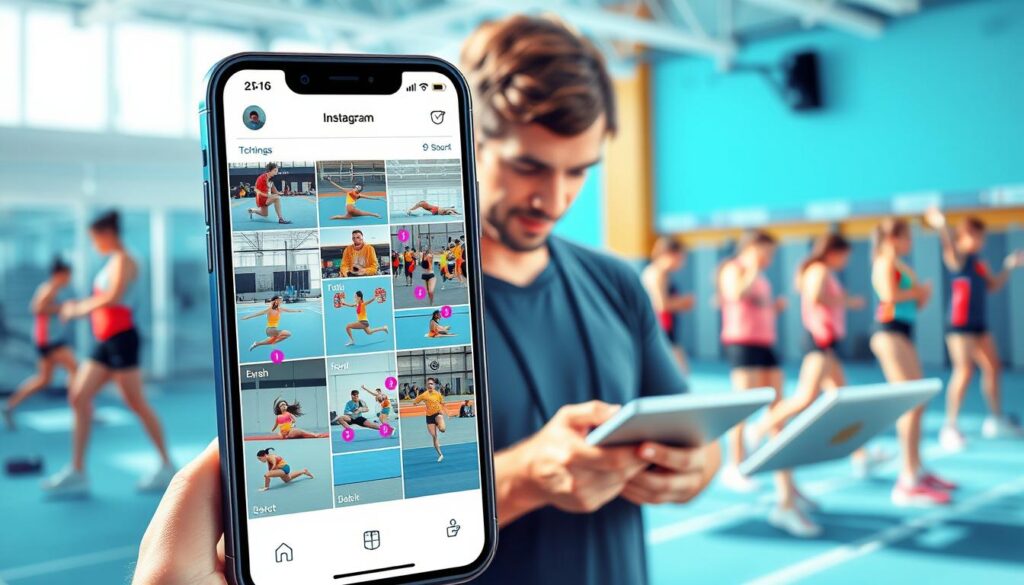
The analytics don’t lie. Visual content—specialy video—drives staggering engagement on Instagram. But for coaches, those metrics translate differently. A “like” becomes comprehension. A “view” becomes a corrected stance. This is micro-feedback at scale, turning mindless scrolling into teachable moments.
Imagine the practical applications. A swimming coach posts a Story, pausing a clip of a flawed stroke. With the drawing tool, they circle the elbow drop. Arrows show the proper path. A 15-second voiceover explains the fix. It’s consumed in a heartbeat and disappears in a day—no pressure, no permanent record of failure.
This ephemeral quality is genius. It lowers the psychological barrier for both coach and athlete. The feedback feels conversational, not archival. The athlete doesn’t see a permanent highlight of their mistake; they see a temporary note from their coach. It’s the difference between a red pen on a final draft and a pencil note in the margins.
The best digital coaching platforms understand this psychology. They’re not just about delivering information—they’re about creating the right environment for receiving it. Instagram Stories provide that environment naturally. The format itself says: “This isn’t forever; it’s just for now. Let’s fix this together.”
What emerges is a new coaching rhythm. Instead of scheduled video reviews, you get real-time nudges. A basketball player posts their jump shot; the coach Stories back with a corrected follow-through. A runner shares their form; the coach highlights the hip alignment. It’s continuous, contextual, and embedded in the athlete’s daily digital life.
This approach transforms Instagram from a vanity platform into a legitimate digital coaching platform. The tools were always there—the drawing feature, the voice recording, the poll questions. Coaches just needed to see past the selfies and latte art to recognize the coaching studio hiding in plain sight.
TikTok for Quick Skill Demonstrations
Forget the long lectures of the past. Today, the best skill demonstrations are quick, lasting under 60 seconds on TikTok. This isn’t a loss of coaching skill—it’s a focus. In a world where attention is hard to find, short videos are the best way to teach.
The secret is the “triple-threat” format. A clear visual grabs the athlete’s attention. Then, concise text explains the mechanics. And the coach’s voiceover adds the “why.” This mix, as seen in Source 3, turns a simple video into a powerful lesson.
It’s like a highlight reel of coaching tips. A perfect box jump isn’t just shown; text highlights the triple extension. A batting stance comparison shows side-by-side, with arrows pointing to key differences. This is social media coaching at its best: delivering the “what” and “why” quickly.
Fitness innovators in Source 2 got it right: “the video or picture captures the attention but it’s your writing that pulls them in.” The platform values clarity, creativity, and rhythm. These are skills every good coach already has. It forces you to show only the essential movement patterns.
The real magic might be TikTok’s algorithm. The “For You Page” acts as a teaching assistant. An athlete scrolling for fun might find a drill for hip mobility they needed. This passive discovery expands an athlete’s toolkit in ways traditional coaching can’t.
This shift is fundamental. The 60-second lesson isn’t a compromise for the digital age; it’s a discipline. It requires coaches to be both technicians and editors. When done well, it makes social media coaching accessible, shareable, and deep.
Twitter for Game Strategy Updates
If Instagram is the polished highlight reel and TikTok the rapid-fire skills clinic, then Twitter is the coaching staff’s digital war room. This platform thrives on chaos—the beautiful, information-dense chaos of real-time sports feedback at a strategic level.
Think about it. Where do breaking news, hot takes, and instant analysis collide? Twitter. Coaches have weaponized this environment for something smarter than just hype.
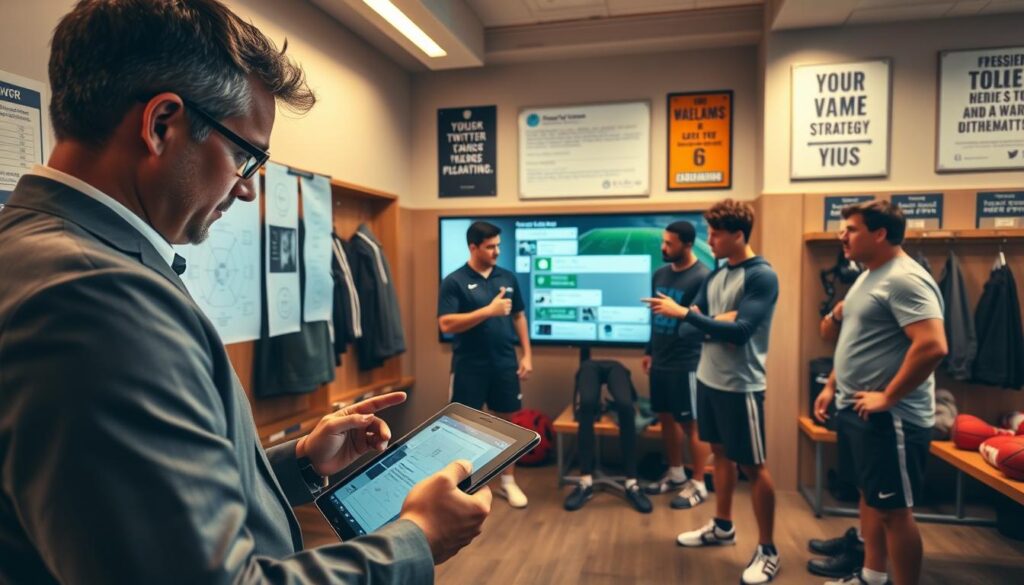
The magic is in the timeline’s velocity. A coach can live-tweet observations during a game, creating a public notepad for post-game review. That cryptic tweet about a defensive formation an hour before kickoff? That’s a strategic breadcrumb for players and fans alike.
This isn’t about polished video. It’s about the rapid-fire exchange of ideas. A threaded breakdown of a critical fourth-down play does more than explain—it invites discussion. It turns monologue into dialogue.
Twitter’s built-in tools are a coach’s secret playbook for engagement:
- Polls to gauge team understanding of a new concept. “Which coverage works best against this offensive set?”
- Scheduled Q&A sessions using team hashtags, answering strategic questions from athletes.
- Direct communication that feels personal, not corporate. A strategic insight appearing between memes and news integrates learning into an athlete’s daily scroll.
The platform fosters what I call collective intelligence. It’s the global water cooler. When a coach shares a tactical observation, they’re not just informing one player. They’re educating an entire ecosystem of fans, analysts, and aspiring athletes. For a masterclass in this approach, check out these best NFL Twitter follows where strategy talk is an art form.
The result? Game strategy stops feeling like homework. It becomes part of the ongoing cultural conversation. An athlete absorbing a coaching point on Twitter is learning in context—the same context where they consume everything else.
This is macro-level coaching. It’s about shaping understanding of systems, philosophies, and adaptations. The feedback loop is immediate and public. Success is measured in retweets, quote tweets, and the quality of the conversation sparked.
In the end, Twitter offers the purest form of real-time feedback sports can harness. It’s messy, unfiltered, and brilliantly effective for the coach who knows how to navigate the noise.
Discord for Team Communication
Discord changes how coaches talk to their teams. It’s not just about sending messages. It’s about creating a place where teams can work together all the time.
Think of Discord like a locker room. It’s where teams build their strength and bond. It’s not just about talking; it’s about working together.
Coaches can now talk to their teams in many ways. They can share game plans, discuss workouts, and even talk about nutrition. This makes communication clear and focused.
There’s a channel for everything. From reviewing games to talking about workouts. Even for sharing memes. It’s not just about organizing; it’s about building a team culture.
Discord gives coaches a safe space to talk. Athletes can ask questions without fear. It’s a place where honesty and learning thrive.
Feedback is always welcome. Athletes can share their thoughts on videos. This creates a learning environment where everyone helps each other.
Coaching becomes a constant conversation. Athletes can share their workouts, and coaches can offer advice. It’s a way to develop skills without being in the same place.
Here’s how to set up your Discord server:
| Channel Type | Primary Purpose | Example Topics/Activities | Coaching Benefit |
|---|---|---|---|
| Technical Review | Skill analysis & correction | Video breakdowns, form checks, technique questions | Creates library of common errors & solutions |
| Performance Log | Tracking progress & accountability | Workout posts, nutrition updates, recovery notes | Provides data for individualized coaching adjustments |
| Strategy Discussion | Tactical planning & game prep | Opponent analysis, playbook questions, scenario planning | Develops collective basketball IQ |
| Team Culture | Bonding & community building | Off-topic chats, motivational content, team announcements | Strengthens cohesion beyond physical training |
| Resource Hub | Centralized information | Schedule links, exercise demonstrations, policy documents | Reduces administrative questions and confusion |
Each channel is a living document of team growth. It shows who’s working hard and who might need help. It also highlights who’s good at analyzing games.
Discord is where coaching culture really comes alive. The conversation never stops. It’s a place where knowledge grows and never fades.
Discord also has voice chat. It’s perfect for quick talks before games or after practices. It’s like having the coach right there with you.
Discord keeps the team engaged all the time. The coach becomes a community leader. They guide discussions and help everyone learn from each other.
Discord is more than just a tool. It’s a way to live your coaching philosophy. It shapes how your team thinks and grows. For serious coaches, Discord is the future of coaching.
The real question is what kind of team you want to build. The tools are ready. The season is always on.
Video Analysis Through Social Platforms
Video analysis has moved out of boring conference rooms. It now thrives on social platforms, where it’s always available. Social media coaching has become more than just sharing videos. It’s about deep, ongoing learning.
Forget the old ways of watching videos. Now, coaches can share clips on Instagram, YouTube Shorts, or Twitter. They can highlight important moments and ask questions like, “See how your hips opened up here?”
This makes feedback a two-way street. Athletes can ask for more details in the comments. It turns watching videos into a team effort, making learning a public yet focused process.
Combining text and video makes content more engaging. Coaches don’t just share videos; they add detailed comments. This creates a library of teaching moments that athletes can refer to later.
This method changes how we analyze videos. It’s no longer just a one-way lecture. It’s a team effort, with the platform acting as a virtual whiteboard. This is asynchronous coaching at its best, fitting feedback into athletes’ schedules.
| Aspect | Traditional Film Session | Social Media Video Analysis |
|---|---|---|
| Timing | Scheduled, weekly (e.g., Monday) | Asynchronous, continuous, 24/7 |
| Format | Group lecture, passive viewing | Interactive, personalized clips with layered commentary |
| Toolset | Projector, laser pointer, whiteboard | Platform editing tools, drawing features, tags, comments |
| Engagement | Limited, in-the-moment questions | Ongoing dialogue, creates a searchable reference library |
| Core Strength | Uniform team instruction | Individualized feedback integrated into daily digital life |
When you see a coach sharing a video with notes, don’t ignore it. It’s the new way of learning. This is social media coaching at its finest, turning screens into classrooms and athletes into active learners.
Creating Engaging Educational Content
Coaches who stand out know a key fact: real-time corrections are short-lived. But teaching athletes to think is forever. This is where the magic begins. It’s the shift from being a remote commander to a digital sage.
Let’s be honest. There’s no secret formula or viral trick that replaces hard work. Look at the giants like Joe DeFranco and Chris Duffin. Their influence wasn’t built on one post. It was built on a mountain of insights. For sports coaching, your real-time feedback sports system’s strength depends on its educational foundation.
So, what does that foundation look like? It goes beyond “elbow up” or “knees out.” It answers deeper questions. The coach Mike got it right: knowing the ‘why’ and the ‘when’ is more powerful than just the ‘what’. Why this footwork pattern for this defense? When should this recovery protocol be used? This turns instant coaching into an insight that empowers self-correction.
The philosophy is simple yet often ignored. Quality over quantity. Simple and digestible education. It’s not about flooding athletes with long videos. It’s about breaking complex ideas into simple, easy-to-understand pieces. Think of it as creating a curriculum for today’s athletes.
To build this curriculum, you need a plan. Not all content educates in the same way. Some explain mechanics, while others build the mindset for competition. Categorizing your approach ensures you’re teaching the whole game, not just a part.
| Content Type | Core Question It Answers | Educational Value | Platform Fit |
|---|---|---|---|
| Technical Breakdown | “HOW does this work?” | Demystifies biomechanics. Provides the “owner’s manual” for a movement. | Instagram Carousels, YouTube Shorts |
| Tactical Analysis | “WHEN and WHY do I use this?” | Connects technique to game intelligence. Teaches decision-making. | Twitter Threads, TikTok |
| Principle & Philosophy | “WHAT is the bigger picture?” | Builds mindset and long-term athletic identity. The “life skills” component. | Long-form Instagram Captions, Blog Posts |
| Case Study / Fix | “WHAT went wrong and HOW do we fix it?” | Provides actionable, relatable solutions to common problems. Immediate application. | Instagram Reels, Video Analysis Posts |
Execution is key. The best educational content tells a story. Use analogies. Compare a swimmer’s catch phase to “grabbing a handful of water.” Frame a basketball defensive stance as “being a spring, not a statue.” These stories stick. They make complex ideas simple.
This approach turns your feed into a continuous learning loop. An athlete sees a principle explained in a carousel post. Later, they get a real-time feedback sports comment on their video, referencing that principle. The connection clicks. The learning deepens. You’re not just correcting a rep; you’re building a smarter, more independent athlete.
In the end, engaging educational content is your leverage. It’s what makes your digital feedback indispensable. It’s the difference between being a voice they hear and the voice they listen to, understand, and apply.
Privacy and Safety Considerations
The digital coaching world has its dark side. Every cool Instagram Story or TikTok video opens a risk we must watch out for.
Are we recording kids without their okay? Is an athlete’s health info shared in a chat that’s not safe? A public comment meant to help can actually hurt. The excitement of quick feedback can lead to privacy issues.
One coach said we need to be very careful about who sees our content. It’s not just about keeping out bots or mean people. It’s about creating a safe space. The top digital coaching sites are like private clubs, not open streets.
Keep your accounts private. Make groups on Discord or Instagram that only invited people can join. Use fake names for young athletes. This is key to keeping things safe in the digital world.
But safety isn’t just about who can see what. It’s also about how athletes feel. A good digital coaching site should be a place where athletes can share their struggles and ask questions without fear. It should focus on the journey, not just the end result.
This isn’t about locking everything down. It’s about building a strong, safe space. The power of digital coaching is huge. So is our duty to use it wisely, keeping our athletes safe and supported.