I used to think machines couldn’t judge human sports skills. But Fujitsu’s 3D motion capture system literally decides Olympic gymnastics medals. It’s more precise than any human eye. Welcome to the Moneyball 2.0 era, where data-driven insights change playbooks fast.
The 2024 Paris Olympics will show AI-made highlight reels. They’ll analyze crowd reactions and biometric data. MLB teams track 20,000 data points per pitch with smart baseballs. NFL teams use NSA-grade wearables to map players’ nervous systems.
This isn’t just about replacing referees with robots. It’s a big change from gut instincts to neural networks predicting injuries. From coaching hunches to algorithms optimizing training loads. The magic happens where sensors meet strategy.
As we explore how machine learning changes athletic performance, remember: the game hasn’t changed. The stakes have. Teams using smart analytics aren’t just playing better. They’re rewriting the rules.
What is AI?
Modern artificial intelligence is not about robot overlords. It’s more like a chess grandmaster that never sleeps. AI systems learn patterns faster than LeBron James can read a pick-and-roll. They analyze numbers, recognize visual cues, and make predictions with the precision of a free-throw champion.

Basic Concepts: How Machines Learn Sports
Machine learning algorithms gobble up data like Joey Chestnut at a hot dog contest. Three key ingredients power this sports revolution:
- Neural networks that process game footage frame-by-frame
- Predictive models analyzing thousands of MLB at-bats
- Computer vision tracking NBA players’ micro-movements
These systems spot patterns humans might need decades to notice. An AI scout found that NBA players who pivot 15 degrees left before shooting 3-pointers have 8% higher accuracy. That’s a secret play you won’t find in your playbook.
Application in Sports: From Locker Rooms to Boardrooms
Teams now use AI like Tom Brady used deflated footballs – discreetly and effectively. The NFL’s Next Gen Stats system tracks 20+ data points per player, per second. MLB front offices use AI for contract negotiations, while European soccer clubs predict injury risks down to the muscle fiber.
Want to see how AI is revolutionizing sports analytics? Look at these real-world implementations:
| Sport | Traditional Approach | AI-Driven Solution |
|---|---|---|
| NBA Scouting | Manual video review | Biomechanical movement analysis |
| NFL Strategy | Gut-feeling play calls | Win probability algorithms |
| MLB Recruiting | Scout travel budgets | Global prospect algorithms |
Educational programs now teach this hybrid skillset. Imagine Moneyball’s Billy Beane teaching a coding bootcamp. Coaches now act as data conductors, using wearable tech, video analysis, and real-time performance metrics.
Changing the Game: AI Impact
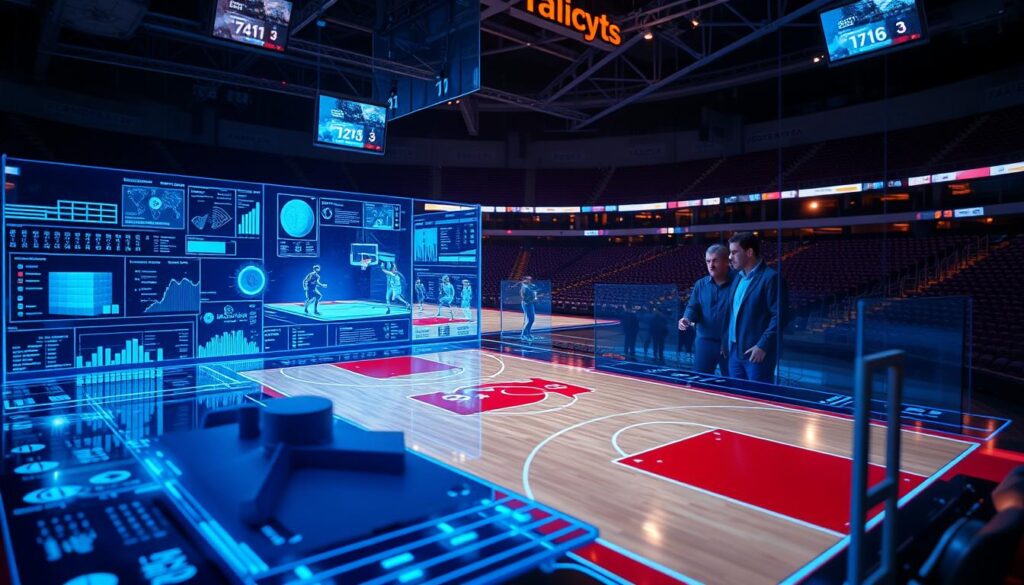
Imagine if your gym buddy could predict your next injury before you feel it. That’s what AI in sports is all about today. Teams don’t just pick athletes anymore; they use AI to analyze data faster than anyone can.
Algorithms are the real MVPs. They turn simple stats into insights that can change careers.
Enhanced Performance Analysis
Coaches no longer rely on gut feelings or VHS tapes. The Chicago Cubs use AI sensors to track muscle fatigue. It’s like having a Fitbit on steroids.
The Cleveland Indians track sleep like sommeliers taste wine. They analyze REM cycles with precision, changing how teams recover.
This isn’t just about making athletes faster. Sports teams now hire more data scientists than scouts. The new locker room hierarchy? Machine learning engineers talk to GPUs while trainers look like they’re in a quantum physics class.
Predictive Analytics in Games
The Seattle Seahawks’ AI predicted a 73% chance of a cornerback’s hamstring snapping last season. It wasn’t just about injuries; it was like playing Madden NFL with real players. Teams use models so advanced, they make Warren Buffett’s stock predictions look simple.
But there’s a catch. If an algorithm knows a player will underperform before their spouse does, who owns that truth? Ethical landmines are everywhere. From biased data skewing draft picks to deciding whether to bench stars based on AI predictions.
Visualization tools add another layer. Real-time dashboards map player movements with NSA-level detail. Coaches become like battlefield generals. But, these systems raise more questions than answers. When AI suggests benching your star quarterback, do you trust the math or your gut?
AI Tools and Platforms
Forget benchwarmers – today’s game-changers are algorithms crunching data faster than LeBron drives the lane. The real magic happens where sports data intelligence meets bleeding-edge tech. This creates tools so intuitive they make Phil Jackson’s playbook look like crayon doodles.
Leading Technologies: From Locker Rooms to Living Rooms
Pro teams aren’t hogging the good stuff anymore. Check these game-changers:
- Adidas’ smart soccer balls – tracking spin rates like NASA monitors rockets
- Warriors’ VR training systems – letting rookies practice 360° dunks without breaking ankles
- Dodgers’ stadium AI – guiding fans to bathrooms faster than a pinch runner steals home
Cloud platforms now analyze jump shots with Moneyball-level precision. Mobile apps turn your backyard hoop sessions into MIT-level analytics seminars. Even amateur cyclists can access sports analytics tools that dissect pedal cadence like Wall Street quants study charts.
How to Join the Big Leagues (Without a Million-Dollar Contract)
- Start small: Use free apps like HomeCourt to map your three-point arc consistency
- Volunteer with local teams’ analytics departments – it’s the new “water boy” entry point
- Experiment with open-source platforms like TensorFlow Sports – no coding PhD required
Pro tip: Your Sunday league stats might be the new Moneyball spreadsheet. Cloud computing in sports has democratized access so completely. Your smartphone now holds more analytical firepower than entire 1990s front offices. The question isn’t “Can you afford it?” – it’s “Can you handle the truth about your backhand?”
Future AI Innovations
The sports world is on the verge of a huge leap forward. Artificial intelligence is growing faster than a rookie quarterback’s skills. The NFL and NHL are already using AI to detect concussions quickly.
Imagine ticketing systems as smart as a scalper’s phone. They would be transparent, secure, and as reliable as LeBron’s work ethic.
What’s Next?
Sports analytics will soon mix reality with simulation. The PGA’s AI for penalty detection could lead to virtual referees. Esports might analyze Fortnite strategies with the detail of Tom Brady’s playbook.
Stadiums could use AI to save energy like a chess master. This would make them more sustainable and efficient.
Speculative Possibilities
Imagine AI that knows your nutrition needs better than Nonna’s lasagna. Fantasy leagues could become AI-driven battles, making GMs more strategic. But there’s a catch: we need to ensure this tech doesn’t go too far.
When AI suggests halftime snacks based on your sweat, we’ll know we’ve entered the future.