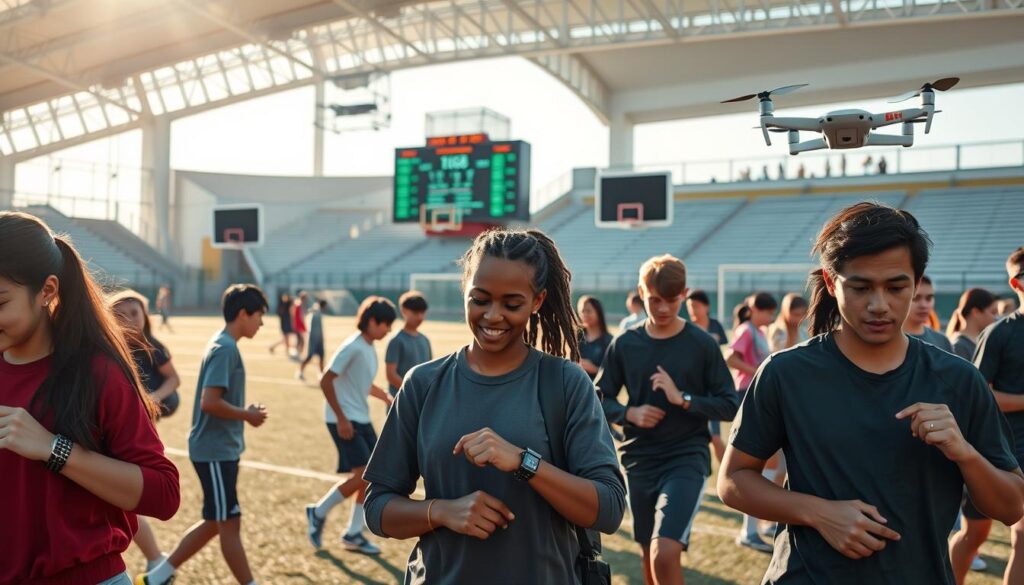
I’ve seen athletes walk onto fields like digital zombies after too much screen time. Research in Malaysia backs up what coaches have known: too much screen time before games makes skilled players into clumsy amateurs.
That 15-minute warm-up is basically useless. It’s like trying to solve complex math after watching too much TV. But here’s the twist: we’re learning to use technology to our advantage.
Tools like AI coaching analyze how athletes move. Equipment with sensors tracks their performance 400 times a second. This isn’t just about cool gadgets. It’s about teaching our devices who’s really in charge.
The answer is clear: it should always be the athletes. We’re now in a digital world where the real battle is between focus and technology.
What Can Be Hacked?
The NBA invests heavily in tech, but high school teams lag behind. They use outdated tech, unlike the NBA’s cutting-edge tools. Yet, you don’t need NBA funds to get ahead.
Smartphones are more than just phones. They can track performance, analyze videos, and plan strategies. Tools like SwingVision and wearable sensors help monitor player health.
The NBA tracks ball movement 400 times a second. High school teams use stopwatches. But, with some creativity, you can close this gap without spending a lot.
Here are some areas to hack:
- Performance tracking using smartphone sensors
- Video analysis with free editing software
- Fatigue monitoring through basic wearables
- Strategic planning with data visualization tools
The latest sports technology innovations show even pros are pushing limits. Why can’t school teams do the same? It’s about using tech wisely, not cheating.
This shift towards maker sports is about being smart, not just hardworking. It’s about using tech to give student athletes an edge.
Why not use apps for instant feedback on serves or shots? Wearable sensors can prevent injuries by tracking fatigue. These tools are ready to be used.
This approach teaches students more than just sports. They learn about data, tech, and problem-solving. They become innovators, not just athletes. This is a lasting competitive advantage.
Top DIY Tech Hacks for Teams
The most innovative sports technology isn’t coming from big companies. It’s being made by coaches who are super creative. You don’t need a lot of money when you have smartphones and cameras.
For example, some junior tennis tournaments use iPhones on fences for line calls. This school sports tech trick makes officiating look professional but costs very little. The camera never misses a close call.
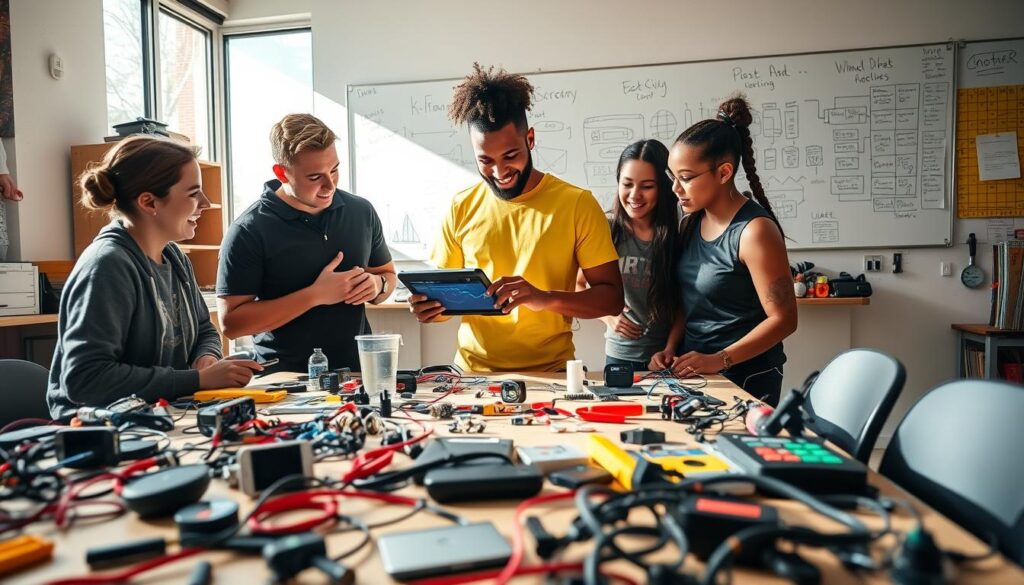
Microsoft 365’s AI can turn practice footage into training plans. Just ask it to analyze opponents or create drills for weak-side defense. It’s like having an AI assistant that’s cheaper than Gatorade.
Wearable trackers are now affordable and give pro-level data. These DIY hacks help you track athlete performance without spending a lot.
Even the NFL uses Sony’s 8K Hawk-Eye cameras instead of chain gangs. They save 45 seconds per measurement. Owl AI’s technology offers similar accuracy for school teams that are creative.
The best part? You probably already have everything you need. That smartphone in your pocket can be a video analysis system. That basic camera can be an instant replay machine. These school sports tech solutions show that innovation is more important than money.
Start with what you have and build from there. The best DIY hacks come from being creative with what you have. Your team’s next big idea might be just one app away.
Leveling the Playing Field with Innovation
Modern athletics have a paradox. Technology can be a distraction, but it can also be a great equalizer. U18 athletes face mental fatigue from screens, but smart tech can help them catch up.
Look at the pros for proof. FIFA’s new offside tech removes human error. The Premier League’s tracking systems give fair data. MLB’s ball-strike system promises fair play. These innovations change the game by removing bias.
At the school level, innovation is key. Underfunded programs don’t need expensive tech to compete. They just need smart, targeted tech to improve.
Here’s a comparison of old vs. new ways:
| Traditional Approach | Innovative Solution | Impact on Performance |
|---|---|---|
| Subjective coaching observations | AI-driven performance analysis | Identifies hidden strengths/weaknesses with 95% accuracy |
| Generic training regimens | Wearable tech data customization | Reduces injury risk by 40% while optimizing output |
| Reactive strategy adjustments | Real-time analytics during games | Improves in-game decision making by 60% |
| Limited recruitment exposure | Digital highlight reels with performance metrics | Increases college scout attention by 300% |
The maker sports movement shows this shift. Schools build their own tracking systems with Raspberry Pi and open-source software. Students learn coding and gain a real edge.
Managing screen time is also key. Teams with digital curfews before games focus better by 25%. It’s about using tech wisely, not banning it.
The best programs use tech to enhance talent, not replace it. They use affordable tools to compete year after year, no matter the budget.
Innovation in school sports isn’t just keeping up. It’s about outsmarting others with creativity and data. The playing field is leveling, and it’s a proving ground for future innovators.
Case Studies: Student Success Stories
Ever wonder if these school sports tech innovations actually work outside Silicon Valley pitch decks? Let’s talk results that would make even Moneyball’s Billy Beane nod approvingly.
Take the rowing team at Pacific Northwest High. They strapped wearable sensors to oars and discovered something revolutionary – the “perfect stroke” wasn’t about brute force. Their data showed optimal efficiency came from subtle wrist adjustments mid-pull. Result? Regional championship victory by 3.2 seconds after three years of fourth-place finishes.
Then there’s the basketball program that implemented video analysis AI. The system tracked every pass, every shot, every defensive rotation. It spotted patterns human coaches missed – like how players tended to force cross-court passes when tired. They implemented targeted conditioning drills. Turnovers dropped 22% in one season.
My personal favorite? The soccer coach who used Microsoft Copilot to generate personalized training plans. The AI analyzed player performance data and created individualized drills addressing specific weaknesses. One defender improved his interception rate by 31% using custom reaction-time exercises.
Even the pros are taking notes. The NBA’s G League is testing sensor-embedded basketballs that might eventually automate out-of-bounds calls. While Owl AI is developing systems that can score snowboard tricks with commentary about “daring and powerful approaches.”
The through-line here isn’t just cool gadgets. It’s measurable competitive advantages showing up where it matters most – the win column. These DIY hacks prove you don’t need professional sports budgets to get professional-level insights.
Schools embracing tech innovation aren’t just keeping up with the times. They’re rewriting the playbook on what’s possible with limited resources and maximum creativity.
Ethical Considerations
Let’s talk about the digital elephant in the locker room. When does innovation become cheating? Leagues using sensor tech struggle with keeping human officials. It’s finding the right balance between accuracy and being real.
Former NFL officiating chief Dean Blandino said it best. We need to get big calls right without messing up the game’s flow. This is the heart of the competitive advantage debate in maker sports.
There’s also the issue of mental fatigue. Studies show athletes can manage screen time if they’re honest about it. But let’s face it, smartphone addiction makes honesty hard.
Are we making athletes or tech-dependent performers? The difference between help and crutch is very thin. We’re on a tightrope, and the safety net might be code.
The big question is, does technology help too much? When does a competitive advantage become unfair? In maker sports, this is a question nobody wants to answer.
Getting Coaches and Classes on Board
Trying to get veteran coaches to use school sports tech is like explaining TikTok to your grandparents. It’s a challenge that needs patience. They resist because they like what works.
Here’s the secret: show them how tech can help, not replace them. AI gives coaches data to back up their instincts. It’s like giving Superman X-ray vision.
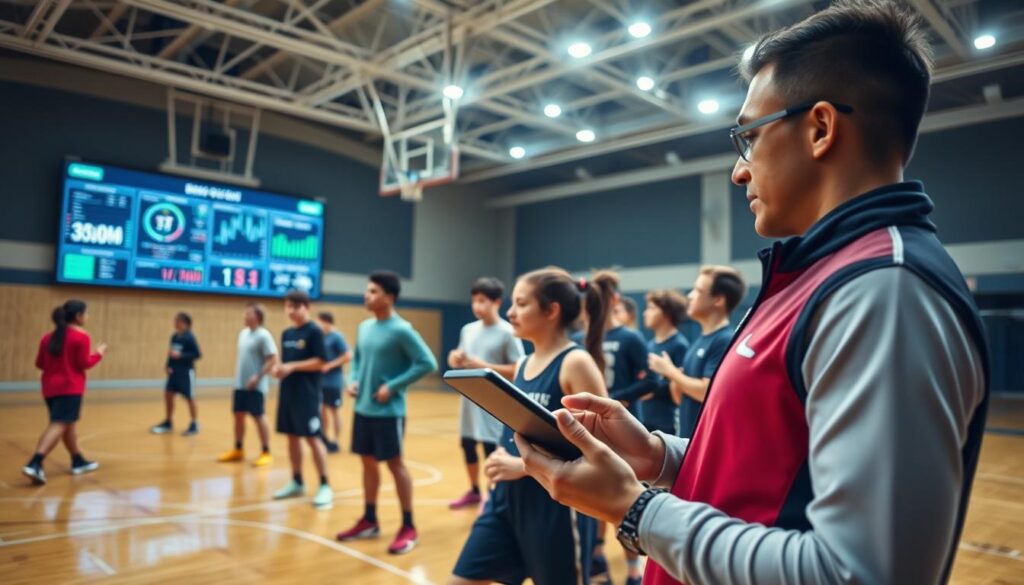
The NBA’s Tom Ryan said it best: “We use technology to support, not replace people.” Begin with simple DIY hacks that show quick results. For example, video analysis or wearable tech for injury prevention.
Here are some effective strategies:
- Show them, don’t tell them – let them see the patterns they’ve missed
- Start with injury prevention tech – everyone wants to keep players safe
- Use what you already have – like smartphone cameras instead of expensive gear
- Focus on one problem at a time – too much data can be overwhelming
The aim is not to turn coaches into data experts. It’s to give them better tools to excel. When they see how film analysis or wearable tech helps, they get it.
Technology adoption in sports follows a familiar curve. Early adopters spread the word, skeptics come around, and soon everyone wonders how they coached without it.
Conclusion
We are at a critical point in sports. Studies show that too much screen time hurts passing and defense. Yet, we have tools like automated officiating and AI coaching.
The big hurdle is using these tools right. They should boost human skills, not take over. It’s about using tech to help, not hinder.
Top schools in sports will have more than just money. They’ll use tech smartly. The right tech can turn distractions into advantages.
This is what maker sports is all about. It lets teams create their own path. The winners will be those who use tech wisely, not just for show.