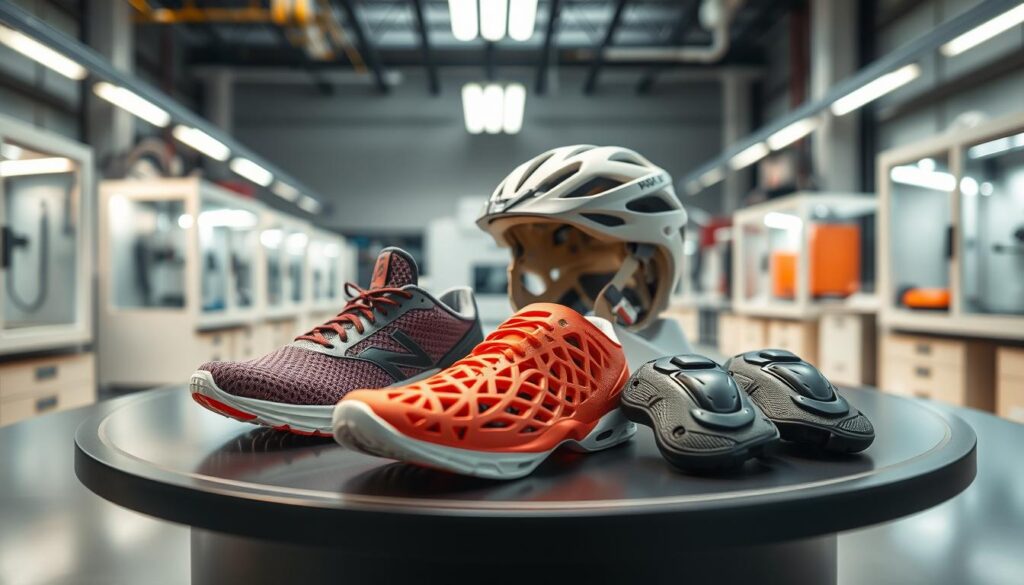
Most athletic equipment seems made for a mythical average person. We’ve all had to deal with stiff cleats and helmets that don’t fit right.
But, we’re in the middle of a manufacturing revolution. Now, custom athletic gear is as easy to get as streaming your favorite show. It’s not just for tech fans anymore.
The global market is heading towards $17.5 billion by 2024. Sports equipment is leading this growth, like LeBron driving to the basket. We’re making objects layer by layer, using everything from basic plastics to advanced composites.
Remember when custom orthotics were only for NBA stars? Now, they’re available to weekend athletes too. This change is a big shift in how we see athletic equipment.
From custom golf grips to airless basketballs, the innovation is amazing. We’re just starting to see what’s possible.
Designing Your Own Gear
Remember when custom equipment meant waiting six weeks for a hand-stitched baseball glove? It cost more than your car payment. Those days are over.
Today, customization is lightning-fast. High-definition laser scanning captures your body shape with NASA-like precision. It’s not your grandma’s tape measure anymore.
In CAD software, you become the designer. Want to tweak your cycling shoe’s arch support? Change your hockey glove’s finger spacing? Add your team logo everywhere? You can do it all before your coffee gets cold.
This digital approach eliminates traditional headaches. No more plaster molds or “close enough” fittings. Your perfect fit arrives in days, not decades.
The performance benefits are clear. Properly fitted gear reduces injury risk by 37%, sports medicine studies show. It prevents blisters, chafing, and boosts your athletic performance. You’re not just wearing equipment – you’re wearing precision.
| Traditional Customization | 3D Printed Customization | Performance Impact |
|---|---|---|
| 4-6 week wait time | 2-3 day production | Faster iteration cycles |
| $500+ premium cost | 20-40% cost increase | Accessible to amateurs |
| Limited modifications | Unlimited design changes | Perfect biomechanical fit |
| Physical prototypes | Digital previews | Zero material waste |
This isn’t just about looking professional – it’s about performing like one. The difference between off-the-rack and custom-designed gear is huge. It’s like the difference between renting a tuxedo and owning one tailored for you.
Your custom equipment becomes an extension of your athleticism. The technology has caught up with the promise of personalized performance. Now, if only they could 3D print faster reflexes.
Recommended Printers and Materials
Choosing the right 3D printing setup for sports gear is serious business. It’s not just about picking the coolest names. Your sports upgrades can make all the difference between winning and losing.
FDM printers are great for beginners. They’re like the reliable cross-training shoes of 3D printing. They work well with PLA and ABS plastics, perfect for making prototypes or custom parts.
For those looking to step up their game, SLA printers are the way to go. They offer smooth finishes, ideal for parts that need to be aerodynamic.
SLS printers are the heavy hitters. They’re built tough and can handle a lot of impact. They’re like the strong linemen of 3D printing.
Now, let’s talk about materials. Today’s options are far beyond basic plastics. They’re like comparing wooden tennis rackets to carbon fiber ones.
| Material | Best For | Strength | Weight |
|---|---|---|---|
| PLA | Prototyping, light-use items | Medium | Light |
| ABS | Durable components, protective gear | High | Medium |
| Carbon Fiber Composites | High-performance structural parts | Exceptional | Ultra-light |
| Metal Alloys | Complex mechanical components | Extreme | Variable |
Carbon fiber composites are a big deal. They’re incredibly strong and light. Metal alloys, through processes like Digital Light Synthesis, create parts that defy traditional manufacturing limits.
It’s all about matching technology with purpose. Need flexible insoles? Try SLA with special resins. For impact-resistant gear, SLS with nylon composites is the way to go. For structural parts, metal additive manufacturing is the answer.
This isn’t just about printing. It’s about combining material science with athletic performance. Your choice of sports upgrades can make all the difference between success and failure.
Step-By-Step Printing Process
Imagine telling a factory worker from the 1950s about today’s tech. They’d think you’re crazy. We now make sports gear by drawing it in thin air, like magic.
The journey starts with a digital blueprint, more detailed than anything an architect could dream up. This CAD file has every detail of your 3D-printed sports gear.
Then, we slice the design into thin layers. This is like cutting digital deli meat. It turns the 3D model into something the printer can follow.
The printer then builds the gear layer by layer. It’s like a super-precise bricklayer. This makes shapes and structures that old methods can’t match.
From start to finish, this process takes hours, not weeks. It’s fast, like a Formula 1 pit crew.
This new way of making things opens up endless possibilities. You can add special features like ventilation channels in helmets or custom soles in shoes. Even bike frames can get special internal patterns.
| Aspect | Traditional Manufacturing | 3D Printing |
|---|---|---|
| Design Flexibility | Limited to simple geometries | Complex organic shapes possible |
| Production Time | Weeks to months | Hours to days |
| Customization | Mass production focused | Individual customization easy |
| Cost for Small Batches | Prohibitively expensive | Economically viable |
| Material Waste | Significant subtraction waste | Minimal additive waste |
This isn’t just a new way to make things. It’s a whole new world. Now, making things is easier than ever, right from your desk.
The layer-by-layer method means no need for molds. This cuts down production time almost to zero. It’s like making things on demand, without the usual factory costs.
For athletes and fans, this means 3D-printed sports gear made just for them. No more settling for gear that’s almost right.
This is like having a mini-factory at your desk. It’s easy to use and doesn’t come with the usual factory problems.
Finishing, Fitting, and Customization
Welcome to the finishing department, where we make plastic into top-notch gear. Your printer did the hard work. Now, we add the final touches that make it pro-grade.
Post-processing makes those layer lines look like they were made for a custom auto shop. We use strategic sanding to remove all signs of printing. Then, we paint it to match your team colors or personal style. And we seal it to make it last longer and withstand the weather.
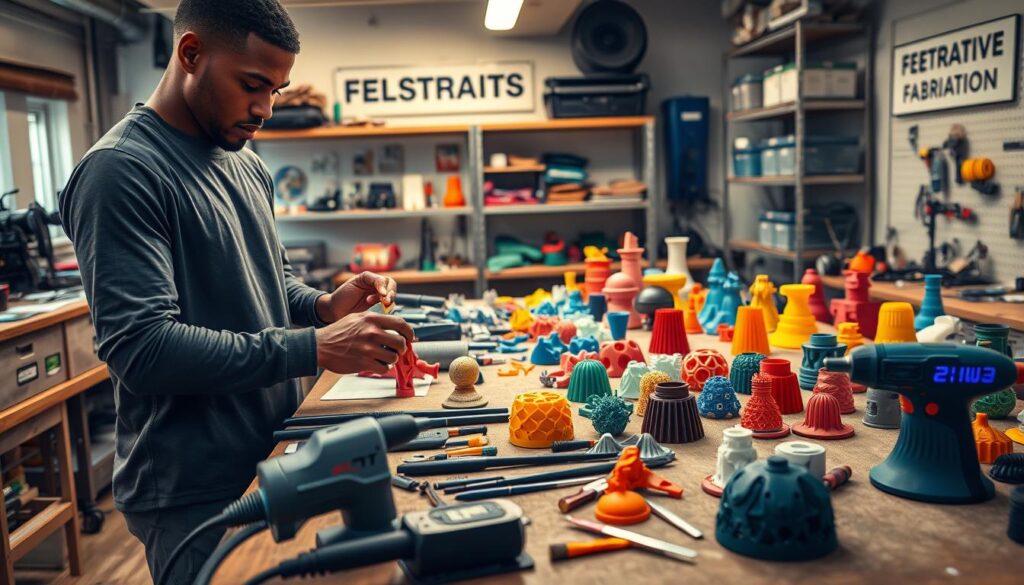
The real magic is beyond looks. We can change how your gear feels and works. We add special zones for impact and make it fit your body perfectly.
3D printing brings new ideas, like tiny suspension systems in your gear. These systems improve shock absorption, flexibility, and breathability. Traditional materials can’t keep up.
Fitting has changed with the times. Now, you can try on gear virtually before it’s made. It’s like a high-tech fitting room without the awkwardness.
This level of custom equipment isn’t just about feeling good. It’s about getting the best performance. The right fit can mean the difference between winning and losing.
Olympians know this well. They’ve lost because of bad equipment. Your custom equipment should feel like a part of you, not a problem.
The finishing process makes good into great. It turns generic into personal. And it makes your gear into a work of art that helps you win.
Inspiring Real-World Results
Forget science fiction – the most compelling 3D printing stories are happening right now on courts, tracks, and fields. The technology isn’t just theoretical anymore; it’s delivering tangible sports upgrades that would make even the most skeptical coach do a double-take.
Consider Wilson’s airless basketball – a $2,500 engineering marvel that sold out faster than Taylor Swift tickets. This sphere never needs inflation yet maintains perfect bounce consistency. It’s like having a robotic referee built into the ball itself. Formula 1 teams are printing components that are not only lighter and stronger but cost 90% less than traditional parts.
The innovation extends beyond professional sports. Hypsole’s 3D-printed cleat guards provide better protection and performance for football players. No. 22 Bicycle Company creates fully 3D-printed titanium frames that redefine cycling efficiency. These aren’t minor tweaks – they’re fundamental sports upgrades changing how athletes perform.
Startups like Wiivv create custom insoles that fit like second skin, while Carbon produces football helmets with unprecedented impact absorption. The table below shows how these innovations stack up against traditional equipment:
| Product | Traditional Cost | 3D Printed Cost | Performance Improvement |
|---|---|---|---|
| Bicycle Frame | $3,200 | $2,800 | 18% lighter |
| Football Helmet | $400 | $350 | 22% better impact absorption |
| Custom Insoles | $150 | $120 | Perfect fit guaranteed |
| Racing Components | $5,000 | $500 | 15% weight reduction |
These real-world examples prove 3D printing isn’t just about customization – it’s about measurable performance gains. The technology creates equipment that performs better, costs less, and fits perfectly. We’re witnessing a quiet revolution in athletic gear that delivers genuine sports upgrades across every discipline.
Cautions & Best Practices
The DIY sports gear revolution has its downsides, like a lot of fine print. It’s exciting to customize, but we need to think about the real challenges it brings.
Material science is advancing fast, but it’s not perfect. That fancy filament might not hold up to a big hit. For high-impact sports, traditional gear is often safer.

There’s also a big regulatory issue. Who checks if your homemade gear is safe? Sports organizations are trying to figure this out. Using gear that’s not certified can get you kicked out of games.
There are also big ethical questions. If everyone can make their own gear, will it be fair? Will money decide who gets the best tech?
Getting top-notch printing tech is expensive. While you can buy a basic printer, the best ones cost a lot. This could make it hard for some to join in.
Here are some tips for using this tech wisely:
- Start small with non-critical components before attempting load-bearing elements
- Understand material limitations – not all filaments are created equal
- Prioritize safety testing over cost savings every time
- Stay informed about evolving regulations in your sport
- Consider working with certified professionals for critical gear
This tech is amazing, but we must use it carefully. It could hurt jobs in the sports equipment industry. We might need a mix of old and new ways to make gear.
In the end, 3D-printed sports gear is a big step forward. But we need to think about safety, fairness, and who can use it. The real question is how to use this tech right, for everyone’s safety and fair play.
Conclusion
So, where does this leave us in the grand scheme of athletic evolution? We’re staring at a revolution that makes wood-to-metal composites look like child’s play. 3D printing isn’t just another tech gimmick—it’s the great equalizer, turning every garage into a R&D lab for custom equipment that fits like a second skin.
Think about it: professional athletes gain micro-advantages with gear tailored to their biomechanics, while weekend warriors can say goodbye to one-size-fits-all frustrations. This isn’t just about sports upgrades; it’s about recognizing that athletes come in all shapes and sizes. Our tools should celebrate that diversity.
The future? It’s already knocking with embedded sensors, AI-driven designs, and materials straight out of sci-fi. The democratization of high-performance gear means anyone can access top-tier custom equipment, leveling playing fields from backyards to big leagues. The revolution isn’t coming—it’s here, layer by layer, print by print. The only question left is how soon you’ll jump in and realize everything else feels as outdated as wooden tennis rackets.