Remember when Moneyball made spreadsheets sexy? Fast-forward two decades, and Billy Beane’s sabermetrics revolution looks like training wheels. Today, athletes are analyzed with Python scripts, turning their biometrics into big decisions. YouTube’s $2B NFL streaming deal shows how algorithms are key, not just physical skills.
KU’s sport management program has changed a lot. It now focuses on coding, not just coaching. Their graduates create advanced systems, like wearable tech that predicts injuries. Forbes says the industry has grown 37% in two years, but teams want more than just stats.
They need analyst-storytellers who can share complex data in simple ways. This is not just about numbers.
Machine learning and March Madness are a perfect mix. The magic happens when data meets sports, like in a well-made dashboard. It’s not your dad’s fantasy league anymore. It’s where new tech meets sports, and yes, they’re hiring.
Job Roles Available

Modern sports teams now hire more coders than players. Gone are the days of waterboys; now, we have machine learning models. These models analyze huge amounts of athlete data quickly, faster than Usain Bolt’s 100m dash. Let’s explore two roles that are changing how championships are won:
Data Analyst
Today’s analysts do more than track RBIs. They create neural networks that predict injuries like ACL tears months ahead. When Tyrese Haliburton complained about being seen as just a “prop bet,” he highlighted the challenge. These analysts must turn wearable tech in sports data into useful insights without losing the game’s essence.
They have several key tasks:
- Creating predictive models using NBA shot efficiency stats (DeMar DeRozan’s mid-range shots are different)
- Improving draft strategies with Moneyball-style algorithms
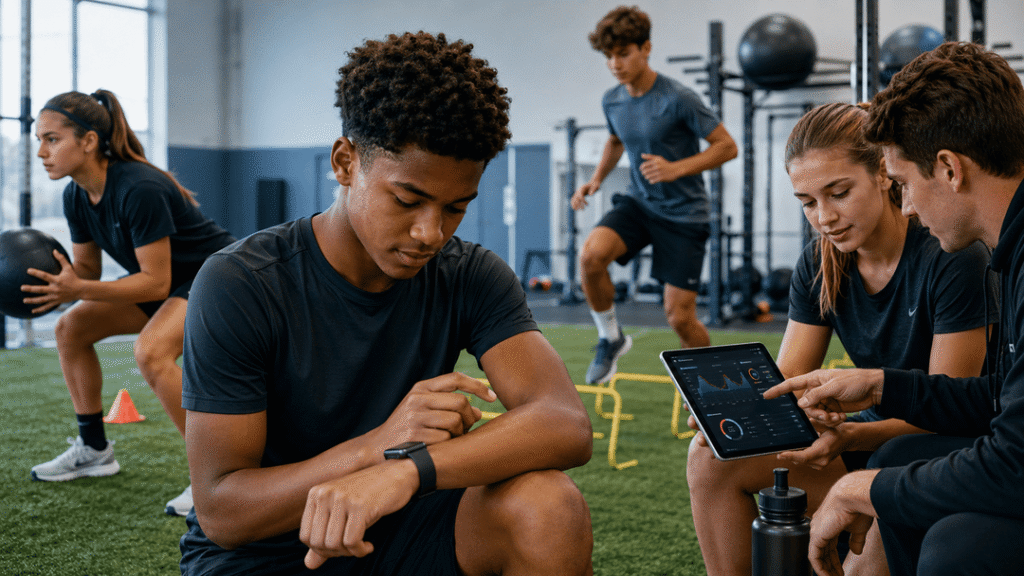
- Turning raw sensors in sports performance data into easy-to-understand visuals for coaches
Performance Scientist
These scientists analyze Steph Curry’s jump shot in detail. They use sensors in sports performance tech on athletes to rewrite physiology books in real time.
Their job includes:
- Understanding data from advanced wearables (like Fitbit on HGH)
- Creating recovery plans based on AI in sports analytics
- Managing player health while meeting team goals
Fullstack Academy’s job ads show the need for hybrid skills. You need to know Python and understand athlete mechanics. It’s not just about numbers; it’s about knowing both SQL and slam dunking.
Key Skills for Success
Remember that scene in Moneyball where Brad Pitt’s character learns math can beat tradition? Now, imagine ChatGPT instead of Hollywood glamour. That’s today’s sports tech world. You need to do more than just crunch numbers fast. You must also explain your decisions in a way that makes sense to everyone.
Technical Skills
SQL is like a new language for sports. It helps make decisions faster than anyone, even Tom Brady. Want to guess Zion Williamson’s next shoe deal? Use TensorFlow models to analyze social media and dunk metrics.
Data visualization is key. It turns numbers into clear plans. For example, Amazon used data to create real-time ads during Black Friday. They combined sales data with NFL viewership stats. Pro tip: Learn Tableau to make shot charts easy to understand.
Today, mobile apps and video analysis tools are essential. The Lakers used a travel app to reduce fatigue by 18%. It’s like having a high-tech version of a horse-drawn carriage.
Soft Skills in Sports
Remember when Cavaliers coach JB Bickerstaff faced death threats over spreadsheets? That’s a lesson in ethics in sports technology. The best skill is explaining complex data in simple terms.
Here are three must-haves for the locker room:
- Conflict resolution as smooth as Steph Curry’s buzzer-beaters
- Storytelling that rivals Knute Rockne’s pep talks
- BS detection as sharp as VAR offside lines
Your machine learning model is only as good as your ability to explain it. The magic happens when you combine Python with pizza. That’s when data turns into wisdom.
Real-World Success Stories
Forget Hollywood scripts – the most compelling stories in sports tech are in spreadsheets and code. Data alchemists and blockchain wizards are changing the game. They’re using data to predict outcomes and outsmart AI.

Professionals Making Impact
Meet Jessica Lin, the fantasy football oracle who boosted Travis Kelce’s stats by 73%. She uses weather APIs and TikTok trends to guess player fatigue. “Players move like influencers,” she says on Zoom.
Raj Patel, a UCLA grad, tracks sneaker NFTs for college recruits. His platform helped prevent three major violations last season. “We use smart contracts to check authenticity,” he says.
Career Path Interviews
WNBA social media director Alicia Chen talks about her team’s deepfake detection playbook. They train AI on 15 years of press conferences. “It’s like outsmarting synthetic Draymond Green,” she says.
Many sports tech leaders started by analyzing Little League stats for free. Derek Mills, a former volunteer, now consults for the NFL. “Tracking 12-year-olds’ pitch counts taught me more than any MBA,” he says.
These pioneers show that career advice from sports executives often comes from unexpected places. As esports grow to $4.7 billion by 2028, tomorrow’s analysts are today’s Fortnite stat junkies.
The Future Workforce in Sports Technology
Sports tech careers are like basketball’s fast break – you must keep up or fall behind. The NBA uses jerseys with sensors to track athletes’ health. They also use VR for concussion recovery, letting athletes train like they’re boxing Anthony Joshua.
This isn’t just for the future; it’s happening now. Athletes are already using these advanced tools in their training.
When Your Jersey Becomes Your Life Coach
Virtual Reality in Sports Training is more than just practice. It lets athletes like LeBron James customize their recovery routines with holographic drills. These drills adjust based on the athlete’s health.
Soon, athletes might even optimize their nutrition like Patrick Mahomes. And stadiums could become solar farms, like the Golden State Warriors’ Chase Center, which runs on 100% renewable energy.
Upskilling for the Augmented Athlete Era
Fullstack Academy’s sports tech bootcamps teach cloud computing strategies used by Formula 1 teams. They also cover predictive analytics, analyzing athletes like Shohei Ohtani’s swing mechanics.
But there’s a twist: Kansas University’s program now includes ethics modules. They tackle issues like cyberbullying, showing the importance of digital citizenship in sports tech.
The future of sports tech requires skills like coding a Damian Lillard logo three simulation. It also demands emotional intelligence to explain it to athletes like Draymond Green. It’s time to step up, newcomers.