Let’s be brutally honest. The roar of the crowd is just background noise for the real game now.
This isn’t about getting a field pass. It’s about building the field. If you’re here, you’re not a fan looking for a job—you’re a future architect of the next leap in human performance.
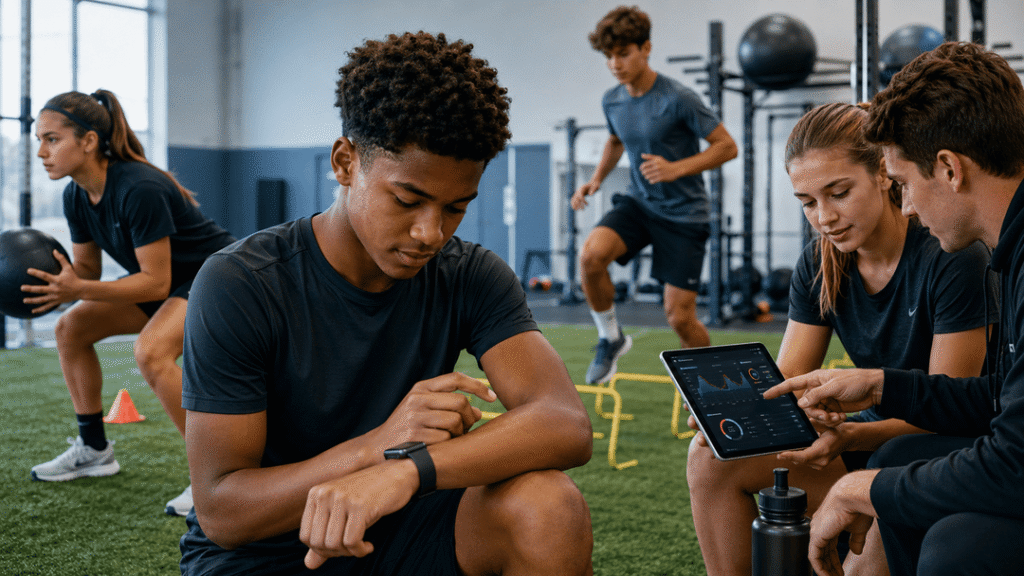
Forget fetching towels. Modern athletics is a mix of analytics and agony, silicon and sinew. The whole industry is based on one simple rule: winning equals data plus biomechanics plus a cognitive edge.
So, how do you get into this? It’s like a career reinvention, but without the cheesy soundtrack. It’s unsettling. It’s rewarding. It demands focus.
We’re here to guide you through this minefield. This is about turning your analytical curiosity into a real seat at the table. Ready to see what’s behind the curtain?
Education Requirements and Pathways
Your diploma is more than just paper. In sports technology, it’s your first tool. It’s like the prototype before the final product hits the market. Your education is the foundation for all future work and career moves, especially as innovations like advanced broadcasting technology continue to reshape how sports are analyzed, delivered, and experienced.
So, what’s the starting point? For most sports technology jobs, you need a Bachelor of Science. Majors like Exercise Science and Kinesiology are key. They teach you the science behind sports.
This foundation gets you into entry-level roles. You’ll apply what you learned to real-world situations. For example, an Athletic Trainer’s job, with a salary around $55,000, is all about applying knowledge to help athletes.
But, the game changes with a graduate degree. It’s like a software update that turns you into a strategy expert. Tulane’s data shows that a master’s degree is often needed for leadership roles.
Take the Athletic Director role, with a median salary of $95,000. Most of these positions require a master’s degree. This degree is essential for making big decisions in sports.
Think of your B.S. as learning the game’s rules. Your M.S. is about rewriting them. Graduate studies focus on data and strategy, not just treating injuries.
| Degree Level | Common Majors | Career Pathway Example | Median Salary Insight |
|---|---|---|---|
| Bachelor’s (B.S.) | Exercise Science, Kinesiology, Biology | Athletic Trainer, Performance Technician | $55,000 (Athletic Trainer) |
| Master’s (M.S./M.A.) | Sports Administration, Biomechanics, Data Science | Athletic Director, Sports Scientist, Lead Analyst | $95,000 (Athletic Director) |
| Doctorate (Ph.D.) | Kinesiology, Physiology, Informatics | Lead Researcher, University Professor, R&D Director | Varies widely; often $70,000+ in academia |
The modern curriculum is a mix of subjects. You’ll learn about biomechanics and sports informatics. This blend is what makes sports technology jobs cutting-edge.
Choosing your path is about building something. Do you want to work with athletes, analyze systems, or manage teams? Your undergraduate studies are the foundation. Graduate studies add specialized tools to your toolkit.
Learning in sports tech never stops. Getting certifications in areas like biomechanics or sports psychology makes you more adaptable. Each certification adds value to your skills.
In sports tech, your education is more than a piece of paper. It’s the first tool in your professional toolkit. Choose it wisely, as it shapes your future.
Biomechanics and Motion Analysis Careers
Ever wondered what happens when Isaac Newton meets LeBron James? Welcome to biomechanics. This field doesn’t just watch sports—it reverse-engineers them. Every jump shot, every stride, every tackle becomes a physics problem waiting to be solved.
Think of it as forensic science for athletics. The lab is your crime scene. The “weapon” might be a golf club with imperfect torque. The “victim” could be a pitcher’s rotator cuff. Your job? Find the microscopic flaw in a seemingly perfect motion. This is where true athletic performance careers are forged—in the space between instinct and data.

The tools would make Marvel Studios jealous. Motion capture suits covered in sensors. Force plates that measure ground reaction like a lie detector test. High-speed cameras capturing 500 frames per second. We’re talking about technology that spits out more numbers than a Wall Street terminal during a market crash.
But here’s the secret sauce: this field thrives in what Vicky Dain calls the “fertile void.” That’s the messy, uncertain space of exploration without guaranteed outcomes. You might start studying pitching mechanics and end up optimizing cycling posture. You enter with curiosity, not a roadmap. This interdisciplinary wandering is the core of modern athletic performance careers.
Where do these professionals work? Everywhere. University labs analyzing gait patterns. NBA teams optimizing jump shots. Olympic training centers shaving milliseconds off swim times. Shoe companies designing soles that reduce injury risk. It’s equal parts lab coat and clipboard.
The mindset matters more than the degree. Yes, you need physics. Yes, you’ll wrestle with MATLAB until 2 AM. But you also need the patience of a detective and the creativity of an artist. You’re translating biological poetry into mathematical prose. These athletic performance careers demand someone who sees a slam dunk and immediately thinks: “What’s the vertical force vector? Where’s the center of mass?”
It’s not for everyone. The work is meticulous. The breakthroughs are incremental. But when you find that one-degree adjustment that prevents a career-ending injury? Or discover the kinetic chain flaw that’s been limiting a sprinter for years? That’s the moment. That’s when you realize you’re not just studying motion—you’re preserving legacies.
The path mirrors Source 3’s lesson perfectly. You explore without expectation. You dabble in engineering, physiology, and computer science. You embrace the fertile void. And somewhere in that interdisciplinary soup, you find your calling: becoming the silent architect behind athletic greatness.
Sports Data Analyst Positions
Today’s sports data analyst is more than just a number cruncher. They use machine learning and real-time biometrics to predict game outcomes. It’s not just about stats anymore. It’s about understanding player movements and stress levels to create winning strategies.
Your job is to analyze huge datasets. You’ll work with optical tracking data, historical stats, and live biometrics. Your goal is to find important trends and patterns that can help the team win.
Our LinkedIn expert said to “Become obsessive about learning the sports business.” You need to love the game and know its strategies and economics. You also need to be skilled in tools like Python, SQL, R, and data visualization.
This job is not just one thing. It’s a range of specializations. Your path will depend on where you want to apply your skills.
| Analyst Focus | Primary Data Sources | Key Deliverables | Industry Value |
|---|---|---|---|
| Performance & Tactics | Player tracking (GPS, optical), video analysis, play-by-play logs | Lineup optimization reports, opponent tendency breakdowns, spatial efficiency maps | Directly influences coaching decisions and in-game strategy for a competitive edge. |
| Health & Load Management | Biometric sensors (HRV, sleep, power output), wellness questionnaires, injury history | Individualized load prescriptions, injury risk probability models, recovery protocols | Protects franchise investments (players) by optimizing performance and minimizing downtime. |
| Business & Operations | Ticket sales data, concession metrics, fan engagement surveys, social media sentiment | Dynamic pricing models, marketing campaign ROI analysis, stadium traffic flow solutions | Maximizes revenue and enhances the fan experience, driving the business side of sports. |
| Scouting & Talent Evaluation | College/pro league stats, combine measurements, psychological assessments | Draft prospect rankings, free agent valuation models, long-term projection analyses | Informs personnel decisions, helping to build a roster for sustained success. |
The key is to provide actionable insights. Your role is to help make decisions, from drafting players to making game calls. This job is for those who love to find patterns and tell stories with data. It shows that in sports today, data can be the most compelling story.
Exercise Physiology and Technology
Exercise physiology has changed a lot. It’s now about using advanced technology, not just ice packs and ankle tape. Today, exercise physiologists use tech to understand human biology better. Their job is like that of a NASA engineer.
The role of an athletic trainer has also changed. They now use advanced tools, not just basic rehab skills. This makes their job very dynamic and exciting.

Now, we can track how athletes recover in real-time. Smart gear and sensors give us detailed data. This lets us understand athletes’ bodies better than ever before.
We’re not just checking if athletes are recovering. We’re using tech to push them to their limits safely. This means making small changes to improve performance.
Recovery plans are now based on sleep data and nutrition apps. Training is tailored to each athlete’s needs. This is thanks to AI and advanced analytics.
This job combines being a clinician, data scientist, and strategist. You need to understand both the physical and digital sides of sports. Your goal is to keep athletes performing well while keeping them safe.
To succeed in this field, you need more than just a degree. You must be comfortable with technology and data. This is what makes sports technology jobs so rewarding.
Managing a basketball player’s workload is a great example. You use data to make decisions, not just how they feel. This approach gives you a complete picture of their performance.
The role of an athletic trainer has evolved. They use data to improve training and recovery. If you’re starting out, learn anatomy and get certified. But also, learn to work with data. The future of exercise physiology is all about combining tech and human biology.
Sports Psychology and Digital Tools
Forget the bicep curl. The most critical muscle in modern sports is the one we can’t see in the mirror. The final frontier isn’t physical; it’s the six inches between the ears. Traditional sports psychology has changed a lot. Now, it’s more about real-time neural optimization.
This field is now a tech-driven, high-stakes athletic performance career dedicated to building mental armor. We’re talking about VR simulations that recreate the deafening roar of a championship game for pressure training. Biofeedback apps teach athletes to control heart rate variability and squash pre-race anxiety. Cognitive training platforms are like CrossFit for the brain.
Here’s a career pivot lesson that fits perfectly. The advice isn’t to chase a blinding “passion” for therapy. It’s to pursue what energizes you. Does the challenge of fortifying a rookie quarterback’s mindset against 80,000 booing fans give you a buzz? What about designing a mindfulness app that helps a gymnast find calm before a balance beam routine?
If problem-solving at the intersection of neuroscience and sport lights you up, this is your zone. It’s a career built on hacking the software to upgrade the hardware.
Let’s break down the digital toolkit reshaping this field. The old playbook is closed.
| Digital Tool / Platform | Core Technology | Primary Mental Benefit | Real-World Application |
|---|---|---|---|
| VR Pressure Simulation | Virtual Reality Headsets, 360° Audio | Resilience in High-Stress Environments | Training a soccer player to take a penalty kick in a simulated packed stadium. |
| Biofeedback Wearables | HRV Sensors, Galvanic Skin Response | Anxiety & Arousal Regulation | A golfer using a wrist device to maintain optimal calm during a putt. |
| Cognitive Training Apps | Adaptive Game Algorithms | Enhanced Focus & Decision Speed | A baseball batter improving pitch recognition through rapid-fire visual drills. |
| Neurofeedback Systems | EEG Headbands, Brainwave Monitoring | Peak Flow State (“The Zone”) Access | Training a swimmer to identify and replicate their ideal pre-race brainwave pattern. |
This isn’t just mental coaching; it’s performance engineering. The goal is quantifiable mental strength. Can an athlete’s reaction time in a cognitive app predict their in-game decision-making? Does a consistent VR training log correlate with fewer performance errors under real pressure?
For the analytically minded, this is where the magic happens. It transforms subjective mental advice into data-driven strategy. Pursuing a career here means you’re energized by puzzles. You’re building the mental marathon training plan, not just cheering from the sidelines.
The path into these tech-focused athletic performance careers often starts with a foundation in psychology or neuroscience. Then, you layer on the tech skills—understanding VR UX, interpreting biometric data streams, or even developing simple apps. The pros in this field are part scientist, part tech guru, and part mental toughness coach.
So, ask yourself: does optimizing the mind’s interface with the body’s machine sound like energizing work? If your answer is a quickening pulse (the good kind), then the digital frontier of sports psychology is waiting. The game is now played as much in the mind as on the field.
Equipment Design and Innovation
Chris Donovan’s journey from telephone repairman to Nike shoe designer is real. It shows how to get into sports tech. He took a 2-day class at 55 and applied to fashion school, showing the power of small actions, even imperfect ones.
Sports science isn’t just about studying. It’s about creating tools for athletes to break records. Think of marathon shoes with carbon fiber plates or helmets that reduce concussions. Or basketballs with sensors for every dribble.
Equipment design is the hands-on side of sports science careers. It’s where data meets materials. You mix materials science, ergonomics, and sport knowledge. It’s like being a mad scientist for good.
To design the next super shoe, you need to know about materials and how they work. You must understand how carbon fiber bends and how foam springs back. Knowing where a runner’s foot hits the ground is key.
The path to get started is like Donovan’s. You don’t need a PhD at first. Start with a CAD workshop or 3D printing. Get an internship, even in marketing.
These fields are all about hands-on work and trying again. You sketch, build, test, fail, and rebuild. An athlete’s feedback is invaluable. It means going back to the lab.
The creativity in this field is amazing. You solve puzzles that affect real lives. A better helmet could prevent brain injuries. A smarter knee brace could help athletes longer. It’s not just research; it’s science you can touch.
Big leagues and Olympic committees have labs for innovation. Startups are always trying new things. The sporting goods industry is huge for innovators. You work with athletes’ bodies and new materials.
So, take that first step. Download Fusion 360 and learn. Take apart an old shoe to see how it’s made. Getting into equipment innovation is easier than you think. Chris Donovan shows that starting late is common.
In these sports science careers, you’re not just watching. You’re building the future of sports, one prototype at a time.
Research Opportunities in Sports Tech
Research in sports technology is a long-term journey, not a quick win. It’s about creating new knowledge that can change how we train. While fans cheer for the game’s end, the real heroes are in the lab, testing and retesting.
These sports technology jobs are for those who love to ask “What if?” more than “Who won?” It’s a path with no shortcuts, where every step counts.
Anne Tumlinson’s words are your daily reminder: “progress is so much less about talent than it is about time, effort, commitment, and consistency.” Talent might get you started, but it’s hard work that keeps you going. The breakthrough often comes when you’re about to give up.
The field of research is diverse and exciting. Academia is where new ideas are born, studying everything from endurance to clutch performance. Private labs focus on practical problems, like AI for sports analysis or safer materials. Government institutes explore how sports can improve public health.
Each place offers unique opportunities in these sports technology jobs. Here’s where you might find your place:
| Research Setting | Typical Focus Areas | Career Path | Key Mindset Required | Potential Impact |
|---|---|---|---|---|
| Academic University | Basic science, longitudinal studies, theoretical models | PhD → Postdoc → Professor/Lead Researcher | Curiosity-driven, patient with publication cycles | Foundational knowledge that informs practice decades later |
| Private R&D Lab | Product development, proprietary algorithms, material science | Research Scientist → Project Lead → R&D Director | Solution-oriented, comfortable with IP and patents | Next season’s gear or software update |
| Government/Institute | Public health, safety standards, youth sports development | Research Fellow → Program Manager → Policy Advisor | Mission-driven, understands regulatory frameworks | National training guidelines or safety regulations |
| Sports Team Research Dept | Performance optimization, injury prevention, opponent analysis | Data Analyst → Sports Scientist → Head of Research | Results-obsessed, thrives under competitive pressure | Immediate competitive advantage for the franchise |
The reward is not a trophy but the chance to change a sport. It’s the algorithm that predicts injuries or the material that saves seconds. You trade the excitement of game day for the joy of discovery.
This career demands unwavering dedication. You must be willing to pursue a question for years, not just a few months. The best researchers combine curiosity with discipline, finding answers in the noise.
So, is this for you? Only if you love the process more than the outcome. If you find joy in data and design. If you believe in the value of a long-term journey. The field needs more researchers than fans.
The marathon of sports tech research won’t make you famous overnight. But it might let you shape the future. In a world focused on quick wins, the long game offers a unique satisfaction. Just remember to stretch first—you’ll be in it for the long haul.
Internship and Entry-Level Strategies
The entry-level world in sports tech is like a movie training montage. You earn experience, not money. View those early years as a chance to learn, not just earn a paycheck. Your network is your most valuable asset.
Don’t just collect LinkedIn connections. Offer real value. Be the one who volunteers for the hard tasks, like data cleanup.
Build your own board of directors. You need three mentors. The Mirror shows you your path, a peer ahead in your field. The Truth Teller gives honest feedback without sugarcoating. The Connector knows the industry inside out.
Write your story with care. You’re not just a “former barista.” You’re a pro who excels in fast-paced environments. Your friends might not get this change. Surround yourself with people in your field.
Look for real opportunities like the adidas internships. They offer six-month spots in Digital and Information Technology. Your application needs a creative 1-pager and your CV. This shows you can think critically.
Now you have the plan to enter athletic performance careers. You know the education paths and tech roles. It’s time to put your knowledge into action. Get that job offer and step into the arena.