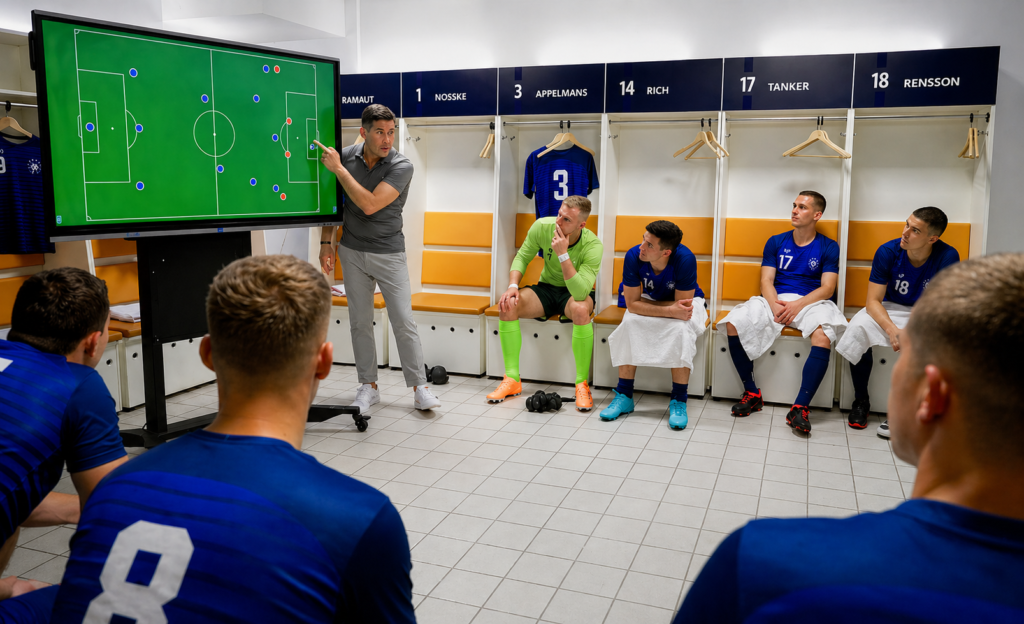
The modern game is no longer driven by instinct alone. Across high school gyms, youth baseball diamonds, and amateur soccer pitches, data-driven decision making is quietly reshaping how athletes train, compete, and improve. For teens growing up in this environment, sports analytics is not an abstract concept—it is becoming a foundational tool that influences everything from practice structure to in-game strategy.
At its core, sports analytics refers to the systematic collection, interpretation, and application of performance data to gain competitive advantages. Historically, this approach was reserved for professional organizations with access to large budgets and specialized analysts. Today, however, affordable software platforms, mobile applications, and wearable technologies have dramatically lowered the barrier to entry.
This accessibility has created a new generation of athletes who are not only physically trained but also analytically aware. Teen athletes are learning to interpret data, understand patterns, and apply insights in real time. The shift is subtle but profound: performance is no longer judged solely by outcomes, but by the processes that lead to those outcomes.
What Sports Analytics Actually Measures
Sports analytics is often misunderstood as a simple extension of traditional statistics like points, goals, or batting averages. While those metrics still matter, modern analytics dives deeper into performance variables that influence results behind the scenes.
These systems capture and analyze a wide range of data points, including movement efficiency, reaction time, spatial positioning, and physiological responses. In many cases, the most valuable insights come from metrics that are not visible to the naked eye during competition.
Key Metrics in Teen Sports Analytics
| Metric Category | What It Measures | Why It Matters for Teens |
|---|---|---|
| Speed & Acceleration | Sprint times, burst movement | Improves quickness and reaction in game moments |
| Skill Efficiency | Shot accuracy, pass completion | Enhances decision-making under pressure |
| Biomechanics | Movement form, posture, technique | Reduces injury risk and improves consistency |
| Workload & Fatigue | Heart rate, exertion levels | Prevents overtraining and burnout |
| Positional Awareness | Movement tracking, spacing | Sharpens tactical understanding |
For example, a soccer player may discover through tracking data that their sprint efficiency declines after repeated high-intensity runs.
A basketball player might analyze shot charts to identify low-percentage areas on the court. These insights allow athletes to refine their approach with precision rather than guesswork.Why Analytics Matters for Teen Development

The teenage years represent a critical window for athletic and cognitive development. During this stage, athletes are highly adaptable, making it an ideal time to introduce structured, data-informed training methods.
One of the most important contributions of analytics is the introduction of objectivity. Traditional coaching often relies on subjective observation, which can vary depending on perspective or experience. Analytics provides measurable benchmarks that remove ambiguity and create clarity.
Instead of vague instructions like “improve your speed,” athletes can track measurable improvements in sprint times or acceleration rates. This creates a feedback loop where progress becomes visible, motivating continued effort and refinement.
Moreover, analytics fosters accountability and self-awareness. Athletes begin to understand how their habits, preparation, and decisions impact performance outcomes. This awareness extends beyond sports, influencing discipline, time management, and problem-solving skills.
The Role of Technology in Everyday Training
Technology is the engine driving the rapid expansion of sports analytics in youth environments. Wearable devices, mobile applications, and cloud-based platforms have transformed how data is collected and utilized.
GPS trackers measure distance covered and movement patterns. Smartwatches monitor heart rate variability and recovery. Motion sensors analyze biomechanics in activities such as pitching, swinging, or shooting. These tools provide real-time feedback that can be immediately applied during training sessions.
The integration of these technologies has made analytics a practical, everyday component of athletic development rather than a theoretical concept. Research from advanced performance metrics shows how data-driven systems are improving athlete performance and injury prevention across multiple levels of sport.
For coaches, this means more efficient practice design. Instead of relying on generalized drills, training sessions can be tailored to address specific weaknesses identified through data. For athletes, it means training smarter, not just harder.
How Analytics Is Changing Game Strategy

While individual development is a major focus, sports analytics is also transforming how teams approach strategy. Decisions that were once based on intuition are now supported by probability models and trend analysis.
In basketball, shot selection is optimized using efficiency metrics that highlight high-percentage scoring areas. In baseball, defensive positioning is guided by hitter tendencies derived from historical data. In soccer, positional tracking helps teams maintain optimal spacing and control.
For teen athletes, exposure to these strategic concepts enhances their understanding of the game. They begin to see sports not just as physical contests, but as dynamic systems influenced by patterns and probabilities.
This shift in perspective encourages smarter decision-making during competition. Athletes learn when to take risks, when to conserve energy, and how to exploit opponent weaknesses based on available data.
Real-World Applications for Teen Athletes
Sports analytics is not confined to elite academies or specialized programs. It is increasingly being integrated into school teams, local leagues, and independent training environments.
Teen athletes are using apps to track shooting percentages, analyze running splits, and review game footage with annotated data overlays. These tools make it possible to break down performance in a detailed yet accessible way.
Equally important is how this data is communicated. Visualization plays a crucial role in helping athletes interpret complex information. Clear charts, heat maps, and simplified dashboards allow teens to quickly grasp key insights.
Balancing Data and Intuition
Despite its advantages, sports analytics is not a replacement for instinct or experience. Overreliance on data can lead to analysis paralysis, where athletes become overly focused on numbers at the expense of natural play.
The most effective approach is balance. Data should inform decisions, providing context and guidance, while intuition remains a critical component of performance. This balance ensures that athletes remain adaptable and creative, rather than rigidly dependent on metrics.
Challenges and Limitations
While the growth of sports analytics presents significant opportunities, it also introduces challenges that must be addressed. Not all data is equally valuable, and misinterpretation can lead to flawed conclusions.
For teen athletes, one of the primary challenges is information overload. With access to multiple data streams, it can be difficult to identify which metrics truly matter. This underscores the importance of guided analysis and structured learning.
Privacy is another consideration. Wearable devices and tracking systems collect sensitive data, raising questions about data ownership and security. Programs must establish clear policies to protect athlete information.
The Educational Impact of Sports Analytics
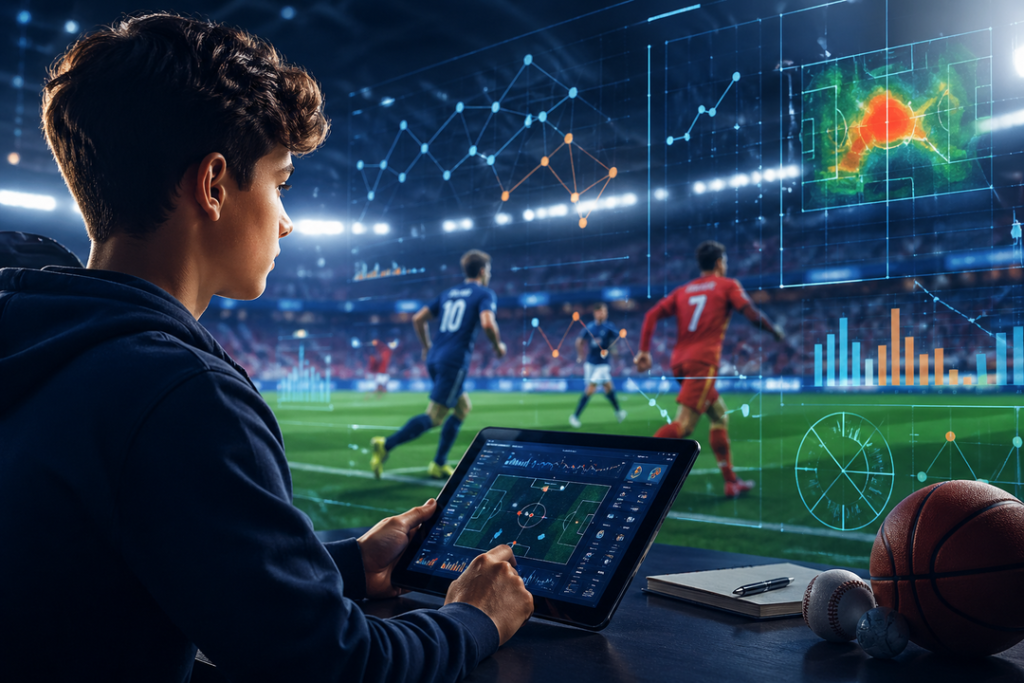
Beyond performance, sports analytics contributes to broader educational development. It introduces concepts related to mathematics, statistics, and critical thinking in a practical and engaging context.
Athletes learn to interpret data sets, recognize patterns, and draw conclusions based on evidence. These skills are transferable to academic subjects and future careers, particularly in fields related to science, technology, and business.
The Future of Analytics in Youth Sports
The trajectory of sports analytics suggests continued expansion and innovation. Advances in artificial intelligence, machine learning, and real-time data processing will further enhance the capabilities of these systems.
For teen athletes, this means access to increasingly sophisticated tools that provide deeper insights and more personalized feedback. Training programs will become more adaptive, adjusting in real time based on performance data.
Looking ahead, the integration of analytics will not just improve how games are played—it will redefine how athletes think, learn, and compete. The next generation of competitors will be shaped by a combination of skill, strategy, and intelligent data application, setting a new standard for excellence in youth sports.