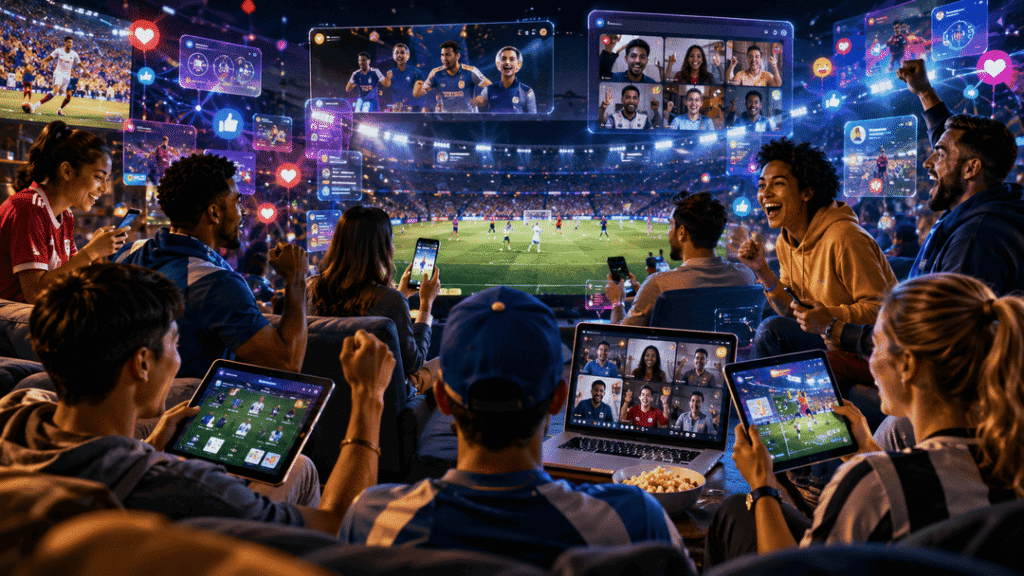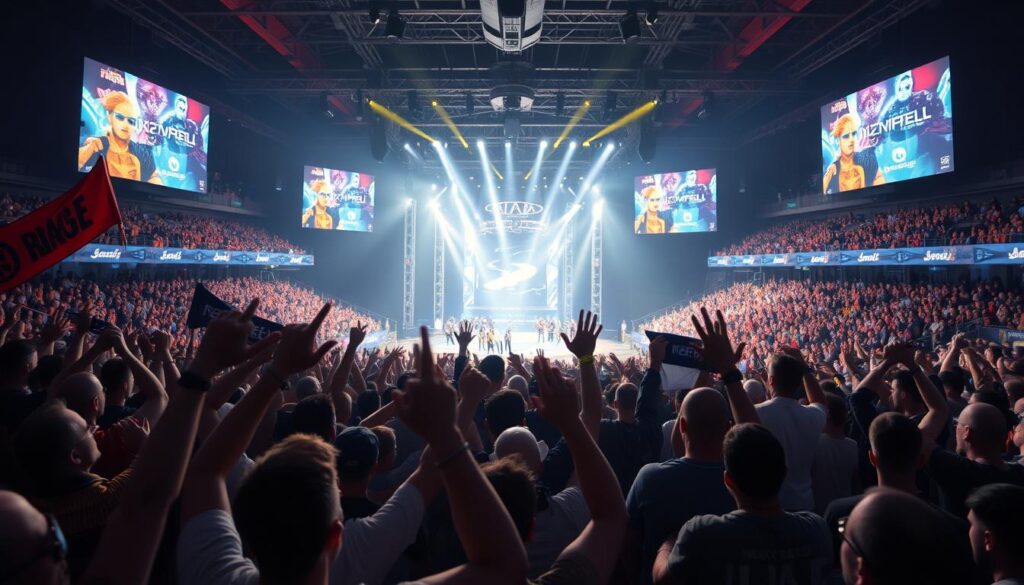
Imagine 12.3 million gamers simultaneously doing the Drake “Hotline Bling” emote during a Travis Scott Fortnite concert. Picture this energy mixed with NBA playoff excitement. Welcome to the world of esports fan engagement, where digital crowds are huge, even bigger than Madison Square Garden sellouts.
The numbers show esports is big. It made $264.3 million in ad revenue and has 532 million occasional viewers. It’s not just a small niche anymore. It’s changing how sports marketing works.
R/GA’s research found 74% of fans want to be part of the action, not just watch. They want to bet virtual currency on big plays or design team jerseys during games.
Traditional sports are paying attention. Netflix’s Drive to Survive made F1 popular with Gen Z through behind-the-scenes stories. But esports started this trend. They turned memes into merchandise and Twitch chats into feedback, creating “participatory branding ecosystems.”
Why is this important? Because 31.6 million hardcore viewers are just the start. The real change is turning casual viewers into active participants through gamification in sports. When your halftime show is a choose-your-own-adventure livestream, you’re not just watching. You’re helping create history.
Introduction: The Explosive Rise of Esports Fandom
Remember when “gamer” meant someone playing games in a dark basement? Now, Verizon’s Fortnite Creative 2.0 stadium drew 40 million virtual visitors. That’s three times Belgium’s population watching online. The esports technology behind this is more advanced than anything in music or sports.
- 45% of male fantasy sports players now co-stream esports matches (Source 1)
- 32% of female participants use TikTok to dissect League of Legends strategies (Source 3)
Traditional sports are trying to catch up. While soccer clubs spend $12B on jerseys, Twitch creators make money fast. The NCAA’s new rules are small compared to what 16-year-old Minecraft players earn online.
| Metric | Traditional Sports | Esports Ecosystem |
|---|---|---|
| Revenue Streams | Ticket sales, merch, TV rights | Subscriptions, bits, brand integrations |
| Fan Interaction | Half-time shows | Real-time Twitch chat commandeering |
| Star Creation | Draft systems | Viral TikTok montages |
Modern fandom is different. It’s not just about wearing a team’s jersey. It’s about finding the perfect streamer for you. The esports technology stack entertains and builds a community through smart use of technology.
Want proof? Gen Z fans spend 7.2 hours a week watching esports. That’s more time than they spend eating. While old sports reruns play, esports is changing the game with personalized content.
What Makes Esports Communities Unique?
Imagine 65% of esports fans more excited about their favorite player dating a pop star than their game stats. That’s right, R/GA’s research shows how gaming communities change fan loyalty. Instead of foam fingers, fans show their love through Discord tags and TikTok dances.
Accessibility, Identity, and Youth Connection
Esports doesn’t need stadiums; just a smartphone. This 24/7 accessibility creates what Hedlund calls “tribal fan ecosystems.” Let’s explore:
| Traditional Sports Fans | Esports Communities | |
|---|---|---|
| Meeting Place | Parking lot tailgates | Discord voice channels |
| Fandom Currency | Jersey collections | Twitch subscriber badges |
| Star Power | Quarterback stats | Streamer personality cults |
The magic is in the participation gap. You can’t challenge LeBron, but teens can play against pros in Valorant. This fuels “collaborative fandom” – fans create memes, mods, and strategies together.
Among Us communities are a great example. Players don’t just watch; they become the content with fan-made maps and tactics. TikTok’s jersey-flipping creators show a new kind of “remote tribal fan” – connected worldwide through algorithms.
This isn’t just fun. It’s identity formation for Gen Z. Your Discord roles are more important than your ZIP code. Your Minecraft skills are more valued than your GPA. In a world where 43% of young Americans feel disconnected, gaming communities offer a new sense of belonging – with respawn points and loot boxes.
Real-Time Fan Interaction: Streaming, Chats, and More
Imagine screaming into the digital void during a big match and hearing 50,000 avatars scream back. Welcome to the excitement of modern fandom. Platforms like Twitch and Discord have made fans more than just viewers. They’ve become active participants, where digital engagement is key.
Take WWE’s Thunderdome, a virtual arena where fans showed up on LED walls. It was more than a pandemic fix; it showed how online tournaments can tap into fans’ emotions.
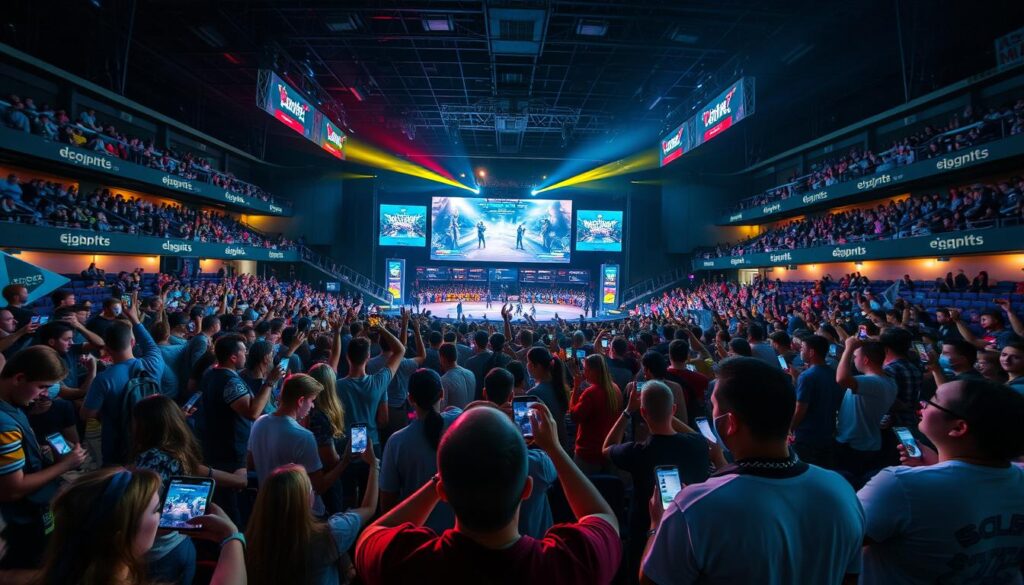
Bowman and Cranmer’s SocialMediaSport theory comes alive in Ludwig’s chessboxing. The streamer’s mix of brains and brawn broke records and broke the fourth wall. Twitch chats turned into strategy sessions, with fans discussing moves like they were in a real game.
This isn’t just watching sports; it’s participatory storytelling with real stakes.
The numbers show the impact:
- Basketball content on TikTok grew 92% last year – faster than LeBron’s receding hairline
- Every 1 million TikTok stitches drives a 23% merch sales spike (ask Travis Kelce about his 400% jersey boom)
- Discord servers for major esports teams now outnumber Pentagon briefing rooms 3:1
The real magic is in the gray area between fandom and hype. When 15,000 fans spam emotes to distract a pro player, we’ve entered a new level of digital engagement. It’s not just about watching; the algorithm wants you to become content.
This hyper-connectivity changes what online tournaments can do. The WWE Thunderdome wasn’t just filling seats; it showed how to turn viewers into visual props. Ludwig’s chessboxing proved that genres are just suggestions when fans are involved. The lesson? In the attention economy, the most valuable player might be the fan holding the phone.
Gamification and Fantasy in the Esports Space
The $7 billion fantasy sports industry is more than just bragging rights. It’s a lesson in gamification in sports, where data and fun meet. It’s like Dungeons & Dragons for sports fans, with a twist of real-life challenges.
Reddit’s r/fantasyfootball community shows this every day. Users dive deep into player stats, just like medieval scholars studied alchemy.
This isn’t just about cheering for teams. It’s about being a player-manager hybrid. Fans use real-time stats and draft strategies that rival PhD theses. They even negotiate trades like Wall Street pros.
But here’s the twist: esports analytics are changing the game. The WNBA saw a 270% increase in betting engagement last season. It wasn’t from beer ads, but from interactive prediction games that make every assist exciting.
| Traditional Sports Fandom | Esports Gamification | Engagement Boost |
|---|---|---|
| Static jersey purchases | Customizable in-game skins | +41% merch revenue |
| TV ad breaks | Live bet triggers during streams | 3.2x longer watch time |
| Fantasy league spreadsheets | AI-powered roster optimizers | 68% higher retention |
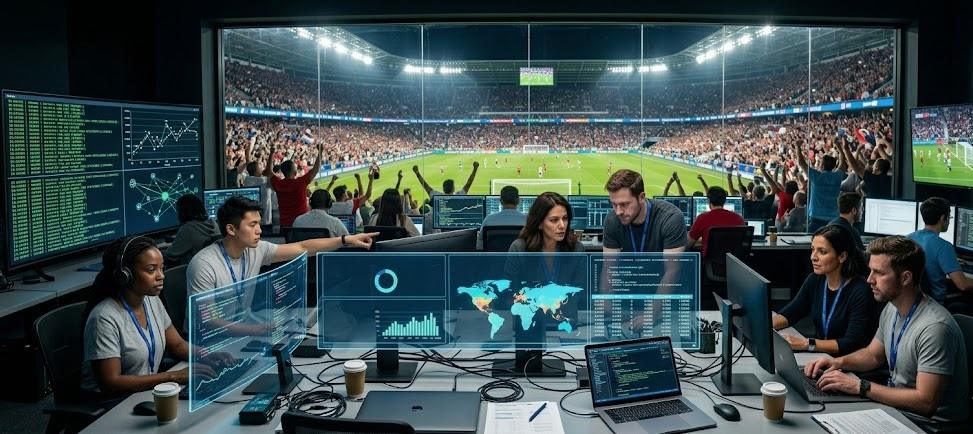
This isn’t your dad’s sports bar debate. It’s gamification in sports evolving into a new form of entertainment. When young adults talk about KDA ratios as easily as RBI stats, we’re seeing a shift. It’s the blueprint for entertainment in the TikTok era.
Esports Analytics and Its Allure for Young Techies
Imagine Moneyball with headshots: Today’s esports analysts aren’t just crunching numbers. They’re figuring out dragon spawn timers and predicting routes in Counter-Strike 2. The NCAA’s NIL ruling didn’t just create college athlete influencers. It also birthed a generation of Fortnite stat nerds trading Python scripts like baseball cards.
Why are tech-savvy Gen Zers flocking to esports analytics? Three reasons:
- EA Sports tracks 4,000 data points per Madden NFL play—more metrics than Tom Brady’s haircut regimen
- Scouts now hunt for players using win probability algorithms instead of highlight reels
- The average Overwatch League coach speaks more SQL than callout jargon
Let’s break down the analytics arms race:
| Traditional Sports | Esports | Tech Edge |
|---|---|---|
| Player heart rate | APM (actions per minute) | Real-time API feeds |
| Shot charts | Heatmap clustering | Machine learning models |
| Draft combine | Twitch VOD analysis | Computer vision tracking |
The real power move? Pro gaming orgs now hire data storytellers. They turn spreadsheets into TikTok breakdowns. UCLA’s gaming lab recently partnered with Riot Games to teach undergrads how to optimize Valorant agent pick rates. It’s like MIT’s Sloan Analytics Conference with more RGB lighting.
Want to break in? Start with these tools:
- Mobalytics (the Bloomberg Terminal for League of Legends)
- Tableau dashboards tracking CS:GO economy rounds
- Custom Discord bots scraping Twitch chat sentiment
As one TSM analyst told me: “We don’t coach players—we debug humans.” The future of competition isn’t just faster reflexes. It’s about who can best weaponize math against Minecraft speedrunners.
Building Your Esports Career: From Fan to Pro
Your esports career might start with moderating Twitch chats, not clutching headshots – and that’s where the real money’s flowing. The industry’s job board now looks less like a gaming rig and more like a Fortune 500 company’s HR portal. Let’s dissect this glitch-free path to paycheck glory.

Take notes from the XFL’s fan advisory network – yes, football – which proves structured fan-to-professional pipelines work. Esports orgs now mirror this with roles spanning:
- Community managers who turn Discord chaos into brand loyalty
- Content creators monetizing memes better than most startups
- Data wranglers making sense of 10,000 APM gameplay metrics
The NCAA’s billion-dollar student influencer economy isn’t just for athletes selling protein shakes. Collegiate esports programs now groom:
- Shoutcasters with Charisma scores higher than their K/D ratios
- Social strategists turning TikTok dances into sponsor deals
- Esports psychologists preventing tilt-induced controller throws
Riot Games’ career portal lists 43 non-playing positions as of last Tuesday – from “metaverse narrative designer” to “emoji linguist.” For every Faker-style prodigy, there are 100 analytics interns dissecting dragon spawn rates. And guess what? The interns get dental.
Here’s your cheat code: specialize in the boring stuff. The esports world desperately needs:
| Role | Required Skill | Salary Range |
|---|---|---|
| Tournament Ops Manager | Excel Wizardry | $65k-$90k |
| Storyboard Artist | Lore Addiction | $50k-$120k |
| Jersey Designer | Photoshop Fu | $45k-$80k |
Pro gaming? Sure, if you enjoy competing against Korean teenagers who sleep in RGB-lit hyperbaric chambers. For the rest of us mortals, there’s the actual esports economy – where your Twitter thread about jungle pathing could land you a team analyst contract.
Gender and Diversity in Esports Fandom
Why does esports fandom seem more progressive than its player base? The numbers show: Female viewers now make up 35% of global esports audiences. Yet, women are less than 5% of pro players. This gap is similar to the WNBA’s rise in digital engagement, showing that more representation means more viewers.
Let’s look at Kennedy’s “digital fandom” framework. League of Legends’ K/DA virtual pop group didn’t just sell out concerts. It opened a door for women to engage without the CS:GO’s frat house atmosphere. This led to a 22% increase in female LoL viewers by 2022, while Valve’s shooter struggles to reach 15%.
Brands are paying attention. With 63% of Gen Z fans wanting ethical sponsors, diversity is key. Shopify Rebellion’s all-women VALORANT team is a marketing win. It’s both an eSports team and a cultural statement. Their Twitch streams now compete with male-dominated teams, showing that inclusion is business-smart.
The real magic is where digital engagement meets real-world impact. Female fans aren’t just watching; they’re creating. They build Discord communities, make fan art, and fund women’s tournaments. It’s like the WNBA’s success online: give space to marginalized voices, and they’ll build something amazing.
The Future of Fan Engagement: VR, AR, Blockchain
Imagine watching an esports tournament where your couch feels like the front row. Holographic stats dance around players, and your favorite team’s jersey is a tradable crypto asset. Welcome to the era of sports fandom, where esports technology turns spectators into participants. This is done through virtual reality, augmented overlays, and blockchain.
Apple’s Vision Pro isn’t just another VR headset. It’s a game-changer for online tournaments. Early adopters can already:
- Watch matches from player POV perspectives
- High-five virtual versions of pro gamers
- Manipulate 3D match analytics mid-air
AR enhancements will make traditional sports broadcasts look old. Imagine real-time damage meters over Street Fighter avatars. Or Fortnite storm circles projected onto real-world maps. And Twitch chat reactions as fireworks around the action.
| Platform | NFT Approach | Result | Key Insight |
|---|---|---|---|
| NBA Top Shot | Video clip collectibles | 74% value drop from 2021 peak | Gimmicks fade – utility matters |
| UFC Strike | Fighter-specific tokens | 23% monthly user growth | Authentic fan access > artificial scarcity |
| Esports Possible | Playable skin NFTs | Valorant gun buddy sales up 310% | Digital = native to gaming culture |
The metaverse won’t be built by Zuckerberg’s avatar. It’ll be forged through esports communities demanding deeper engagement. Why settle for watching when you could:
- Vote on tournament rules via blockchain DAOs
- Earn XP for predicting match outcomes
- Trade virtual merch that actually impacts gameplay
Digital jerseys are already happening. Riot Games’ Valorant Champions 2023 skins sold out in 6 hours. They’re trackable on blockchain like rare baseball cards. Your grandkids will mock your physical jerseys.
The real question isn’t “Will VR replace stadiums?” but “How soon before my fantasy esports team becomes an NFT portfolio?” Buckle up, grab your motion-sickness pills, and prepare for fandom that’s more immersive than your last all-nighter grinding ranked matches.
Conclusion
The scoreboard has reset. We’re not just watching games anymore; we’re creating them. R/GA’s On-Demand Fan study shows 57% of Gen Z now mixes traditional sports with esports. This mix blurs the lines between watching games live and online.
Memes are now playcalls, and emotes are battle cries. Hutchins’ prosumer theory was right on track. It predicted the $500B sports market’s digital transformation.
Your phone is no longer just a second screen. It’s the main control panel for gaming communities. They build empires through Discord servers and fantasy leagues.
The real meta is that every “EZ” taunt and strategy post fuels an economy. Fandom is now creative currency. Traditional sports stars hire social media managers, while esports pros handle their TikTok edits.
Tomorrow’s stadiums will be in VR headsets, but today’s revolution is in comment sections. When Activision Blizzard’s Overwatch League lets fans vote on skin designs, or Fortnite players co-create maps, we’re not just choosing cosmetics. We’re drafting the rulebook for 21st-century spectatorship.
The question isn’t whether you’ll join – it’s where you’ll plant your banner. So, what’s your play? Analyst? Memelord? The kid shouting casting takes between math classes?
In this arena, having main character energy doesn’t require pro skills. Just a decent WiFi connection and opinions hotter than a GPU running Cyberpunk 2077. The match never really ends. It just migrates to new platforms, waiting for your keystrokes to change the meta.