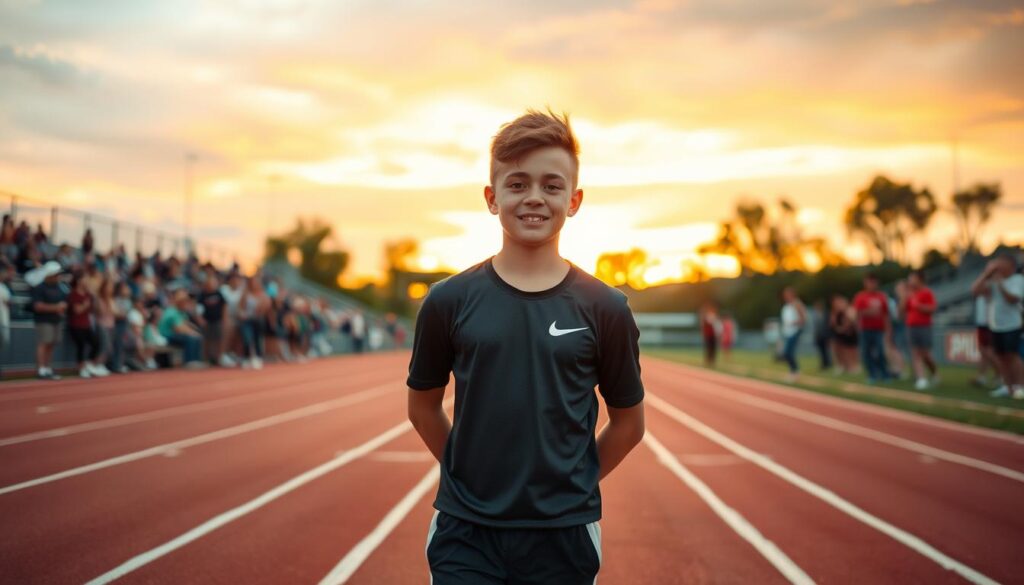
Your digital footprint is like a permanent record. It’s what college recruiters and brand managers see when you’re not playing.
I’ve seen careers changed by one social media post. Building a personal brand isn’t just about being a corporate shill. It’s more than that.
It’s about creating your own story online before others do. This is essential in today’s world.
It’s not just about being a great player. It’s about becoming a story that sponsors and fans want to follow. That story can open doors and last a lifetime.
Strategic youth athlete branding turns you from a trivia answer to a headline. It’s the smart move that builds a lasting legacy, not just stats.
How Online Presence Impacts Your Sports Future
In today’s sports world, your biggest challenge isn’t on the field. It’s on social media and search results. Every post, like, and comment is like a line on your resume. This digital reputation is more important than a scouting report for many teams.
Think of it as social capital. A strong digital reputation is like a golden ticket. It turns you from just a player with good stats to a marketable asset. Coaches look for more than just athletic ability; they want a representative.
A clean, proactive online presence shows maturity and coachability. It also signals brand safety to sponsors. This can lead to media gigs, NIL deals, and careers after sports.
Take Marcus Rashford as an example. His activism against child hunger made headlines and built a socially conscious image. He’s seen as a leader, not just a soccer player. This shows the power of a purpose-driven online presence.
On the other hand, a mismanaged online presence can be a crisis. Historical tweet controversies have ruined careers more than poor combine performances. The internet remembers everything, and one bad post can close doors fast.
Your digital reputation is key, not just a side quest. Recruiters will Google you. They look for positive signs like community involvement and academic pride. They want to trust you won’t become a liability.
Managing your digital reputation is as important as your training. The stakes are high, from scholarship offers to your future after sports. Your legacy is written online before your jersey is retired.
Social Media Best Practices
Being an athlete on social media is more about being real and strategic. Your profile is like a control room for your public image. It’s not just a place to post updates.
Choosing the right platform is key. Instagram is great for sharing photos and videos. Twitter is for quick comments and connecting with fans. TikTok is for raw, fun content.
Your posts should show both the highs and lows. Share your wins and your hard work. But keep the personal stuff private.
Engaging with fans makes your posts more than just content. Reply to comments and host Q&As. This shows you’re real and cares about your fans. It’s how social media shapes your identity and builds a community.
Tools like Hootsuite help you stay active without being glued to your phone. They help you keep a steady flow of posts. It’s like your digital training plan.
Remember, your social media is your professional portfolio. A small mistake can be big. Always double-check before posting. In social media sports, being precise is key.
Mistakes to Avoid
In the world of youth athlete branding, some mistakes can end a career before it starts. Think of your online presence as a permanent exhibit in the Museum of You. It’s important to curate it wisely.
First, avoid emotional outbursts online. Tweeting angrily after a loss or posting a bitter story on Instagram might feel good at the moment. But it can harm your reputation. Coaches and recruiters look for athletes who are calm and professional.
Next, stay away from political or social debates without careful thought. You’re an athlete, not a political expert. Passion is great, but a post that offends can lose you fans and sponsors quickly.
Also, be careful with ambiguous posts. A cryptic quote or photo can start rumors. It can damage trust, which is key to your brand.
Being authentic is important, but it needs strategy. You don’t have to share every feeling. Instead, show a consistent, reliable side that matches your athletic goals. Being hypocritical can quickly lose people’s trust.
Having a crisis management plan is essential. What do you do if an old tweet comes back? Silence is not always the best answer. A thoughtful response can help manage the situation.
| Digital Fumble | Immediate Fallout | The Strategic Fix |
|---|---|---|
| The Emotional Post | Labels you as unprofessional & volatile. | Implement a 24-hour “cooling off” rule before posting after competition. |
| The Political Dive | Alienates segments of fans, sponsors, and programs. | If you engage, do so with researched, respectful commentary, not hot takes. |
| The Ambiguous Message | Fuels damaging rumors and creates locker room tension. | Ask: “Could this be misinterpreted?” If yes, rewrite or don’t post. |
| The Archived Offense | Old posts resurface, creating a credibility crisis. | Conduct regular social media audits. Delete old, risky content. |
The internet remembers everything. That joke from 8th grade? It’s waiting for your first scholarship offer. For young athletes, understanding this is critical.
Your online presence should be an asset, not a liability. Every mistake is a distraction from your talent. Smart youth athlete branding is about being wise, not sanitized. It’s the difference between being known for your skills or your scandal.
Privacy Settings and Controls
Privacy settings are more than just switches. They act as filters, keeping your private life separate from your public image. They protect your digital reputation from unwanted exposure.
Your social accounts should be private, not open to everyone. Make your Instagram, Facebook, and TikTok accounts private. This isn’t about being shy; it’s about being strategically selective. You decide who sees your daily life.

But having a private account is just the start. You also need to stay vigilant. Here’s a simple checklist:
- Tag Review: Turn on tag approvals. Not every tag is worth sharing. You can choose what gets posted.
- Search Yourself: Google your name every month. It’s smart, not selfish. See how others see you online.
- App Permissions: Check which apps have your social data. Many apps collect more than they share.
Being proactive helps you build a strong online presence. A professional website is your central hub. It’s where you control the story, not react to others.
Smart athletes and agents plan for crises. They don’t wait for problems to arise. They have plans for handling negative publicity. In today’s digital world, your digital reputation is priceless. It can be boosted or damaged quickly.
The main goal is to control the narrative. Your online profile should showcase your best work and character. By learning these controls, you take charge of your online story.
Brand-Building: Highlight Reels, Blogs, Bios
Being a one-dimensional jock online is old news. Today’s athlete is a multimedia publisher of their own legend. In the world of social media sports, you’re not just chasing likes. You’re aiming for legacy, opportunities, and investments. Your brand is everything you post, and building it is key.
Your highlight reel is like a blockbuster trailer. It’s fast, exciting, and meant to grab attention. A well-edited mix of your best plays shows off your skills. But, with everyone having a highlight reel, yours needs a unique angle.
Is it the hard work, the perfect form, or a standout game? Pick your story and edit to it.
Your blog or captions are like the director’s commentary. They turn you from an athlete to a legend. Writing about overcoming injuries or game strategies shows your mind and heart. This content is your intellectual wealth.
Your bio and profile are like your executive summary. They tie your visuals and words together. Instead of just listing your team and year, show who you are.
Use the same professional photo and tone everywhere. This makes your posts seem like a single campaign.
The key is being real, consistent, and telling stories. Being authentic means showing your true self online. Coaches and recruiters can spot fakes.
Consistency is your rhythm, and storytelling connects your posts. It shows who you are.
This approach makes you interesting. And in today’s world, being interesting is valuable. It turns you from a stats-only athlete to a character with a story.
This story attracts brands, media, and recruiters. They’re not just looking for a player; they’re investing in a story.
Mastering social media sports branding means being both the subject and the author. Your highlight reel shows your talent. Your blog reveals your depth. Your bio states your purpose. Together, they create a persona that attracts opportunities.
Stories: Successes and Regrets
Imagine two tweets: one creates a legacy, the other burns a bridge. Welcome to the world of managing your digital story. For young athletes, your online presence is like a first draft of your biography. The internet can take control of your story.
Your story is your greatest asset in youth athlete branding. It can also be your biggest risk if you let your past self write it.

Felix Neureuther won skiing races and the branding game. He was authentic online and in real life. This built a lasting brand.
Gela Allmann turned her tough recovery into a story of strength. She shared her journey, not just her wins.
The Hahner twins, Anna and Lisa, focused on building a community. Their content was about connection, not just running. They showed that your brand is what people feel when they see your name.
Now, let’s look at the mistakes. “Star Prospect’s Decade-Old Tweet Surfaces” is a common headline. A joke at fifteen can become a scandal at twenty. These mistakes are hard to forget.
The lesson is clear. Your story is your currency in the world of attention. You can create it with purpose, like Neureuther, Allmann, and the Hahners. Or, you can let old posts define it. The smart choice is to write your own story now. Be the hero, not the cautionary tale. Your future fans are already reading.
Recruiter and Coach Views
When recruiters look at your social media, they’re not just browsing. They’re checking your character. I’ve seen many people with scholarship forms. They’re not just looking for a player. They’re looking for someone who won’t cause trouble or could be a great brand ambassador.
Your digital reputation is like an unspoken interview question. It shows traits like maturity, intelligence, and how well you take direction. It’s like your cover letter, but in a world where everyone has a highlight reel.
What do they look for? They want consistency. A profile that shows you’re dedicated on Monday but not on Friday is a big warning sign. Being real is important, but you also need to represent your team well.
Coaches look at everything. Your follows, captions, and even memes. It’s not fair, but it’s true. Having a clean online presence shows you’re thinking about the future. It shows you know your personal brand is key for your career and legacy.
So, what makes a good prospect? The table below shows the key differences from a recruiter’s point of view.
| What They Value (The Green Flags) | What Raises Red Flags | The Underlying Trait They’re Assessing |
|---|---|---|
| Consistent, positive messaging across platforms | Inappropriate jokes or controversial shares | Judgment & Awareness |
| Highlighting teamwork and community involvement | Posts that are purely self-promotional or show poor sportsmanship | Coachability & Team Focus |
| A bio that clearly states athletic goals and achievements | Vague or unprofessional profile information | Professionalism & Ambition |
| Engaging respectfully with fans, coaches, and other athletes | Public arguments or negative comments about competitors | Character & Maturity |
A good agent or advisor is like your digital offensive coordinator. They help manage your online presence. They make sure you’re strategic, not fake.
A strong digital reputation is more than just avoiding trouble. It’s about building value. It shows you’re reliable and worth the investment. In a competitive world, that can be the deciding factor.
Your public profile is the first chapter of your sports story. Make sure it’s interesting enough for recruiters to want to keep reading.
Conclusion
Your digital reputation is key, even after you retire from sports. Building a strong personal brand on social media takes hard work and dedication. It’s just like training for a game.
It’s a smart move in a world focused on quick wins. Planning ahead is key for lasting success. It turns your online image from a weakness to a strength.
This effort goes beyond just posting. It’s about creating a lasting identity for your career. Studies on athlete identity show how our self-image guides us. Your digital image is now a big part of that.
In the world of social media sports, you play two roles. Be clever, be genuine, and be strategic. Your future is at stake.