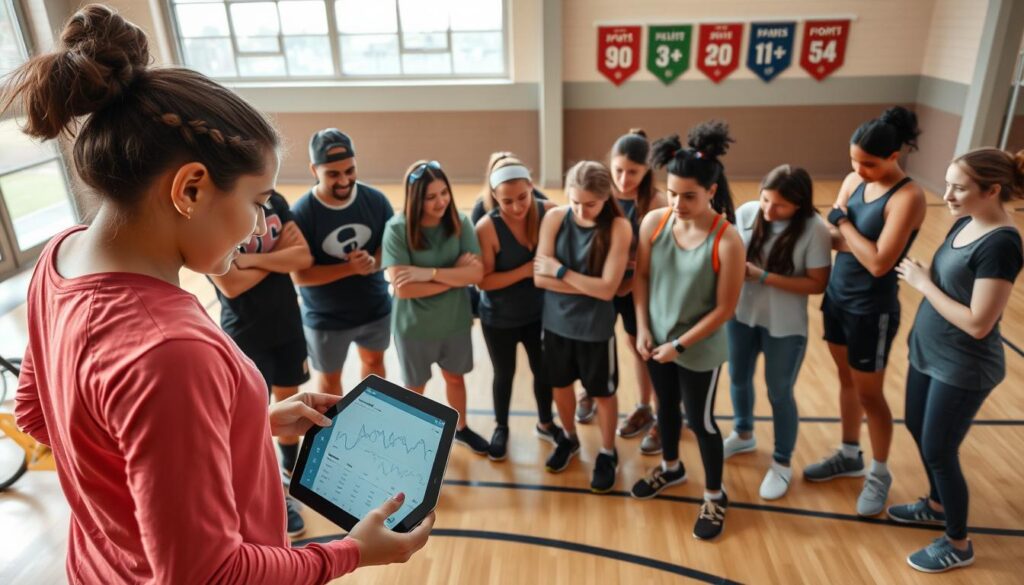
Imagine the classic sports scene. An older adult yells drills from the sidelines. But now, that image is changing.
The new hero isn’t holding a clipboard. It’s holding a smartphone. I’m talking about the rise of the teen sports tech expert.
These digital natives aren’t just fixing phones. They use apps, video analysis, and social platforms. They break down a free throw and improve training for their friends.
This is a big change. The gym’s hierarchy is flipping. Who’s better to explain iPhone slo-mo biomechanics than someone who edited a viral TikTok dance?
This isn’t just about sharing skills. It’s a quiet revolution in authority and knowledge transfer. Forget “coach says.” The new mantra is “peer proves.”
Building Confidence as Young Coaches
Handing a teenager a whistle doesn’t magically install coaching software in their brain—it’s more like giving them admin access to a server they’ve only ever used as a guest. The psychological shift is real. One day you’re high-fiving teammates after a win. The next, you’re expected to analyze their footwork. This isn’t just about sports. It’s about identity.
Research backs this awkward transition. Studies like the Support Through Sport project show that formal programs create essential scaffolding. They involve youth coaches through structured mentorship and peer intervention programs. These aren’t nice-to-haves. They’re the training wheels for a bike you’re suddenly expected to ride in traffic.
The magic happens in environments built for safe experimentation. Think YMCA camps. Their model thrives on letting youth “grow confidence by trying new activities” in supportive settings. The key ingredient? A culture that treats mistakes as the most valuable data points in the room. A fumbled pass becomes a case study in grip strength. A missed free throw is a masterclass in follow-through.
This reframing is the engine of authentic confidence. It turns performance anxiety into analytical curiosity. For peer learning sports to work, the coach must believe they have the right to be there. Not as an all-knowing expert, but as a slightly-more-experienced guide.
So how do we build this belief system? It’s less about pep talks and more about toolkit assembly. Below is a breakdown of practical strategies that transform self-doubt into coaching authority.
| Confidence Strategy | How to Implement | Outcome for Peer Learning Sports |
|---|---|---|
| Micro-Tasking | Start by coaching ONE specific skill for 5 minutes (e.g., proper shooting stance). | Reduces overwhelm. Builds small wins. Makes the coaching role feel manageable. |
| Mistake Reframing | Publicly analyze your own errors. “I missed that pass because I didn’t lead the receiver. Let’s try it again.” | Models vulnerability. Shows that errors are learning tools, not failures. Normalizes the process. |
| Peer Feedback Loops | After a drill, ask peers: “What worked? What felt awkward?” Use their answers to adjust. | Shifts dynamic from “coach vs. team” to “collaborative problem-solving.” Shares ownership. |
| Role Reversal Drills | Let teammates briefly coach YOU on a skill they’ve mastered. | Democratizes expertise. Highlights that everyone has something to teach. Builds mutual respect. |
| Use a simple app to track one metric (e.g., successful passes). Review the numbers together. | Moves conversation from subjective opinion (“you played bad”) to objective analysis (“our completion rate was 60%”). |
Notice what’s missing from that table? The word “perfect.” That’s intentional. In peer learning sports, confidence isn’t about flawless execution. It’s about comfortable facilitation. It’s the ability to stand in front of your friends and say, “I don’t know why that drill failed, but let’s figure it out together.”
The authority challenge melts away when you stop pretending to have all the answers. Your real power comes from asking the right questions. “Where did your balance fail?” “What did you see right before the turnover?” This turns coaching into a joint investigation.
Programs that formalize peer intervention understand this deeply. They’re not just creating coaches. They’re building peer analysts. Young people who can dissect a play, identify a mechanical flaw, and communicate a fix without triggering defensiveness. That’s a life skill that transcends the court or field.
Ultimately, confidence in peer learning sports is a byproduct of prepared repetition. You don’t get it by wishing. You build it by doing the awkward thing, analyzing why it was awkward, and trying a slightly less awkward version next time. The whistle is just a prop. The real tool is a mindset that welcomes the glorious, messy process of figuring it out.
Planning Effective Peer Workshops
Planning a workshop for your peers is more than just a chat. It’s like directing a mini-TED Talk where everyone knows you. You aim to make the skill matter before they get distracted by their phones.
Forget the old lecture hall feel. Good youth coaching technology sessions use proven methods. For example, university programs mix hands-on training with goal-setting chats. This mix is key to keeping everyone engaged.
Your workshop should have a clear three-act structure. Act One: The Hook. Start with something shocking or relatable. You’re grabbing their attention right away. Act Two: The Core. This is where you teach a specific skill using technology. Act Three: The Takeaway. Everyone leaves with a drill or goal to work on next.
The secret to success is improved accessibility. Your materials shouldn’t be a heavy binder. Instead, use QR codes, videos, or live polls. This makes your workshop an experience they can use, not just information to read.
| Workshop Element | The “Winged It” Approach | The Strategically Planned Session |
|---|---|---|
| Structure | Rambling demo, Q&A at the end. | Clear three-act arc: Hook, Core Skill, Tangible Takeaway. |
| Content Relevance | Generic tips that could apply to anyone. | Skills framed around immediate, peer-specific challenges and goals. |
| Materials & Accessibility | Verbally explained links, forgotten by tomorrow. | QR codes, shared digital docs, and interactive polls for instant access. |
| Engagement Strategy | Hope they listen. | Plan to capture and hold attention from the first minute. |
Don’t just show up with a cool app. The real magic is in the plan you build around it. That plan turns a casual show-and-tell into real youth coaching technology leadership. It’s the difference between being heard and being followed.
Technology Tools for Teen Coaches
The clipboard and stopwatch are out, replaced by cool digital tools. These tools make you a better coach, like a superhero. Your authority now comes from using these tools well.
Let’s look at the tools you need. First, there’s the admin stuff that keeps everything running smoothly. Tools like MS Bookings or Calendly help you schedule sessions easily. They save you from endless texts and make you look professional.
Then, there’s the educational part. Modern teen sports coaching uses cool eLearning modules. These aren’t boring books. They’re interactive and fun, making learning exciting.
The best tools are for analyzing performance. Apps like Hudl Technique or Coach’s Eye turn your phone into a lab. You can analyze a player’s shot in detail, making feedback clear and effective.
But tools work best together. Here are some key areas to cover:
- Scheduling & Admin: Calendly, MS Bookings, Google Calendar
- Video Analysis: Hudl Technique, Coach’s Eye, Dartfish
- Skill Circuit Builders: Simple apps to design and time progression drills
- Collaborative Hubs: Shared Google Docs or Sheets for workout plans and goal tracking
Don’t forget the power of working together. A shared workout plan lets everyone contribute. It turns your sessions into a team effort. This is like the comprehensive toolkit for peer coaching, where everyone helps each other grow.
Remember, the tech is just a tool. The best app is nothing without your coaching skills. It’s like a good microphone or camera. Your job is to use these tools well, making your teen sports coaching better and more effective.
Creating Age-Appropriate Learning Content
The age range in peer learning sports is like a journey through different cultures. Middle schoolers live in TikTok time, high school athletes aim for scholarships, and college students dive into biomechanics. How do you make content that thrives in this diverse world?
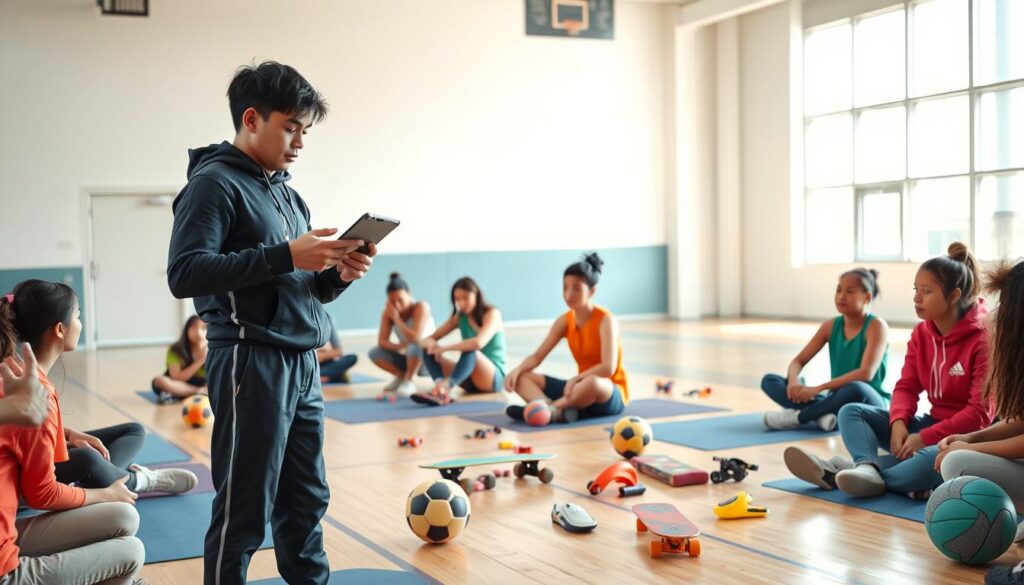
For 11 to 16-year-olds, it’s not about perfecting moves. They’re growing in confidence and learning social skills. Your content should offer quick wins. Use group challenges, visual aids, and games that make failure fun.
For this age, a peer learning sports session should feel like a video game. It should have clear goals, increase in difficulty, and provide feedback. A 14-year-old beginner wants to make the ball do what they want, right now.
Then, there are 17-to-24-year-old club athletes. They’re into the science behind sports. Explain ball spin using sports highlights. Connect heart rate to recovery and muscle memory to learning a dance.
At this level, your content needs to be more advanced. Use analogies they already get. A training plan is like leveling up in a game. Nutrition timing is like optimizing social media.
The key is modular design. One workshop for all, with different levels. The core idea is the same, but the depth varies. Younger groups learn the basics, while older groups explore deeper.
Here’s how this works for different ages in peer learning sports:
| Age Group | Primary Focus | Content Style | Delivery Method | Success Metric |
|---|---|---|---|---|
| 11-14 Years | Confidence & Social Connection | Visual, Game-Based, Immediate Feedback | Group Challenges, Partner Drills | Participation & Enjoyment |
| 15-18 Years | Skill Mastery & Team Dynamics | Progressive Drills, Video Examples | Skill Stations, Peer Review | Measurable Improvement |
| 19-24 Years | Theory Application & Leadership | Analytical, Discussion-Based | Case Studies, Data Analysis | Understanding & Teaching Ability |
Notice the progression? It’s not about different content—it’s about different layers of the same content. The 15-year-old learns how to analyze a swing. The 20-year-old learns why that analysis matters and how to explain it to others. That’s the magic of scalable peer learning sports design.
Your cultural references are your secret weapon. For the younger group, use memes and trending sounds. For the older group, reference sports documentaries and athlete podcasts. The material feels custom-made for each demographic, but you’re actually building one adaptable framework.
The final test? Can a 13-year-old and a 21-year-old leave the same workshop feeling equally challenged and accomplished? If your content passes that, you’ve mastered the art of age-appropriate design in peer learning sports. You haven’t found a middle ground—you’ve built bridges to every shore in the room.
Video Analysis Techniques for Peers
Forget the whistle and clipboard. The most powerful tool in a teen coach’s arsenal is now the pause button. Video analysis isn’t about playing film critic; it’s about becoming a collaborative forensic scientist. This is where youth coaching technology transforms from a gadget into a genuine language of improvement.
The trick? You’re not just pointing out flaws. You’re modeling the ideal. It turns “your form looks weird” into “let’s solve this puzzle together.” The shift from subjective opinion to objective, shared fact is nothing short of revolutionary for peer-led sessions.
First rule: always get consent. Filming a peer can feel invasive. Frame it as a tool for discovery, not judgment. Once you have the green light, follow a simple, three-act framework. This structure keeps the session focused and prevents it from devolving into unhelpful nitpicking.
The Three-Act Framework for Peer Video Analysis
Act 1: The Baseline. Film your peer performing the skill their current way. Two or three attempts are enough. This isn’t about catching a mistake; it’s about establishing the honest starting point. Think of it as gathering the evidence.
Act 2: The Model. This is the “aha” moment. Show a clip of the ideal technique. This could be a professional athlete, a tutorial from a trusted coach, or even you executing it correctly. The key is to provide a clear, visual target. You’re showing the destination on the map.
Act 3: The Gap Analysis. Here’s where the real coaching magic happens. Play the two clips side-by-side or use drawing tools to literally connect the dots. “See how your elbow is here, but in the model, it’s here?” Use slow motion liberally. Hit pause.
Ask rhetorical questions to guide the discovery: “What do you think happens to the ball’s trajectory when your wrist flicks like that?” or “How does that foot placement change your balance?” You’re not giving the answer; you’re lighting the path so they can find it themselves. This collaborative detective work builds understanding without undermining confidence.
Tools of the Trade (That You Already Have)
You don’t need a broadcast truck. Your smartphone is a fully equipped analysis studio. Use the native slow-motion feature. Free apps like Coach’s Eye or Hudl Technique offer drawing tools and side-by-side comparison. The tech is democratized—the expertise is in how you use it.
Remember, the goal is clarity, not complexity. A single, well-analyzed rep is worth more than ten confusing clips. Focus on one specific skill element per session. Is it the follow-through? The knee drive? The shoulder turn? Laser focus prevents overload.
This process does more than fix a jump shot or a swim stroke. It teaches critical thinking. It models a growth mindset. It proves that with the right tech tools, feedback isn’t something you receive from an authority—it’s something you discover with a partner. That’s the real power of modern youth coaching technology.
Using Apps for Skill Development
In today’s world, teen sports coaching needs a new tool: apps. Your phone is more than just for social media. It’s your equipment room, locker room, and playbook all in one.
But not all apps are the same. You need to pick wisely. Think of it like choosing a team. You’re looking for apps that fill specific roles.
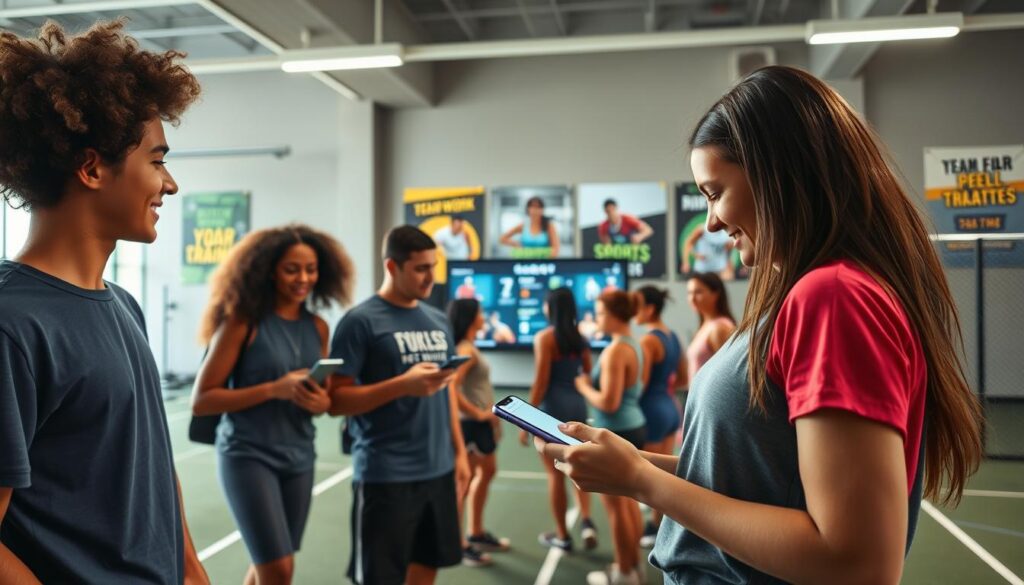
First, there are the trackers. Apps like Strava are more than just for showing off. They help you stay accountable. By joining a “club” with your friends, workouts become a team effort.
Next, there are the skill-builders. These apps are like digital coaches. They offer daily challenges for different sports. They help with repetition, which can be hard for young coaches to plan.
Then, there are the connectors. These apps help with scheduling. They make it easy to plan coaching sessions. Some schools even use them for free coaching sessions.
This method is called guided autonomy. As a coach, you guide but don’t dictate every step. You create the environment and set challenges. The apps help your teammates build their own success.
This way of coaching changes everything. It moves from telling to enabling. You’re teaching teens to learn and grow on their own. That’s the real win.
So, check your app store with a coach’s eye. Does it track, teach, and connect? If yes, your phone becomes a top-notch assistant coach without the cost.
Social Media for Peer Coaching
Forget the humble-brag selfie; the real game is building a digital micro-community for your team. If you’re not using social media strategically, you’re leaving a massive reservoir of leadership capital untapped. This isn’t about broadcasting your greatness. It’s about curating a persistent space for peer learning sports to thrive beyond the gym, field, or court.
Look at Strava Clubs. They’re not just fitness trackers; they’re niche communities built around a shared activity. That’s the model. Your mission is to replicate that energy on platforms your peers actually use. Create a private Instagram group for your team or a Discord server for real-time chatter and resource drops. Your role shifts from sole instructor to part-curator, part-provacateur.
Your content strategy should be snackable and engaging. Think of it as knowledge transfer for the TikTok age. Post a 15-second clip of flawless technique with a caption that breaks down the “why.” Use polls in your Stories: “Biggest hurdle with your backhand?” Share quick-tip videos and host live Q&As. This turns coaching from a scheduled event into an ongoing, supportive conversation.
To do this right, you need a playbook. Different platforms serve different purposes in your peer coaching arsenal.
| Platform | Best For | Peer Coaching Tactic | Community Vibe |
|---|---|---|---|
| Visual storytelling & quick updates | Technique clips in Reels, polls in Stories, resource carousels | High-visibility, aspirational, & connected | |
| Discord | Real-time chat & resource sharing | Dedicated channels for drills, Q&A, and motivation | Private, collaborative, & persistent |
| Strava | Activity-specific community & data | Creating a Club for shared goals and route analysis | Niche, data-driven, & supportive |
| TikTok/YouTube Shorts | Reaching new audiences & viral tips | Ultra-short, catchy tutorials on common problems | Broad, discoverable, & trend-focused |
This table isn’t about picking one. It’s about mixing these tools to create a layered peer learning sports ecosystem. The Instagram page showcases success. The Discord server hashes out the daily grind. Each platform extends your reach and makes your coaching omnipresent.
But a word from the sage: the comments section is a digital wilderness. Be the guide. Your number one job is to foster a space that’s positive, inclusive, and ruthlessly focused on growth. Shut down negativity. Highlight effort. This digital extension of your workshop is where true, lasting peer learning becomes a culture, not just a lesson.
Overcoming Authority Challenges
Every peer coach faces a moment when someone questions their advice. It’s not about having a title; it’s about earning respect. This is a chance to grow, not a power struggle.
Think back to what we discussed about the coach’s role. You’re there to improve the sport culture. Your tool is data, not a whistle. When doubts arise, show the evidence, not just your opinion.
Using youth coaching technology is key here. It’s like wearing armor that’s fair and true. The numbers don’t pick favorites, and the video doesn’t lie. You become the leader, guiding everyone with facts.
Use the safe space you’ve created to solve problems together. Say, “We’re all in this together. What does the data say?” This shows you’re all working towards the same goal. It turns the challenge into a team effort.
The ultimate test isn’t winning an argument. It’s showing how youth coaching technology can build trust. You move from just a friend to a leader, guiding the team’s growth. This is the true power of youth coaching technology.