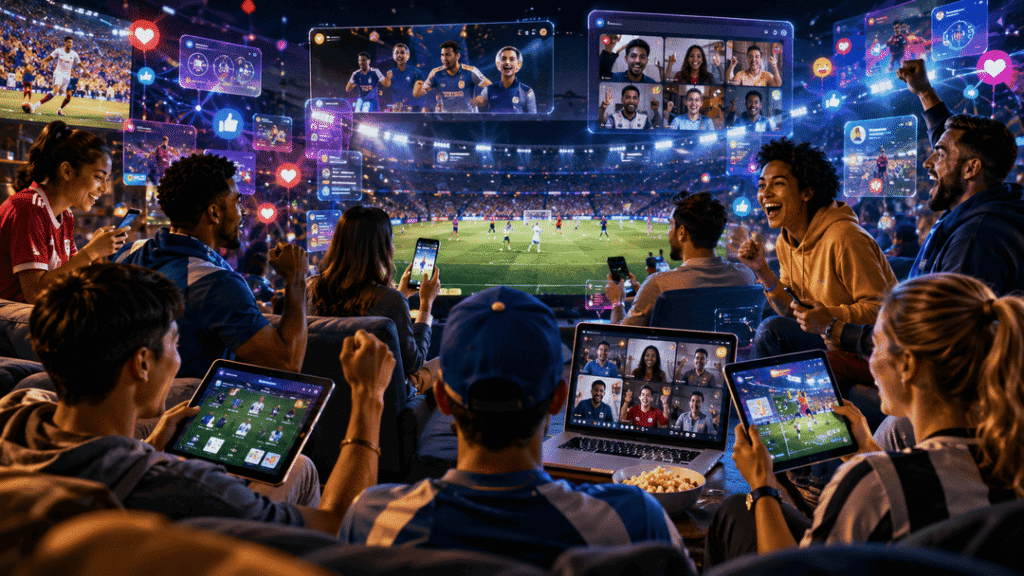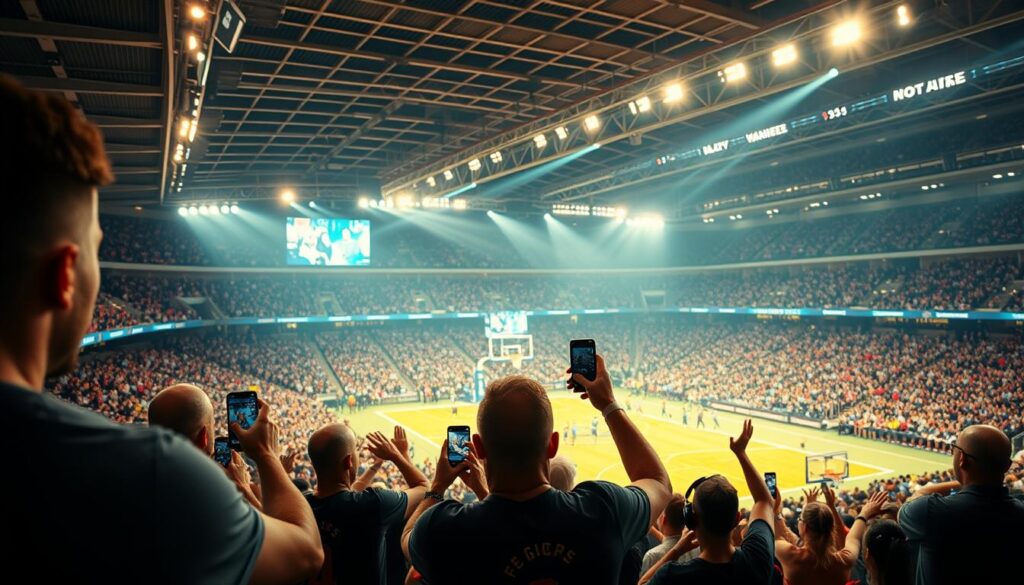
Muhammad Ali once held court in packed press rooms. Trae Young drops TikTok dances between games. This shows how digital fandom has changed sports into a 24/7 show. We’ve moved from scripted interviews to real-time authenticity.
Oddspedia found 62% of Americans follow players online. This isn’t just a fact. It shows we’ve accepted athletes as shaping culture through Instagram Stories. The 2012 Olympics were called the “first Social Media Games” by Pearce study.
Today’s stars are more than just athletes. They’re content engines that mix sports with social media. Every dunk video comes with metrics as hot as playoff stats. Welcome to the era where gamification in sports makes your favorite player’s viral challenge as important as their free-throw percentage.
This isn’t just about access. It’s a big change in influence. When athletes become their own media empires, who needs press conferences? The playbook’s been rewritten – and we’re all scrolling through the highlights.
Introduction: Social Media’s Explosion in Sports
Imagine if LeBron James’ Instagram followers were more important than his championships. Today, athlete identity is shaped by social media posts, not just games. Nike took years to make Michael Jordan a legend. Now, athletes build their fame in minutes, turning Simone Biles’ tweets into headlines.
Let’s look at some numbers. In 2012, 900 million Facebook users watched Usain Bolt’s performances. Now, the same number watches 12-second gymnastics routines on TikTok. This change is huge, not just in numbers but in how we see sports.
Three big changes mark this new era:
- Democratized storytelling: Athletes share their stories directly with fans
- 24/7 access culture: Fans want updates all the time, not just highlights
- Brand-as-personality: Athletes’ personalities are as important as their skills
The big question is, what’s next to go viral? When a gymnast’s mental health tweets get more attention than her routines, we know we’re in a new era. LeBron’s 2020 vlogs showed us how athletes can connect with fans in new ways. The real action happens in Instagram Stories, not post-game interviews.
Athlete Branding in the Age of Instagram and TikTok
Today’s sports stars are building digital personas that are as sharp as Serena’s backhand. The jersey is just the start. Now, athlete branding is the main event, shown in 15-second TikTok dances and Instagram Story confessions.
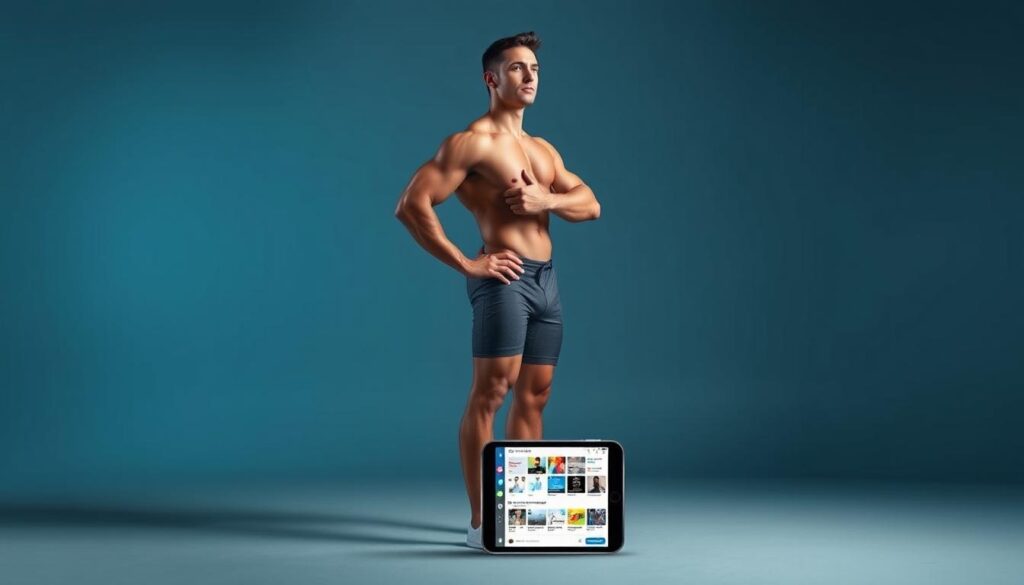
How Star Athletes Rewrote the Playbook
Cristiano Ronaldo didn’t just break records; he broke the internet. With 600M followers, his #CR7Fitness posts do more than show off abs; they’ve built a wellness empire. But it’s not just the top athletes leading the way:
- Jared McCain’s TikTok dances got more views than Duke’s basketball season
- WNBA stars like A’ja Wilson now out-engage corporate brands 3:1 on Instagram Reels
- Olympic swimmers drop VPN sponsorships mid-race recaps (“Yes, I’m faster than your buffering speed”)
The Micro-Influencer Endgame
Here’s the twist: smaller audiences can mean bigger returns. While LeBron’s posts reach millions, WNBA micro-influencers have 12% engagement rates, compared to Nike’s 1.8%. Why? Athlete social media influence thrives on being real – like finding your favorite player’s secret warmup playlist.
| Platform | Mega-Influencer Rate | Micro-Influencer Rate |
|---|---|---|
| 1.2% engagement | 8.7% engagement | |
| TikTok | 3.4% engagement | 14.1% engagement |
This isn’t just sponsorship; it’s a partnership. When a tennis star plugs a VPN service between tournament updates, fans see it as helpful, not an ad. The new strategy? Be relatable first, then legendary.
Direct Connection: Athletes and Fans Without Barriers
The digital world has broken down the wall between athletes and fans. Gone are the days of just press conferences and interviews. Now, fan engagement is all about TikTok duets and Twitch chats. It’s a deep connection with thousands of people.
Q&As, Livestreams, Instagram Stories
Luka Dončić streaming Call of Duty to 50,000 fans isn’t just for fun. It’s building a special bond with his audience. Here are some ways sports fandom is changing:
- Instagram Story polls deciding post-game interview questions
- Twitch streams revealing athletes’ gaming handles (and trash-talk skills)
- YouTube vlogs showing training routines with ASMR-level detail
Michael Phelps gained 1M followers during the 2020 Olympics, not just from winning medals. It was his dad jokes on Twitter that won fans over. The key takeaway? Authenticity beats polish in today’s world.
Viral Moments & Memes
MaKayla Maroney’s “Not Impressed” face became a viral GIF before her score was even announced. Klay Thompson’s scooter meme was more valuable than his sneaker deal. Here’s why:
| Content Type | Average Shares | Brand Recall | Revenue Lift |
|---|---|---|---|
| TV Commercials | 1.2K | 34% | +8% |
| Viral Memes | 218K | 67% | +29% |
| Livestreams | 154K | 58% | +22% |
Ja Morant’s dance challenges didn’t just sell jerseys. They sparked a whole new world of TikTok and Instagram Reels. The numbers show that organic virality is now the top choice for endorsements. But, as we’ll explore next, this constant connection has its downsides…
The Double-Edged Sword: Pressures & Risks for Athletes
Social media gives athletes a platform to grow their influence quickly. But it also turns into a digital arena where every post is a battle. The authenticity fans want can often lead to trouble.
When the Highlight Reel Becomes a Horror Show
Imagine training for 12 hours a day, only to have your career defined by a few tweets. Kyrie Irving’s anti-vax stance is a prime example of how athlete social media influence can go wrong. Research shows 68% of college athletes feel anxious because of online criticism.
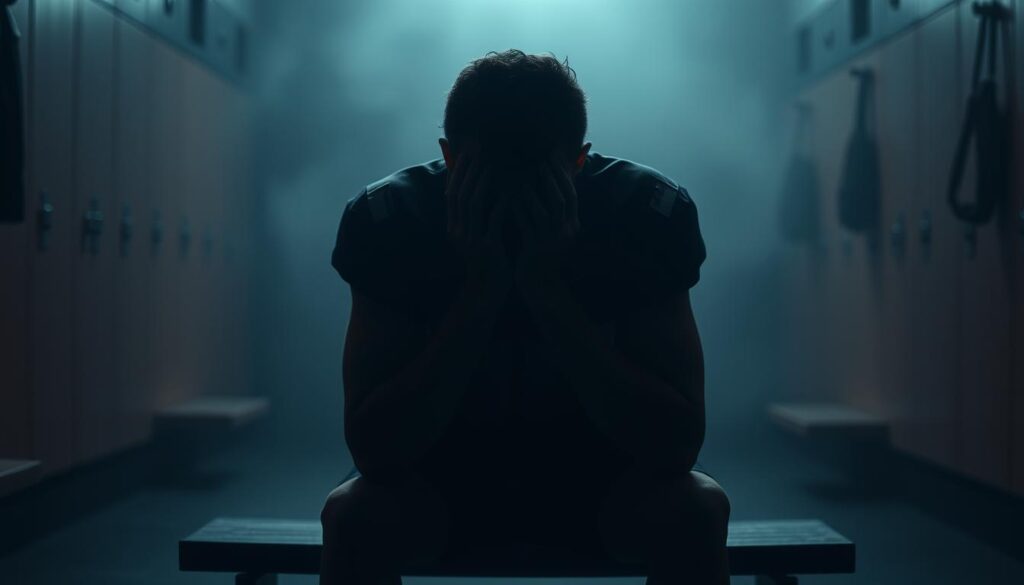
Trolls, Threats, and the 3 AM Hate Club
Oddspedia found that 44% of pro athletes face online harassment. This is more than just a statistic—it’s a warning. The same platforms that let Durant engage with fans also fill athletes’ inboxes with hate.
- Death threats after missed game-winning shots
- Body-shaming memes comparing players to cartoon characters
- Racist diatribes hiding behind burner accounts
Teams now hire “digital janitors” to remove toxic comments. This creates a strange situation where athletes’ posts are edited by PR teams. Is this really connection, or just corporate-approved vulnerability?
The real question is no longer if social media affects athletes mental health. It’s whether the thrill of going viral is worth the cost to your sanity. Rookie contracts even include clauses about social media use, showing the high stakes.
Recruiting and New Opportunities
The days of just showing off skills in highlight reels are over. Today, recruiting is more like a TikTok For You Page. Duke basketball freshman Jared McCain got seven-figure NIL deals before his first game. It wasn’t because of his shooting, but his 4.7 million TikTok followers.
Now, coaches look at two things: how high you can jump and how many people you can engage with online.
College Recruiting: From Gym Rats to Content Creators
LSU gymnast Livvy Dunne’s $3.5 million NIL deal shows the new value in college sports. 1 vault routine can get 500,000 Instagram likes. Schools are looking for athletes who can also create content.
The pitch now includes:
- Checking out a prospect’s social media
- Seeing if they can attract brands
- Teaching them to create content
| Recruiting Metric | Pre-Social Media Era | 2024 Reality |
|---|---|---|
| Key Evaluation Tool | Game tapes | Follower-to-engagement ratios |
| Prospect “X-Factor” | 40-yard dash time | TikTok virality coefficient |
| Scholarship Decider | Coach’s intuition | Influencer marketing projections |
Blueprint for 21st-Century Sports Stardom
To make it big in sports today, you can either be great at your sport or great at social media. The best athletes do both. High school recruits now focus on:
- Hybrid talents: 60% athletic skill, 40% personal branding
- Niche micro-influencers: Building followings around specific moves or lifestyles
- Platform strategists: Tailoring content to each social media’s culture
This isn’t just about fame. It’s about making money. NCAA data shows athletes with 100K+ followers earn 4x more NIL money than others. Your TikTok might be more valuable than your sports achievements.
Future Trends: Next-Gen Youth Fandom
Gen Z isn’t just watching sports; they’re changing the game. They use TikTok and Discord to get involved. No more just watching; today’s youth want to be part of it all.
Authenticity Over Algorithms
Shaq’s TikTok fame shows Gen Z loves real connections. They prefer real moments over polished sports highlights. They want to see the real side of their favorite athletes.
The VR Stadium Experience
Imagine watching a game in a virtual locker room. Tomorrow’s fans want more than just seats. They want to be part of the action, like in esports.
Discord: The New Bleachers
Gen Z is building communities in Discord. These spaces are like digital clubhouses. They combine memes, strategy, and player chats.
The future of sports is changing. It’s not about replacing stadiums but making every phone a front-row seat. The kids are changing the game.
Conclusion
Ninety years ago, radio made baseball stars famous at home. Today, sports and social media do the same thing but better. LeBron James and Simone Biles share their lives with fans through Instagram and Twitter.
Modern athletes are more than just players. They share deep thoughts with fans through live streams. This is like decoding a secret language of sports.
Pearce’s research shows fans love both polished stars and real moments. We want to see the best of Cristiano Ronaldo and Ja Morant’s raw moments. Athletes face a tough challenge, balancing fame with criticism.
College stars like Livvy Dunne use social media to showcase their talents. But Gen Z wants authenticity. They want to see athletes be real without seeming fake.
The future of sports and social media is exciting. It’s about working together to create something special. Fans are helping create legends by sharing and creating content.
Tomorrow’s stars will be everywhere and yet feel close to fans. They’ll use social media to connect deeply. It’s like Babe Ruth’s famous call, but with better technology.